
Loading...
Loading...
Heart bypass surgery recovery takes six to twelve months — not the few weeks most families expect. Why India's post-hospitalisation care gap is finally getting attention.
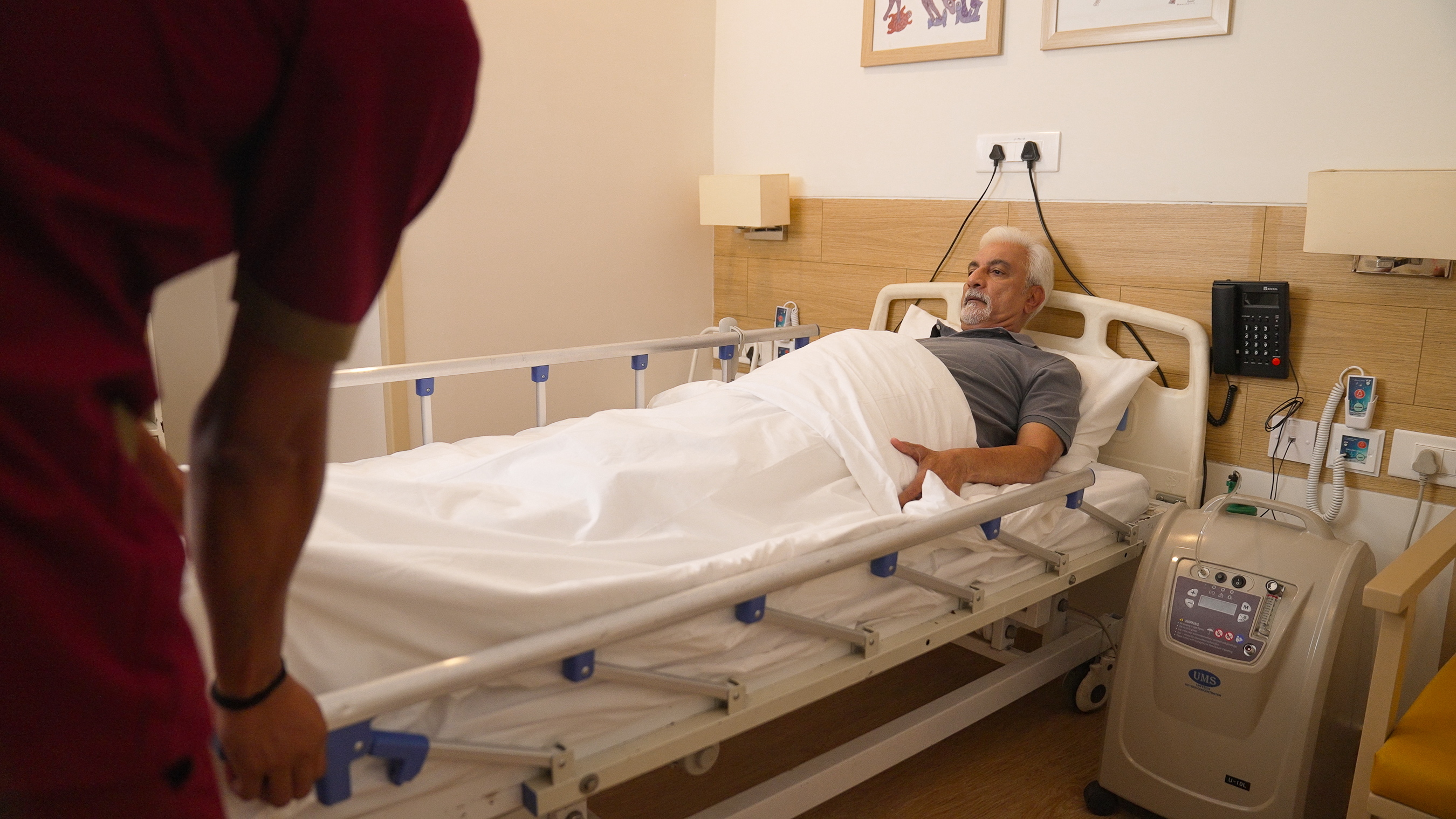
As cardiac surgery rates climb among older Indians, a new spotlight
is falling on what happens after discharge — and why most families are left
managing it alone
A growing number of Indian families are discovering that the most difficult
phase of cardiac recovery is not the surgery itself. It is the six to twelve
months that follow — and the near-total absence of structured clinical support
during that period.
The issue has gained renewed attention as post-hospitalisation care
providers and healthcare fintech platforms have begun partnering to address
what clinicians describe as a significant and underserved gap in India's
cardiac care continuum. Antara Senior Care's recently announced partnership with
GMoney, aimed at making structured rehabilitation financially accessible
through insurance facilitation and flexible financing, is among the more
visible signals that the sector is beginning to take post-operative recovery
seriously.
The clinical case for doing so is hard to dismiss.
A 2024 study in the Journal of Cardiopulmonary Rehabilitation and
Prevention, tracking over 2,600 cardiac patients, found those who attended
structured cardiac rehabilitation faced a 42–47% lower risk of readmission or
death within 180 days compared to those who did not. For context, that is a
larger risk reduction than many pharmaceutical interventions routinely
prescribed after surgery.
Yet fewer than a third of eligible patients globally complete a cardiac
rehab program. In India, referral rates are lower and awareness lower still.
Heart bypass surgery recovery time runs six months to a year when measured
honestly — not the "few weeks" many patients are informally told to
expect at discharge. The sternum takes six to eight weeks to heal. Breathing
exercises are clinically essential in the early weeks, when the risk of
pneumonia and respiratory complications is highest. Medication management — anticoagulants,
beta-blockers, statins — requires careful oversight that most home environments
cannot provide.
Depression affects between 30% and 40% of patients after cardiac surgery,
according to research published in the Annals of Thoracic Surgery. It
goes largely undiagnosed. It slows physical recovery, reduces medication
adherence, and raises the risk of a second cardiac event. A rehabilitation
program without a psychological support component is, by that measure, incomplete.
The post-hospitalisation recovery gap extends well beyond cardiac cases.
Stroke rehab is perhaps the most time-sensitive intervention in medicine —
the brain's plasticity is highest in the weeks immediately after a stroke, and
delays in structured rehabilitation can turn recoverable deficits into
permanent ones. Paralysis rehabilitation, pulmonary rehab following thoracic
surgery, and ACL injury recovery — which typically requires nine to twelve
months after surgical reconstruction — all share the same underlying problem:
discharge happens, structured supervision disappears, and outcomes suffer.
Palliative care and respite care represent another dimension of this. For
families searching for palliative care near me, the presence of a trained,
senior-focused clinical team changes not just patient comfort but family
capacity to sustain care over months.
By discharge, most insurance coverage has already been absorbed by surgical
and ICU costs. Families typically assume rehabilitation is an additional
out-of-pocket expense they cannot currently afford.
That assumption is frequently wrong. Several health insurance policies in
India cover post-hospitalisation expenses — physiotherapy, nursing care, and
medically necessary rehabilitation — for a defined period after discharge.
Cashless TPA claims can apply to structured post-operative care, not just the
surgical admission. Flexible financing now also exists for costs outside
coverage, allowing families to access rehabilitation without a pressured
lump-sum decision at an already difficult moment.
Antara Care Homes provides post-hospitalisation recovery programs across
Delhi-NCR, Bengaluru, and Chennai — covering cardiac rehabilitation, stroke
rehab, paralysis and neuro rehabilitation, pulmonary rehab following thoracic
surgery, orthopaedic recovery, and palliative and respite care. The
organisation operates 8 Care Homes with over 490 beds, with 24x7 nursing,
NABH-aligned care pathways, and on-site emergency support. Insurance
facilitation and flexible financing are available through its partnership with
GMoney.
Bypass surgery recovery time. Stroke rehab timelines. Pulmonary rehab after
thoracic surgery. The numbers differ by condition and patient. The principle
does not — structured, supervised recovery produces meaningfully better
outcomes than the alternative.
The data on that has been clear for some time. Closing the gap between what
the evidence recommends and what most Indian families can actually access is
what is now beginning to change.
Sources: Journal of Cardiopulmonary Rehabilitation and Prevention
(2024); Annals of Thoracic Surgery; American Heart Association; NITI Aayog
Senior Care Reforms in India (2024)