Loading...
Loading...
 BACK
BACK2026-03-31
Dr. Divya Mathew
Recovering from paralysis can feel challenging, but the right exercises can make a big difference over time. With regular practice, these movements can help improve strength, flexibility, and daily function. It’s important to start slowly and follow guidance from healthcare professionals like Antara to ensure safety. Even small improvements can boost confidence and independence. In this blog, we will explore five simple and effective exercises that support paralysis recovery. These exercises are easy to understand and can be adapted based on individual needs, helping patients and caregivers take positive steps towards better mobility and overall well-being.
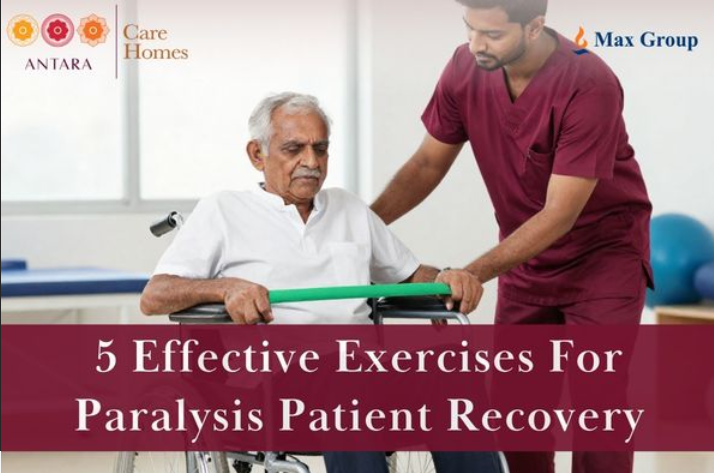
Here are five effective exercises that can support faster recovery for a paralysis patient. These exercises are designed to improve strength, flexibility, and movement over time. However, it is important to perform them only under expert guidance and consulting a doctor to ensure safety and avoid any complications.
Passive range of motion (PROM) exercises involve gently moving the patient’s arms, legs, or joints with the help of a caregiver or therapist. These exercises are useful when the patient is unable to move on their own. They help keep the joints flexible, improve blood circulation, and prevent stiffness or muscle tightening. Regular practice can also reduce the risk of bed sores and joint contractures. It is important to perform these movements slowly and carefully, following proper technique and guidance from a healthcare professional.
How to Do:
These exercises should be done regularly and ideally under the guidance of a trained professional to ensure safety and effectiveness.
It helps improve muscle strength and gradually restore movement in paralysis patients. In this exercise, a caregiver or therapist supports the patient in lifting their arms or legs, especially when they cannot do it independently. Regular practice can enhance blood circulation, prevent muscle stiffness, and build confidence in movement. Over time, it may also help the patient regain partial control of their limbs. These exercises should always be done slowly and with proper support to avoid strain or injury.
How to Do It
It helps improve upper body strength and posture in paralysis patients. This exercise focuses on the muscles around the shoulders and upper back, which are important for daily movements like sitting upright and using arms. Regular practice can reduce stiffness, improve blood circulation, and support better control of the upper body over time.
How to Do It
These are simple yet effective exercises that help improve blood circulation and prevent stiffness in the lower limbs. These movements are especially useful for paralysis patients who spend long hours lying down or sitting. Regular practice can reduce swelling, lower the risk of blood clots, and keep the muscles in the feet and ankles active.
How to Do It
Mirror therapy is a simple technique that helps stimulate the brain and improve movement in paralysis patients. It uses a mirror to create the illusion that the affected limb is moving normally. This can help the brain reconnect with the weakened or paralyzed limb over time. It is especially useful for improving motor control, coordination, and reducing frustration during recovery.
How to Do It
Recovering paralysis pateint at home without proper medical supervision can be risky. Patients may perform exercises incorrectly, leading to injuries, muscle strain, or delayed recovery. There is also a higher chance of complications such as bed sores, infections, or falls without trained support. Recovery requires a structured plan, regular monitoring, and timely medical intervention, which can be difficult to manage at home. Rehabilitation centre such as Antara care homes is considered often a better option, as it provides 24/7 professional care, expert-guided therapy, proper equipment, and a safe environment. This ensures faster, safer recovery while also giving families peace of mind. Always ensure that a paralysis patient performs exercises under proper guidance. You can also search for a premium rehabilitation centre near me for safe and effective recovery.”
Recovering from paralysis is a gradual journey that requires patience, consistency, and the right support. While simple exercises can help improve strength and mobility, they must be done correctly and under expert guidance to ensure safety. Every patient’s condition is different, so a personalized care plan is essential for effective recovery. Along with physical improvement, emotional support also plays a key role in boosting confidence and independence. Choosing the right care environment, whether at home with professional help or assisted living, can make a significant difference in achieving better and faster recovery outcomes over time.
Rehabilitation should begin as early as possible, often within days after medical stabilization, to improve recovery outcomes.
Home care may help, but without expert supervision, it can be challenging. Structured rehab or assisted living often provides better support and faster recovery.
Recovery time varies for each patient. It can take weeks to months or even longer, depending on the condition and consistency of therapy.

Please fill in the form and submit the details to request an appointment.