Loading...
Loading...
 BACK
BACK2026-09-07
Summary
A weak hand after a stroke is common, and it responds well to consistent exercise. Simple movements, done regularly, help retrain the brain's connection to the hand. It's best to perform these exercises under a physiotherapist's guidance, not entirely alone. You can arrange physiotherapy easily at home too. Antara Care Homes offers trusted physiotherapy services at home, guided by trained professionals every step of the way.
A stroke disrupts the brain's signals to the muscles. The hand often takes the hardest hit, more so than larger muscle groups like the legs.
This happens because hand movement relies on a narrow, precise neural pathway. Unlike bigger muscle groups, there's less room for the brain to find alternate routes around damage. Fine motor control, the kind needed for gripping or moving individual fingers, needs very specific, concentrated signals to work properly.
When that pathway is damaged, the hand can feel weak, stiff, or completely unresponsive. This isn't permanent for everyone, even when it feels that way early on. With the right input, many people see real, meaningful improvement over time, sometimes months after the stroke itself.
Hand exercises work by giving the brain repeated practice at something it's actively relearning.
This connects to neuroplasticity, the brain's ability to form new connections around damaged areas. Movement, repeated consistently, strengthens whatever pathway is still working, even if it's weaker than before. Over time, this can restore function that felt completely lost early on, sometimes surprising both patients and their families.
Exercises also prevent secondary problems from developing. Stiff joints. Shortened muscles. Reduced circulation. All of these show up quickly when a hand goes unused, making later recovery considerably harder than it needed to be.
Beyond the physical side, hand exercises build confidence too. Small wins, a finger that moves again, a grip that holds slightly longer, matter more than they might seem from the outside looking in.
A few exercises work well for most people, especially early in recovery, before more complex movement becomes possible.
1. Finger Extension Exercise
Gently straighten each finger one at a time, holding the position for a few seconds before slowly releasing. This hand exercise after stroke can help improve finger movement, flexibility and control as part of stroke recovery exercises.
2. Fist and Release Exercise
Slowly close your hand into a loose fist and then open it fully, repeating the movement several times. This simple hand strengthening exercise after stroke can help improve grip, hand mobility and coordination.
3. Thumb-to-Finger Touch Exercise
Touch your thumb to each fingertip one by one, moving slowly and deliberately. This stroke hand exercise helps work on finger coordination and fine motor skills needed for everyday activities such as eating, dressing and writing.
4. Wrist Flexion and Extension
Gently bend your wrist forward and then backward, staying within a comfortable range of movement. These wrist exercises after stroke can support wrist flexibility, mobility and overall hand function.
5. Soft Ball Grasping Exercise
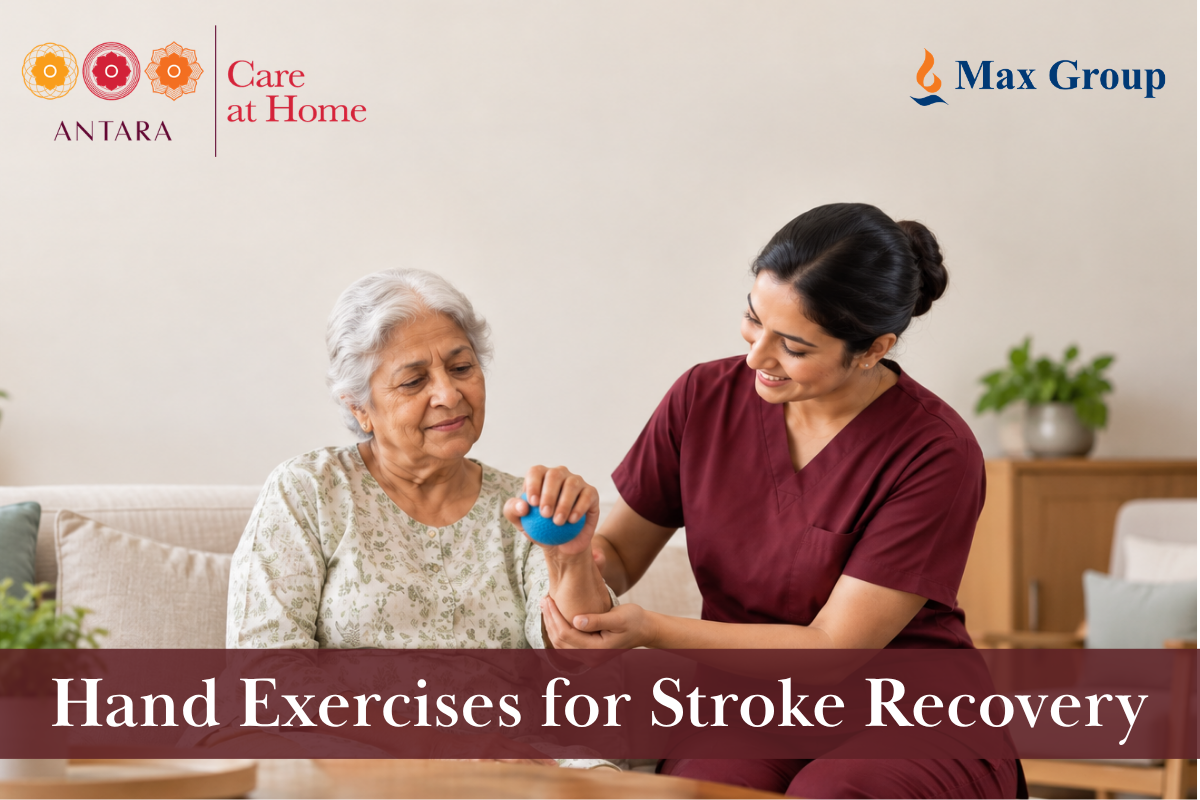
Hold a soft ball or sponge in your hand and gently squeeze it before releasing slowly. This hand strengthening exercise can help improve grip strength and hand control for people working on stroke rehabilitation.
6. Object Transfer Exercise
Pick up small, lightweight objects and transfer them from one hand to the other or place them in a container. This functional stroke recovery exercise helps practise hand-eye coordination, grasping and movements used in everyday tasks.
More frequently than most people expect, especially early on in recovery.
Best stroke rehabilitation programs recommend several short sessions daily, rather than one long session stretched out. Ten to fifteen minutes, done multiple times a day, often works better than a single thirty-minute stretch attempted once. The brain responds to repetition spread across the day, not just total time spent in one sitting.
Progress can feel slow some weeks and faster in others, without any clear pattern. That's normal, and it doesn't mean something's going wrong. Staying consistent matters more than any single session going particularly well or particularly poorly.
This is common, and it doesn't mean exercises won't help eventually.
Severe stiffness, sometimes called spasticity, needs a slightly different approach than standard exercises. Gentle stretching and careful positioning become the priority before active movement exercises make sense to introduce. Forcing movement through significant stiffness can cause pain, or even injury to already vulnerable tissue, so this needs careful, professional guidance from the start.
A home physiotherapist can assess exactly how much movement is safe right now, and build a plan around that specific starting point. Sometimes splints or supportive devices help too, keeping the hand in a better position between active sessions. This isn't something to figure out alone at home without guidance. Professional input matters most here, especially in the early stages.
Keep sessions short but frequent, rather than pushing through one long, exhausting session that leaves the hand more fatigued than helped.
Practice with real objects when possible. A cup. A pen. Something meaningful, not just abstract movement in the air. Track progress somehow. Even simple notes work. Small gains are easy to miss otherwise, and noticing them helps motivation stay high. Stay patient on harder days. Progress isn't always visible immediately, even when real change is happening underneath the surface.
And always work with guidance. A physiotherapist at home adjusts exercises based on what your hand can actually do that week, not a fixed plan set once and never revisited. Warm up the hand gently before starting too. A warm cloth or a few minutes of light movement can make exercises feel less stiff and more comfortable overall.
Hand exercises after a stroke genuinely help, but they work best with proper guidance behind them. It's best to perform these exercises under a physiotherapist's supervision, especially early in recovery when the risk of injury is highest. You can get physiotherapy easily at home too, with trained professionals guiding every single session. Antara offers exactly this. Reliable, skilled physiotherapy services delivered right at home, helping hand function rebuild safely and consistently over time, one small movement at a time.

Please fill in the form and submit the details to request an appointment.