Loading...
Loading...
 BACK
BACK2026-04-28
Antara
Recovering from paralysis is rarely a straight path. It’s a long, demanding journey that requires medical expertise, daily support, and consistent therapy. For families managing a loved one with paralysis disease, one of the biggest challenges is ensuring round-the-clock care without compromising quality.
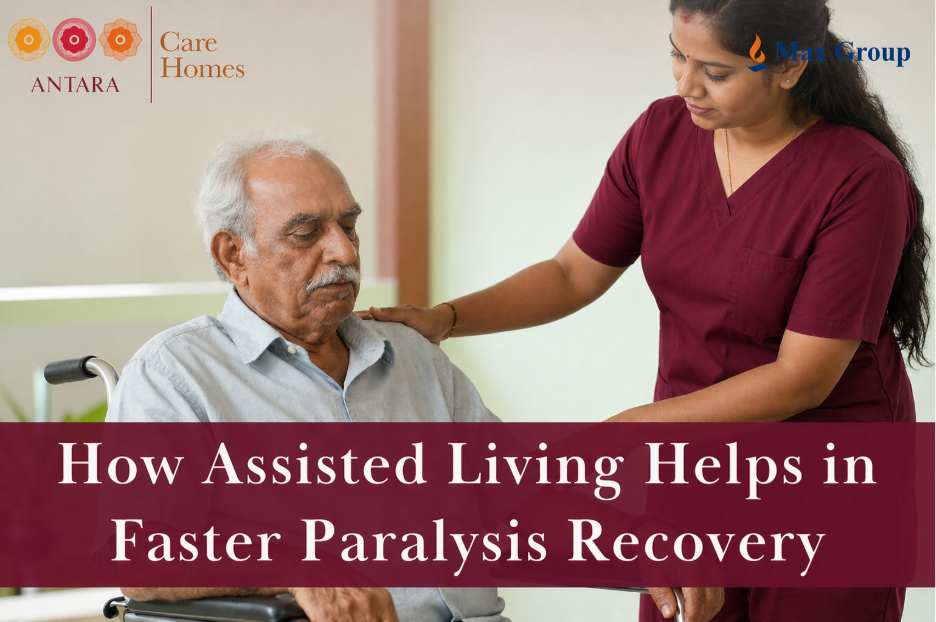
This is where assisted living plays a transformative role. Designed to bridge the gap between hospital care and home recovery, an assisted facility provides structured support that can significantly speed up paralysis recovery; both physically and emotionally.
Recovery from paralysis is not just about treatment; it’s about repetition, routine, and the right environment.
After the initial medical phase, the body needs continuous stimulation to rebuild neural connections. Without structured care, patients often face:
An assisted living setup creates a recovery-focused ecosystem where every aspect of care is aligned with improving mobility and independence.
Assisted living refers to residential care designed for individuals who need medical and daily support but do not require intensive hospital care.
An assisted facility typically offers:
Unlike hospitals, these facilities provide a more comfortable, home-like environment while still maintaining professional medical supervision.
One of the biggest barriers in paralysis recovery is inconsistency.
At home, therapy sessions may be skipped due to logistical issues or lack of motivation. In an assisted facility, rehabilitation becomes part of a daily routine.
Patients receive:
This consistency helps the brain relearn movements faster, which is essential for recovery from paralysis disease.
Paralysis patients are vulnerable to complications such as bed sores, infections, and muscle stiffness.
In an assisted living environment:
This level of supervision ensures that recovery is not disrupted by avoidable complications.
Even small daily activities; like sitting, standing, or walking; are crucial for recovery.
In an assisted facility, trained staff help patients:
This hands-on support encourages patients to stay active, which directly improves mobility and strength.
Recovery from paralysis disease is not just physical; it’s deeply emotional.
Patients often struggle with:
Assisted living environments provide:
This mental support plays a critical role in speeding up paralysis recovery, as a motivated patient is more likely to engage in therapy.
Nutrition is often overlooked but is essential for muscle repair and overall recovery.
In an assisted living setup:
Proper nutrition enhances energy levels and accelerates recovery outcomes.
Caring for a paralysis patient at home can be physically and emotionally exhausting for families.
An assisted facility:
This balanced approach improves the overall recovery environment for the patient.
Both options have their advantages, but assisted living often provides a more structured and reliable recovery framework.
| Factor | Assisted Living | Home Care |
|---|---|---|
| Therapy Consistency | High | Variable |
| Medical Supervision | 24/7 | Limited |
| Social Interaction | Strong | Limited |
| Family Burden | Reduced | High |
| Recovery Speed | Faster | Slower (in many cases) |
For patients who require continuous care and structured rehabilitation, assisted living is often the more effective choice.
An assisted facility is ideal for:
It is especially beneficial during the first 6–12 months, which is the most critical period for recovery.
To get the best results from assisted living, consider the following:
Assisted living is a residential care setup where patients receive medical support, therapy, and help with daily activities in a structured environment.
Yes, due to consistent therapy, professional care, and a supportive environment, recovery is often faster compared to unstructured home care.
It depends on the patient’s condition, but assisted living offers more structured care and continuous supervision, which can improve recovery outcomes.
Typically, patients benefit from staying for several months to a year, depending on their recovery progress.
Costs vary based on services, but it often proves cost-effective when considering the level of care and improved recovery outcomes.
Recovery from paralysis disease requires more than just treatment; it demands consistency, care, and the right environment. Assisted living provides all three, making it one of the most effective solutions for faster and safer paralysis recovery.
For many families, choosing an assisted facility is not just about convenience; it’s about giving their loved ones the best chance at regaining independence and dignity.

Please fill in the form and submit the details to request an appointment.