
Loading...
Loading...
 BACK
BACK2026-08-27
dr. lovely
A spinal cord injury is one of the few medical events that changes a family's life in a single afternoon. Surgery and intensive care handle the emergency. What decides the years afterwards is what happens next, and that is rehabilitation.
Choosing where to do that rehabilitation is a decision most families make in a hurry, with a discharge date approaching and very little idea what separates a strong centre from a weak one. This article covers who needs spinal cord injury rehabilitation, what a proper centre actually provides, and how to judge one before you commit.
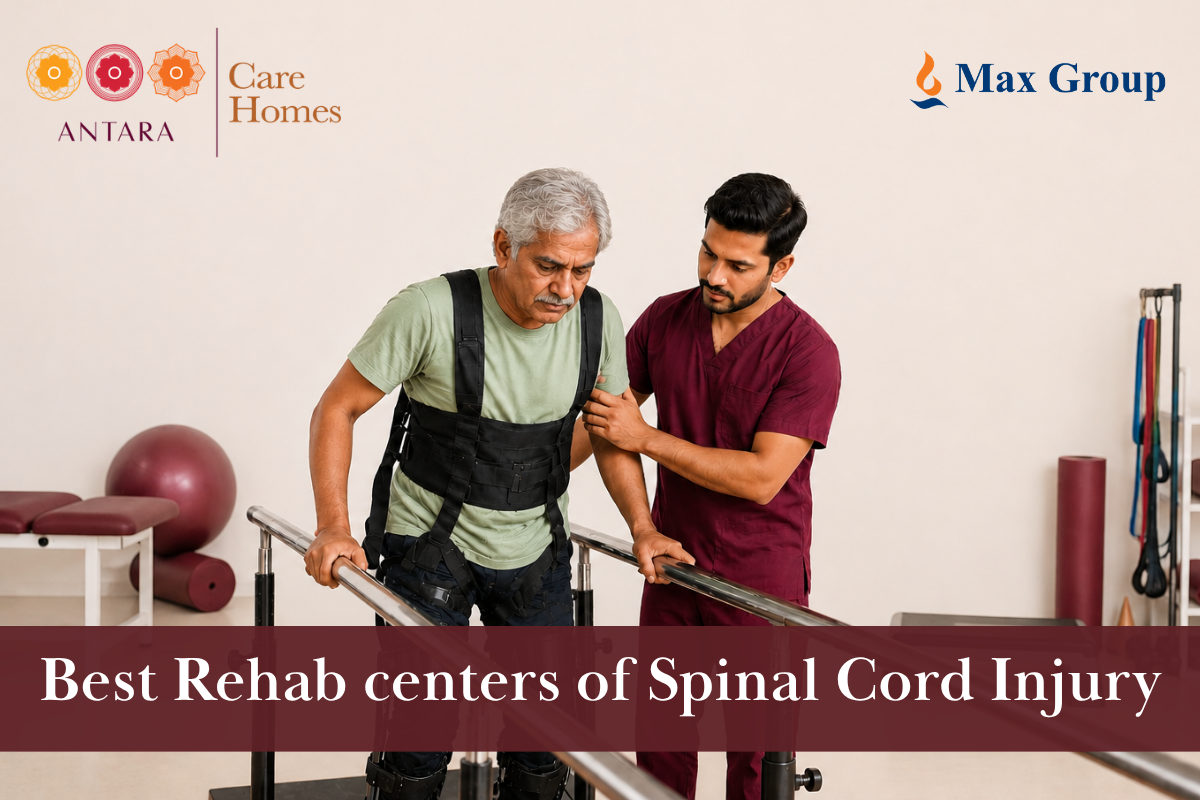
Almost everyone with a significant spinal cord injury needs structured rehabilitation, whether the injury was traumatic or not.
Traumatic injuries are the larger group in India. Road accidents account for most of them, followed by falls from height, which are common in construction work and among older adults, along with diving injuries, agricultural accidents and assaults.
Non traumatic injuries are often overlooked but equally disabling. Spinal tumours, tuberculosis of the spine, which remains common in India, transverse myelitis, spinal infections, severe disc disease and vascular events all damage the cord.
Rehabilitation is needed across the full range of severity:
There is a group that gets missed entirely: patients after spinal surgery who were never referred for rehabilitation at all. Post operative care in spinal injury is not simply rest and follow up. It means early, supervised mobilisation within the surgeon's precautions, breathing exercises to protect the lungs, daily movement of joints to prevent stiffness, and strict skin protection. Patients discharged with only a follow up appointment routinely develop pressure sores, contractures and chest infections that could have been prevented.
Rehabilitation should begin as soon as the person is medically stable, often within the first week, not months later when problems have already set in.
India has genuinely good options now, which was not true twenty years ago. Established institutions with strong spinal rehabilitation departments include the Indian Spinal Injuries Centre in New Delhi, AIIMS New Delhi, NIMHANS in Bengaluru, Christian Medical College Vellore and the Postgraduate Institute of Medical Education and Research in Chandigarh. Several dedicated private rehabilitation facilities now operate in most major cities as well.
Antara sits in this second category, offering residential neurological rehabilitation designed specifically for patients who need extended, supervised recovery rather than a short hospital stay.
What defines the approach there is coordination. The programme is led by a PM&R specialist, a doctor trained in physical medicine and rehabilitation, who sets the plan and directs physiotherapy, occupational therapy, speech therapy and nutrition therapy as a single coordinated effort rather than a series of separate appointments.
For spinal cord injury specifically, three things matter more than almost anything else, and all three are built into the model.
Round the clock nursing. Nursing staff and trained caregivers are available 24 hours a day, seven days a week. In spinal injury this is not a comfort feature. Turning schedules prevent pressure sores. Bladder and bowel programmes prevent infections and accidents. Skin checks catch problems while they are still reversible. Most of this work happens outside therapy hours.
Safety infrastructure. Grab bars run through bathrooms and corridors, anti skid flooring is used throughout, and emergency call buttons sit within reach. Patients learning transfers fall, and a single fall can set recovery back by months. Rehabilitation rooms include an in built oxygen pipeline, which matters particularly for cervical injuries where breathing capacity is reduced.
Same day medical response. An in house pharmacy means changes to spasticity medication, pain relief or antibiotics happen the same day rather than after someone drives out and back.
Antara also provides TPA coordination and end to end insurance support. Spinal injury admissions are long and expensive, and having someone handle claim paperwork removes a real burden from families already managing a crisis.
The honest advice is still to visit more than one place. A centre that suits a young man with a thoracic injury aiming to return to work may not suit an older patient with a cervical injury and other health conditions.
A structured neurological rehabilitation care plam for spinal injury covers considerably more than just physiotherapy.
Medical management by a physiatrist working with the treating surgeon, covering spasticity, neuropathic pain, blood pressure instability, and autonomic dysreflexia in injuries above the sixth thoracic level.
Physiotherapy builds strength in whatever is preserved, particularly shoulders, arms and trunk, since transfers and wheelchair propulsion depend on them. Sitting balance comes first, because everything else follows from it. Where any movement exists below the injury, it is trained repetitively. For incomplete injuries, gait training progresses from parallel bars to walkers and orthoses.
Occupational therapy handles the practical business of living: dressing, bathing, eating, writing and using a phone, often with adapted equipment. Transfer technique is taught precisely, because poor technique destroys shoulders over decades of use. Wheelchair skills training covers kerbs, ramps and uneven ground.
Bladder, bowel and skin programmes established properly during admission, because these determine long term health more than almost anything else. Urinary infections and pressure sores are the complications that most often send people back to hospital.
Respiratory care, including breathing exercises and chest physiotherapy, which is critical in cervical injuries.
Nutrition therapy, supporting tissue healing, maintaining protein intake, managing weight and supporting bowel regularity.
Psychological support, which is not optional. Grief, depression and anxiety after spinal cord injury are extremely common and frequently untreated.
Caregiver training and discharge planning, including home assessment, equipment recommendations, and teaching families safe transfers and skin checks. This is where a great deal of long term outcome is decided.
While selecting a neurological rehabilitation center look for things like and ask questions:
Visit in person before deciding. Watch a therapy session if you are allowed. Meet the therapist who will actually treat your family member rather than the person handling enquiries. Look at the bathrooms, since that is where independence is won or lost. Neuro rehabilitation like Antara care homes.
The best rehabilitation centre for spinal cord injury is not necessarily the one with the newest equipment in the brochure. It is the one with medical leadership, a full team, enough therapy hours to matter, nursing that holds everything together between sessions, and a plan that continues after the person goes home.
Start early, ask hard questions, and expect a long project rather than a short course of treatment. Recovery after spinal cord injury is measured in months and years, and what a person can do at the end of it is heavily influenced by the quality of the place where they began.
Best Stroke Rehabilitation Centre in Bangalore: Recovery, & ...
Best Stroke Rehabilitation Centre in Chennai: Recovery, & Co...

How to Safely Get Out of Bed After Open Heart Surgery
Best Physiotherapy Exercises for Shoulder Pain at Home
Best Physiotherapy at Home Services in Bangalore

Please fill in the form and submit the details to request an appointment.