
Loading...
Loading...
 BACK
BACK2026-08-26
Dr. Darshan NA
Introduction
There is a particular moment many families reach, usually in a hospital corridor, when the conversation stops being about cure and starts being about comfort. Someone mentions palliative care. Someone else says hospice. The two words get used as though they mean the same thing, and because one of them sounds like giving up, families often refuse both without ever finding out what was being offered.
They are not the same thing, and neither is about giving up. Understanding the difference between palliative care and hospice care helps families make a decision based on what a person actually needs rather than on what the words seem to imply.
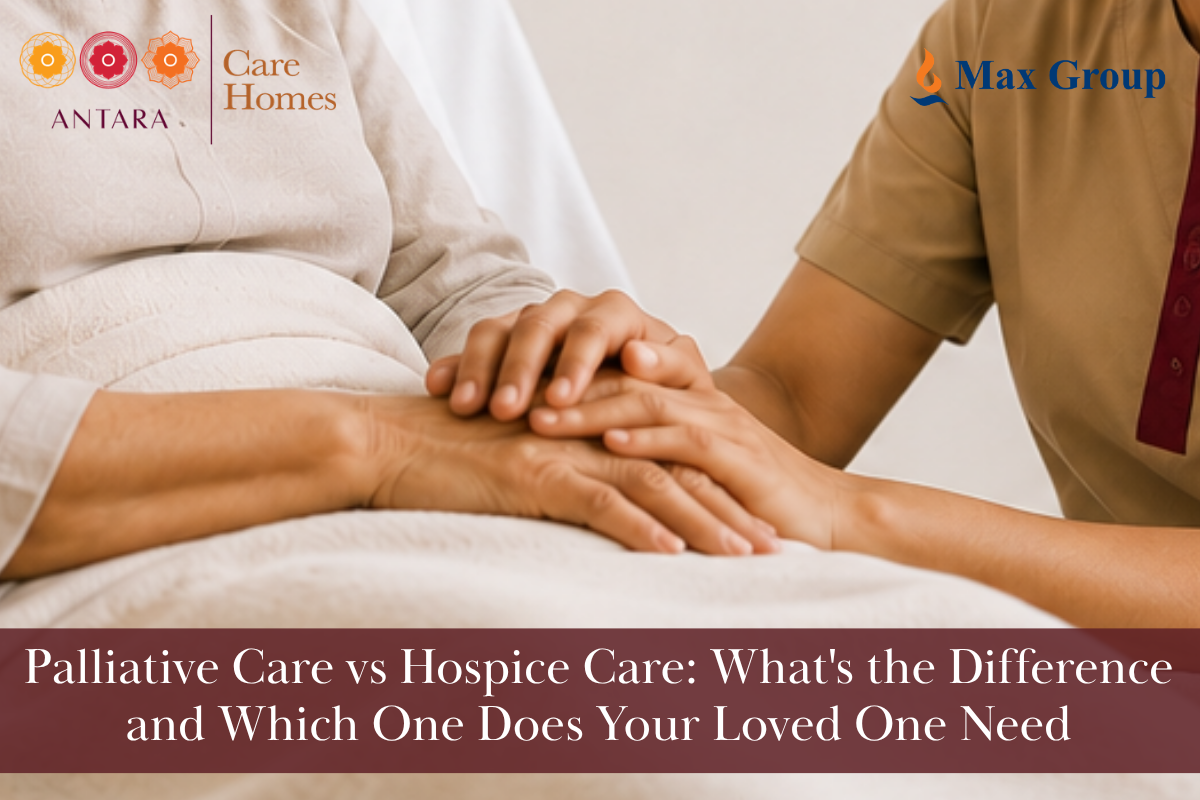
Palliative care is important as it is aimed at relieving symptoms and improving quality of life for someone living with a serious illness.
The most important thing to understand is that it runs alongside treatment, not instead of it. A person can be receiving chemotherapy, dialysis, heart failure management or physiotherapy and be under palliative care at the same time. Accepting it does not mean stopping anything.
It also has no fixed relationship to how long someone has left. Palliative care can begin on the day of diagnosis and continue for years. Some people receive it, improve, and stop needing it.
The work itself covers more ground than most families expect. Pain relief is the part everyone knows about, but the team also manages breathlessness, nausea, constipation, poor appetite, fatigue, anxiety and sleep problems. It usually includes emotional and psychological support for both the patient and the family, help thinking through difficult treatment decisions, coordination between the various specialists involved, and practical guidance for caregivers.
A typical team includes doctors, nurses, a counsellor or psychologist, a physiotherapist, a dietitian and often a social worker.
There is a point worth making plainly here, because it changes how families feel about the decision. Research in cancer patients has found that people who received palliative care alongside standard treatment reported better quality of life and mood than those receiving standard treatment alone. Good symptom control is not a consolation prize. It helps people tolerate treatment and live better while receiving it.
Hospice care is a form of care for people who are approaching the end of life, when treatment aimed at curing or controlling the illness is no longer working or is no longer wanted.
The goal shifts entirely to comfort, dignity and peace. Aggressive treatments, repeated hospital admissions and invasive investigations are set aside because they have stopped offering benefit and often cause distress. What remains is careful symptom control, gentle nursing, and support for the family.
Hospice care includes pain and symptom management, help with bathing, feeding and turning, emotional and spiritual support according to the family's beliefs, guidance for relatives on what to expect, and bereavement support afterwards.
It is delivered in different settings. In many parts of India it happens at home with a visiting team, which is what most families prefer. There are also dedicated hospice facilities, palliative care units within hospitals, and programmes run through care homes.
Hospice care in India is not organised the way it is in the United States, where eligibility is tied to a formal prognosis under Medicare rules. Here, provision is more varied. Kerala has an unusually well developed community palliative care network, and there are respected hospices and hospital based services in most major cities, but availability is uneven and many rural areas have very little. Cost and access differ considerably between states.
No, though this is easily the most common misunderstanding.
Palliative care for cancer patients is where the field began and where it is still most visible, which is why the association stuck. But it is appropriate for any serious illness that causes difficult symptoms.
That includes advanced heart failure, chronic obstructive pulmonary disease and other severe lung conditions, kidney failure, advanced liver disease, dementia, Parkinson's disease, motor neurone disease, multiple sclerosis, stroke with severe disability, and frailty in very old age.
The question is not what the diagnosis is. The question is whether the person has symptoms that are hard to control, or whether the illness is significantly affecting their quality of life. If the answer is yes, palliative care is relevant regardless of the label on the file.
No, and this misunderstanding causes real harm.
Families frequently delay hospice until the final week, sometimes the final days, because agreeing to it earlier feels like abandoning hope. By then, most of what hospice offers has been lost. Pain that could have been controlled for months went untreated. The family never received the guidance that would have made those months less frightening. Nobody had the conversations they later wished they had.
Hospice care is generally appropriate when someone is thought to be in the last months of life, not the last days, and people sometimes remain under hospice care longer than expected. A meaningful number improve for a period once their symptoms are properly controlled and they are no longer being put through exhausting treatments.
The practical difference comes down to three questions.
Is treatment for the illness still ongoing or still wanted? If yes, palliative care is the right fit, running alongside it. If curative treatment has stopped working, has been declined, or is causing more harm than benefit, hospice becomes appropriate.
What is the goal right now? If the aim is to live as well as possible while treatment continues, that is palliative care. If the aim has become comfort and dignity in whatever time remains, that is hospice.
What has the medical team said about prognosis? Palliative care fits at any stage, including years from the end. Hospice generally applies when life expectancy is thought to be within months.
Two things are worth adding. First, hospice care is a form of palliative care, not its opposite. It is what palliative care becomes at the end of life. Second, the move from one to the other is not a single dramatic decision. Many people begin with palliative care during treatment and transition into hospice gradually as the situation changes.
If you are unsure, ask the treating doctor directly for a palliative care referral. It commits you to nothing, and the assessment itself often clarifies the picture more than weeks of family debate.
Palliative care for elderly patients is underused in India, and the reasons are worth naming.
Older adults frequently live with several conditions at once rather than one clear diagnosis. Heart failure, diabetes, arthritis etc causes a great deal of suffering without any single illness that obviously triggers a referral.
There is a further issue specific to older patients. Repeated hospital admissions are exhausting and disorienting, and often achieve little. Comfort care for seniors and good home based symptom management frequently produce a better result than another admission, while allowing the person to remain somewhere familiar.
Families carry a heavy load in all of this. End of life care for elderly relatives at home in India usually falls on daughters and daughters in law, often without training, respite or support. A palliative care team helps with the practical side, teaches families how to manage symptoms safely, and gives them someone to call at two in the morning instead of ringing an ambulance out of fear.
If an elderly parent has advancing illness, ask about palliative care early. It is not a step towards the end. It is a way of making the time that remains more comfortable.
1. What is the difference between palliative care and hospice care?
Palliative care manages symptoms at any stage of serious illness, while hospice care focuses on comfort during end-of-life care.
2. When is palliative care needed?
Palliative care may help when a serious illness causes pain, symptoms or challenges affecting quality of life.
3. When is hospice care recommended?
Hospice care is generally considered when treatment is no longer focused on curing a life-limiting illness and comfort becomes the priority.
4. Is palliative care the same as end-of-life care?
No. Palliative care can begin earlier during an illness, while end-of-life care focuses specifically on comfort during the final stage of life.
5. How do I choose between palliative care and hospice care?
The choice depends on the illness, treatment goals and care needs. A doctor or palliative care team can help determine the right option.
Palliative care is about living as well as possible with a serious illness, at any stage, alongside whatever treatment is happening. Hospice care is what that becomes when the illness can no longer be controlled and comfort becomes the whole purpose.
Neither is surrender, and families who understand the difference tend to ask for help sooner. That extra time, with pain controlled and support in place, is almost always something people are glad to have had rather than something they regret.
If you are carrying this decision at the moment, ask the treating doctor for a referral and let a specialist assess the situation. You do not have to work it out alone.

Best Stroke Rehabilitation Centre in Bangalore: Recovery, & ...

Best Stroke Rehabilitation Centre in Chennai: Recovery, & Co...

How to Safely Get Out of Bed After Open Heart Surgery

Best Physiotherapy Exercises for Shoulder Pain at Home
Best Physiotherapy at Home Services in Bangalore

Please fill in the form and submit the details to request an appointment.