
Loading...
Loading...
 BACK
BACK2026-08-31
Introduction
The fever broke a week ago. The cough has almost gone. On paper, your father has recovered from the flu.
Except he has not really. He is still in bed most of the day. He needs a hand getting to the bathroom, which he never did before. He is not eating properly, he seems slower to answer, and he has not been out of the house since he fell ill.
This is one of the most common things families notice after an older adult has H1N1, and it is one of the least talked about. The infection ends. The weakness stays. Understanding why it happens, and knowing which parts of it will pass on their own and which need help, makes a considerable difference to how the next few months go.
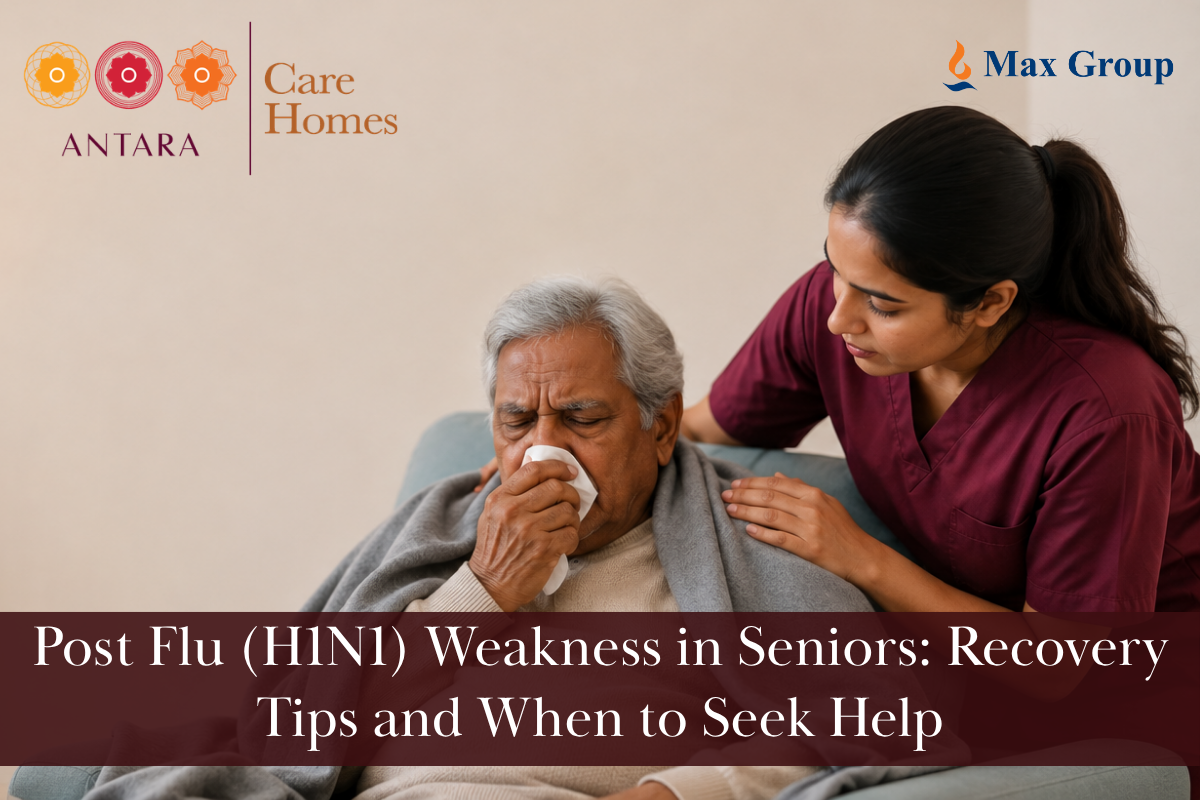
Several things happen at once, and they compound each other.
Muscle is lost far faster than most people realise. An older adult confined to bed can lose a meaningful amount of muscle strength within a week, because ageing muscle breaks down quickly and rebuilds slowly. A younger person loses some too, and regains it in days. A person of seventy five may take weeks or months to get back what a five day fever cost them.
The immune response itself is exhausting. Fighting an infection consumes enormous energy and produces inflammation throughout the body. That inflammation does not switch off the moment the virus clears, and the fatigue it causes lingers well past the point where someone technically counts as recovered.
Appetite disappears at exactly the wrong time. Most people eat very little while ill. The body needs more protein than usual to repair itself, and receives less. Older adults often have modest protein reserves to begin with, so the shortfall bites harder.
Dehydration is common and produces its own weakness, dizziness on standing, and confusion.
Existing conditions get knocked off balance. Blood sugar swings during illness in someone with diabetes. Breathing worsens in COPD or asthma. Heart conditions come under strain. Medication may have been missed during the worst days. Each of these leaves a person weaker afterwards.
Sleep is disrupted for a week or more, and poor sleep alone causes fatigue and slowed thinking.
Confidence takes a hit too, and this part is invisible on any test. Someone who felt unsteady while ill often becomes cautious about walking, stops moving, and grows weaker as a direct result of the caution.
Families usually describe some combination of the following.
Physical tiredness that does not lift with rest, so the person sleeps a great deal and still feels drained. Weakness in the legs specifically, which shows up as difficulty rising from a chair, climbing stairs or standing at the sink. Unsteadiness while walking, and sometimes a near fall. Breathlessness during activities that were easy a month earlier.
Appetite often stays poor for weeks, with noticeable weight loss. Some older adults become mildly dehydrated without anyone spotting it.
Then there is the mental side, which worries families most. Slowed thinking, difficulty concentrating, forgetfulness, and low mood or withdrawal are all common after a serious infection in older age. People stop wanting to go out, stop calling friends, and lose interest in things they enjoyed. This is not usually dementia setting in, though it frightens families into thinking so, and it generally improves as strength returns.
Persistent cough and disturbed sleep round out the picture, along with a general sense from the family that the person simply has not come back to themselves.
There is no single answer, but there are useful patterns.
For a healthy older adult who had a mild illness and stayed largely out of bed, most of the fatigue lifts within two to three weeks.
For someone who was in bed for several days, or who has diabetes, heart or lung disease, expect four to eight weeks before they feel close to normal. This is the most common situation.
For anyone hospitalised, particularly with pneumonia or oxygen support, recovery is measured in months rather than weeks. Three to six months is realistic, and some people do not return fully to their previous level without structured help.
Two things predict the timeline more than anything else. How long the person spent immobile, and how well they ate during and after the illness. Both are partly within a family's control, which is the encouraging part.
Recovery is also uneven. There are good days followed by flat days, and a person who overdoes it on a good day usually pays for it for the next two. That pattern is normal and does not mean something is wrong.
Most people recover with time, patience and decent food. A smaller group does not, and for them, waiting is the wrong strategy.
The concern is a downward spiral that is well recognised in geriatric medicine. Weakness leads to less movement. Less movement causes further muscle loss. That causes unsteadiness, which causes a fall or a fear of falling. Fear leads to even less movement. Within a couple of months, an independent person can become a dependent one, and the original infection is long gone.
Structured rehabilitation like antara care homes helps in recovery. As it provides daily vital monitoring, food as per the requirement and right portions of everything. It also provides physiotherapy if needed, rebuilds leg and trunk strength safely and works directly on balance, which is what prevents falls.
Starting early matters. Rebuilding strength that was lost three weeks ago is far easier than rebuilding strength lost six months ago.
Get them moving, gently and early. This is the single most useful thing you can do. Sitting out of bed for meals, standing up from a chair a few times a day, short walks inside the house that gradually get longer. Little and often beats one exhausting effort. If they are unsteady, walk beside them rather than persuading them to stay put.
Feed them properly. Protein is the priority, since it is what rebuilds muscle. Dal, eggs, milk, curd, paneer, chicken, fish and pulses all count. Small frequent meals work better than three large ones when appetite is poor. Keep fluids going steadily through water, buttermilk, coconut water and soups.
Encourage independence rather than doing everything. The instinct is to take over completely. Resist it. Every task a person does for themselves is exercise, and every task you take away speeds the decline. Help where it is genuinely needed and step back where it is not.
Make the house safer. Clear clutter and loose mats, improve lighting particularly on the route to the bathroom at night, add grab bars where you can, and make sure footwear has a proper grip. Falls during this period are common and set recovery back badly.
Restore normal rhythm. Regular sleep and waking times, daylight exposure, and getting out of nightclothes during the day all help more than they sound like they should.
Protect their mood. Encourage visitors and phone calls, and get them out of the house when they are able. Isolation slows recovery in older adults as surely as inactivity does.
Keep on top of the medical basics. Restart any medication that was paused, monitor blood sugar or blood pressure as usual, attend the follow up appointment, and discuss flu vaccination for the coming season.
Look after yourself as well. Caring for a recovering parent is tiring, and an exhausted family member is not much use to anyone. Ask for help before you need it.
Weakness after flu in an older adult is common, expected, and usually temporary. Most people are back to themselves within a month or two, given rest, decent food, and steady gentle activity.
What matters is knowing the difference between recovery that is slow and recovery that has stalled. If your parent is improving week by week, however gradually, that is normal. If they are not moving as they did before, have stopped walking independently, are still losing weight, or seem to be sliding backwards, do not wait it out. Ask for help, and ask about rehabilitation before the loss of strength becomes permanent.
Best Stroke Rehabilitation Centre in Bangalore: Recovery, & ...
Best Stroke Rehabilitation Centre in Chennai: Recovery, & Co...
How to Safely Get Out of Bed After Open Heart Surgery
Best Physiotherapy Exercises for Shoulder Pain at Home
Best Physiotherapy at Home Services in Bangalore

Please fill in the form and submit the details to request an appointment.