
Loading...
Loading...
 BACK
BACK2026-07-18
Key Takeaway
Robotic gait rehabilitation is a game-changer for people recovering from serious brain or spinal injuries. By using high-tech wearable robots called exoskeletons, patients can practice walking with perfect form and more repetitions than ever before. This doesn't just help the legs; it actually helps the brain "relearn" how to move through a process called neuroplasticity. When combined with traditional therapy and expert doctors, like those at Antara Care Homes, Bangalore provide a faster, safer, and more motivating path to recovery.
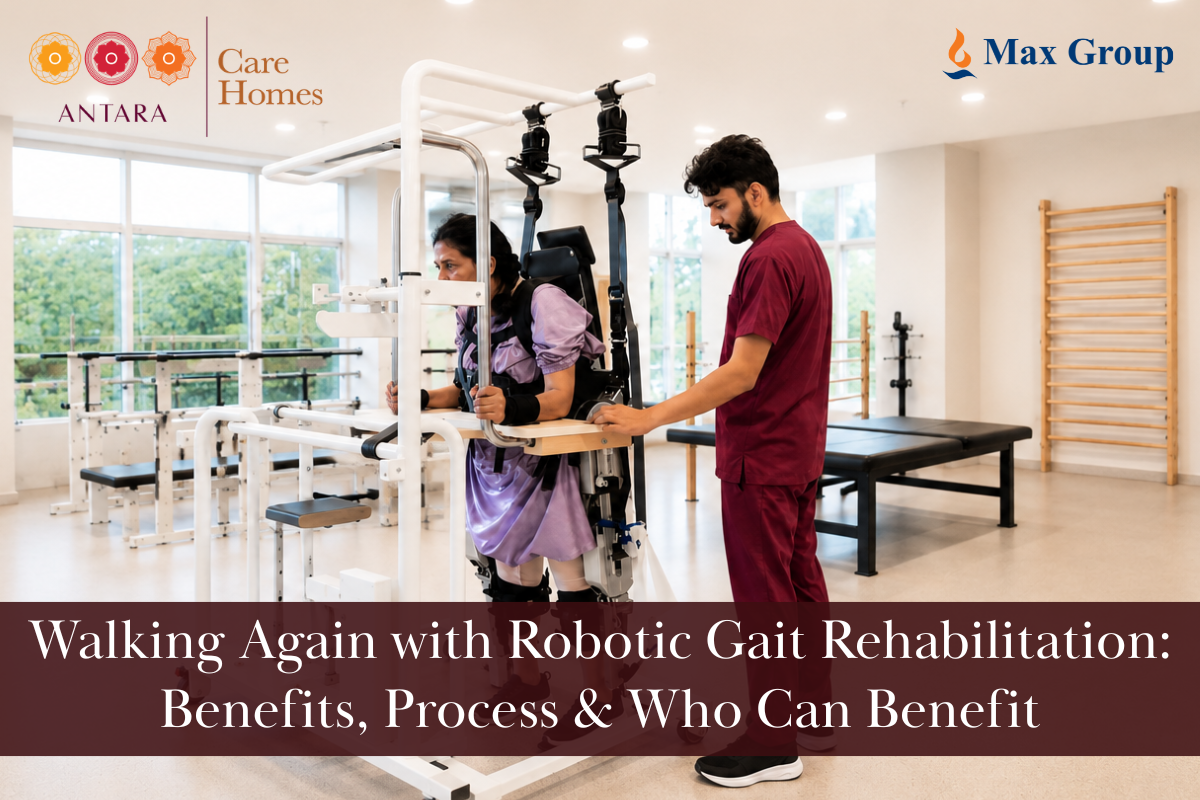
So, what exactly is a robotic exoskeleton? Think of it like a wearable robot or an suit designed specifically for the legs. It is a motorized frame that a person wears over their body. It has sensors, motors, and smart software that help move the person's legs in a way that mimics a natural walking pattern.
When someone has a brain injury, the connection between their brain and their legs gets fuzzy or broken. The exoskeleton helps bridge that gap. It supports the person's weight and guides their legs through the motions of walking perfectly.
Robotic rehabilitation isn't just for one type of injury; it helps a lot of people who are going through Neuro Rehabilitation. The most common group of people who benefit are those undergoing Stroke Rehabilitation. Since a stroke often leaves one side of the body weak or paralyzed, the robot can provide the extra strength and stability needed to keep moving.
Other people who use these robots include those with:
- Spinal cord injuries (where the signal from the brain is interrupted).
- Multiple Sclerosis (MS).
- Parkinson’s disease.
- Traumatic Brain Injuries (TBI).
Why are these robots so much better than just trying to walk on your own or with a walker? There are a few big reasons:
1. Neuroplasticity (Brain Power): Our brains are amazing! They can actually rewire themselves. This is called neuroplasticity. By walking in a robot with perfect form thousands of times, the brain starts to create new pathways to control those movements. The robot helps the brain "relearn" walking by doing it correctly over and over.
2. Consistency and Repetition: In traditional therapy, a therapist might help you move your legs, but humans get tired. A robot never gets tired! It can help a patient take hundreds of steps in one session, all with the exact same perfect posture. More steps usually mean a faster recovery.
3. Safety and Confidence: The exoskeleton holds the patient up securely. This means there's almost zero risk of falling, which gives the patient a lot of confidence. When you aren't afraid of falling, you can focus all your energy on your movement instead of your fear.
4. Real-Time Feedback: It helps in tracking exactly how much work the patient is doing versus how much the robot is helping. This helps doctors see exactly how much progress is being made every single day.
5. Better Overall Health: Being able to stand up and look someone in the eye instead of sitting in a wheelchair all day is a huge boost for mental health. Plus, standing up helps with digestion, bone density, and blood circulation, which are all important for someone recovering from an injury.
Even though robots are awesome, they aren't replacing human therapists. Instead, the best results come from combining Robotic Rehabilitation with conventional (traditional) therapy. Think of it like learning a sport: the robot is like a high-tech training machine that perfects your form, but the therapist is the coach who knows your personal struggles, understands your pain, and cheers you on.
Conventional therapy focuses on things like balance, core strength, and doing everyday tasks like getting dressed. When you mix that with the high intensity walking practice from a robot, you get a "supercharged" recovery plan.
If you are looking for where this amazing technology is actually being used, Antara Care Homes, Bangalore is a great example of how it's done right. They don't just have the machines; they have a whole system to make sure patients get better in a comfortable environment.
One of the best things they use is the advanced robotic exoskeleton. This is one of the most advanced robotic exoskeletons used in rehabilitation. It's designed specifically to help people with walking disabilities go through intensive gait training. It's adjustable, comfortable, and provides really precise movements that help the brain and muscles work together like a team.
At Antara, the whole process is PMR-led. PMR stands for Physical Medicine and Rehabilitation. This means a specialized doctor oversees the entire journey. They lead a multidisciplinary team that includes physical therapists, nurses, and even nutritionists to make sure every part of the patient's health is looked after.
Everything at Antara is about personalized rehabilitation plans. They know that every person's injury is different. Some might need more help on their left side, while others might need help with endurance. The team creates a roadmap specifically for that person.
In the end, Neurological Rehabilitation is all about hope, patience, and a lot of hard work. Technology like Robotic Gait Rehabilitation and the advanced robotic exoskeleton is making that work a little easier and much more effective. It's incredible to see how robots and humans can work together to help someone regain their independence.
For anyone recovering from a stroke or a brain injury, the journey is long, but with the right team like the multidisciplinary experts at Antara and the right technology, the dream of walking again is becoming a reality for more people every day. We are living in the future, and it's a future where more people can stand tall and move forward!
Best Stroke Rehabilitation Centre in Bangalore: Recovery, & ...
Best Stroke Rehabilitation Centre in Chennai: Recovery, & Co...

How to Safely Get Out of Bed After Open Heart Surgery

Best Physiotherapy Exercises for Shoulder Pain at Home

Best Physiotherapy at Home Services in Bangalore

Please fill in the form and submit the details to request an appointment.