
Loading...
Loading...
 BACK
BACK2026-07-07
Key Takeaways: The first 90 days after a stroke are the period where the brain is most responsive to rehabilitation. Starting neurological rehabilitation early, within days of the stroke, significantly improves long-term outcomes. Recovery is not linear, it varies by person, by stroke severity, and by the consistency of post-stroke care. The therapies & stroke rehabilitation that work is specific and structured. Waiting until the patient "feels ready" is one of the most common and costly mistakes families make. Every week in this window matters.
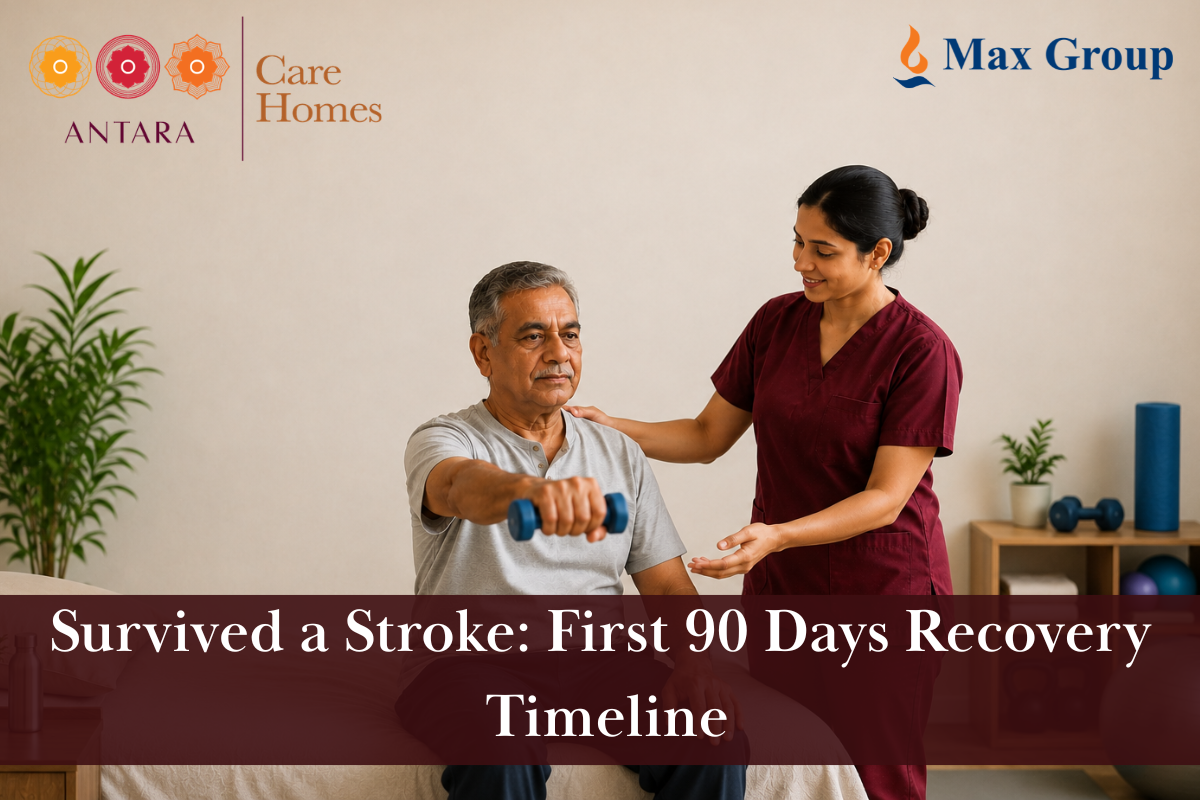
Surviving a stroke treatment or surgery is the first milestone. Getting your life back is the work that begins right after.
Most families leave the hospital with a discharge summary, a list of medications, and very little understanding of what the next three months are supposed to look like. That gap in information is a real problem, because the first 90 days after a stroke are not just important. They are the window in which the brain is most capable of rewiring itself, and what happens, or does not happen, in this period shapes the long-term recovery in ways that are very difficult to reverse later.
This is a timeline families can actually use.
When a stroke occurs, brain cells in the affected area die due to lack of oxygen. But the brain does not simply accept this damage and move on. Within hours, it begins trying to adapt, recruiting healthy neighbouring regions to take on the functions of the damaged ones.
What most people do not know is that this adaptability has a peak period. In the first few weeks and months after a stroke, the brain is in a heightened state of plasticity. It forms new connections more readily; it responds to training more quickly, and the potential for meaningful functional recovery is at its highest point. This is not a metaphor. It is neuroscience.
Week 1 to 2: The immediate priority is medical stabilization, preventing a second stroke, managing swelling, and beginning the earliest stages of mobilization. Even simple activities like sitting upright, assisted standing, and early physiotherapy assessments matter here.
Week 3 to 4: If the patient is medically stable, more structured stroke physiotherapy begins. Patients work on regaining basic movement, balance, and in many cases, speech.
Month 2: Therapy intensifies. The patient is working on real-world tasks, getting dressed, moving around independently, managing basic communication.
Month 3: The final stretch of the critical window. Gains made consistently through this month tend to consolidate. Patients who have had structured, consistent neurological rehabilitation through this period are significantly better positioned for long-term function than those who had inconsistent or delayed care.
After the 90-day window closes, recovery does not stop. But the pace of neuroplastic change slows considerably, which is why what happens in this period cannot be made up for later with the same efficiency.
Stroke rehabilitation facility only works if the right therapies are in place. Each one targets a different aspect of what the stroke affected.
Stroke physiotherapy is the core of motor recovery. It targets walking, balance, coordination, and strength, using repetitive, structured movement to rebuild the neural pathways controlling physical function.
Occupational therapy focuses on daily living, eating, bathing, dressing, and writing. These tasks have high neurological value because they combine motor, cognitive, and sensory demands simultaneously.
Speech and language therapy addresses communication and swallowing difficulties, both of which are common after stroke and carry serious risks if not treated promptly.
Cognitive rehabilitation targets the mental deficits many stroke survivors experience but rarely talk about poor concentration, memory gaps, difficulty planning or making decisions.
Psychological support addresses the depression and anxiety that affect a large proportion of stroke survivors and directly impact how well they engage with every other therapy.
The science here is consistent across decades of clinical research. Patients who begin structured post-stroke care early, within the first few days of a stable medical state, recover more function, recover faster, and retain more of it long term.
The reason comes back to neuroplasticity. The brain's rewiring capacity is at its peak in the weeks right after the stroke. Every day of delayed rehabilitation is a day that window narrows without being used.
For families managing stroke recovery at home, this is the hardest part. It is easy to prioritize rest when the patient is exhausted and fragile. But rest and rehabilitation are not opposites.
Access to early neuro care in Bangalore and neurological care in Bangalore has improved significantly through specialized post-stroke rehabilitation centres that offer intensive, multidisciplinary programs starting from the sub-acute phase. Families should not wait for the patient to "feel ready." They should start as soon as the medical team clears it.
The first 90 days after a stroke are a window of biological opportunity that does not come around again in the same form. The brain is most willing to rewire itself during this period, and the right neurological rehabilitation gives it the direction to do that in a way that leads to real, lasting recovery.
The families that navigate this well are the ones who understand that recovery is not passive. It requires consistent therapy, the right clinical team, a structured daily routine, and enough emotional support to keep the patient engaged even when progress feels slow.
Stroke rehabilitation works. But it works best when it starts early.
1. When should stroke rehabilitation begin?
Ideally within 24 to 48 hours of a stroke, once the patient is medically stable. The earlier structured post-stroke care begins, the better the outcome. Waiting weeks to start is one of the most avoidable mistakes in stroke recovery.
2. How much recovery is possible in the first 90 days?
It varies by stroke severity and the consistency of rehabilitation. Many patients regain significant function in this window. Some regain full independence. The 90-day period is where the most rapid and significant gains typically happen.
3. Can stroke recovery continue after 90 days?
Yes. Neuroplasticity continues beyond the critical window, just at a slower rate. Ongoing stroke physiotherapy and neurological rehabilitation can produce continued gains for months and even years after the stroke.
4. What is the biggest risk during home-based stroke recovery?
Inconsistent therapy and unguided compensatory habits.
5. What does neurological care in Bangalore include for stroke patients?
Neurological care in Bangalore through specialized rehabilitation centres typically covers physiotherapy, occupational therapy, speech therapy, cognitive rehabilitation.
Best Stroke Rehabilitation Centre in Bangalore: Recovery, & ...
Best Stroke Rehabilitation Centre in Chennai: Recovery, & Co...

How to Safely Get Out of Bed After Open Heart Surgery

Best Physiotherapy Exercises for Shoulder Pain at Home
Best Physiotherapy at Home Services in Bangalore

Please fill in the form and submit the details to request an appointment.