
Loading...
Loading...
 BACK
BACK2026-07-23
Summary
A slipped disc can make even simple daily activities uncomfortable, affecting your ability to sit, walk, bend, or sleep without pain. While medical treatment and physiotherapy play a vital role in recovery, your everyday habits have an equally important impact on how well and quickly you heal. Knowing what to do and what to avoid can help reduce strain on your spine, relieve symptoms, and prevent further injury. In this guide, we'll cover the essential do's and don'ts after a slipped disc to support a safe and effective recovery.
Picture two vertebrae stacked on top of each other. Between each vertebra is a disc with a soft inner core and a durable outer layer. A slipped disc happens when that soft inner material pushes through a weak spot in the outer layer. Sometimes it presses on a nerve nearby. That's when the pain shows up.
It doesn't always stay in one place either. Sometimes it's just the back. Sometimes it runs down a leg. Sometimes an arm, if it's higher up in the spine. It depends on where the disc is and which nerve gets caught in the middle.
This is one of the most common reasons people end up needing real, structured care for their back. And what someone does after diagnosis, day to day, matters more than most people expect.
Physiotherapy sessions help. Obviously. But they're only an hour or two a week.
What happens the rest of the time? That's where recovery actually gets decided.
How you sit at your desk. How you sleep. Whether you pick things up the right way or just grab and go without thinking. All of it adds up. Some habits help the disc settle. Others keep reigniting the same irritation, over and over, without anyone realizing why progress has stalled.
A lot of people slow down their own slipped disc recovery without meaning to. One bad lift. Too many hours slouched at a laptop.
Knowing what actually helps, and what actually doesn't, is sometimes just as important as the physiotherapy itself.
Keep moving, gently. Bed rest feels like the safe choice. It isn't, not past the first couple of days. Staying in bed too long slows things down. Short walks, a few times a day, help more than people think.
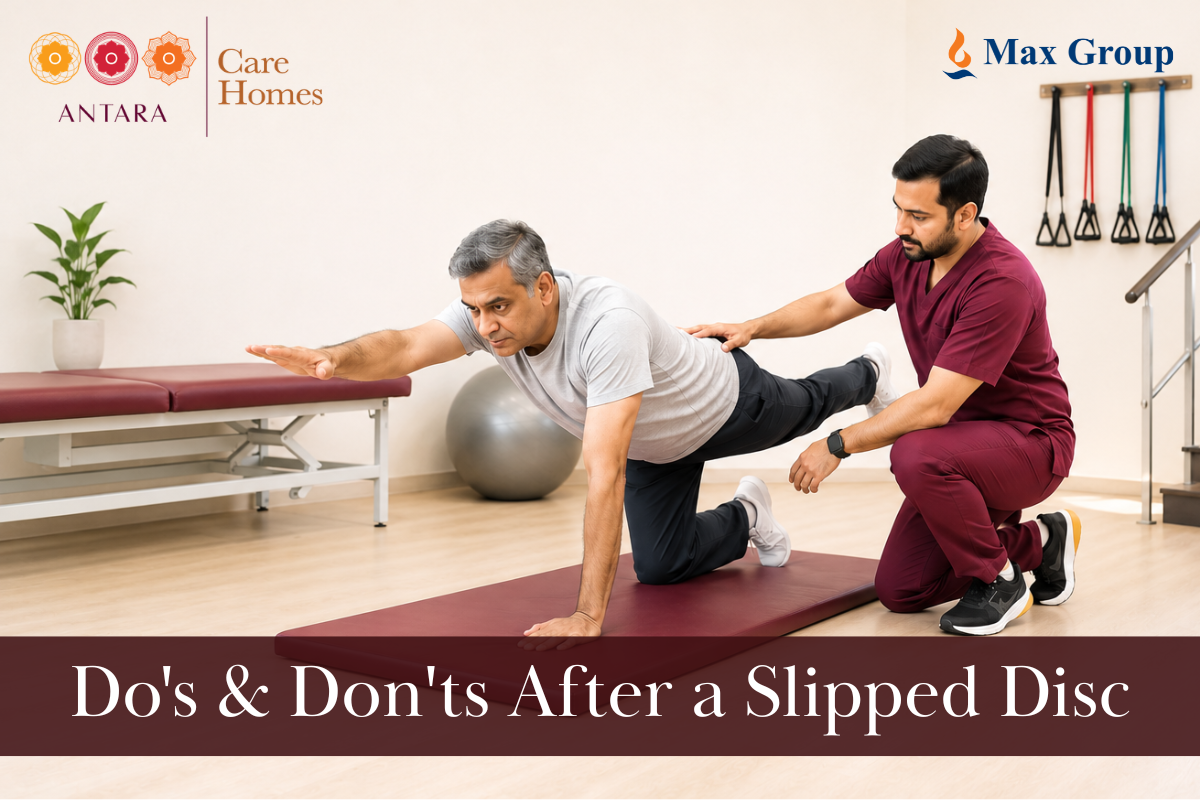
Stick with your prescribed slipped disc exercises. Even the boring ones. Especially the boring ones. Core stabilization work is quiet and unglamorous, but it's doing more for your spine than almost anything else in the program.
Watch your posture. Sitting, standing, doesn't matter. Use lumbar support if you're at a desk all day. Slouching adds pressure exactly where you don't want it.
Sleep smart. Side sleeper? Pillow between the knees. Back sleeper? Pillow under the knees. Small adjustment, real difference.
Use heat or cold when your physio tells you to. Cold early on, for inflammation. Heat later, for the muscle tightness that builds up around a healing spine.
Speak up if something changes. New symptoms. Worsening symptoms. Numbness. Weakness. Anything with your bladder or bowels. Don't wait it out. Call your team.
Don't stay in bed. Past a few days, it works against you. Muscles weaken. Recovery after slipped disc slows down, not speeds up.
Don't lift heavy with a rounded back. If you have to lift something, bend the knees, keep it close, don't twist while you're doing it.
Don't push through pain that's getting worse. There's a difference between mild discomfort during recovery and pain that's spreading or intensifying. The second one is your body telling you to stop.
Don't rush back into the gym. Running, jumping, heavy lifting, all of it too soon is one of the most common reasons people end up back at square one.
Don't sit for hours without breaking it up. Get up every 30 to 45 minutes. Even just to stand for a minute.
Don't stop physiotherapy for slipped disc just because the pain eased off. Feeling better isn't the same as being fixed. The muscles still need the work. Stopping early is how people end up back here again in six months.
Some things are just too risky right now. Heavy lifting, especially with a rounded back. Deep bending, like touching your toes. Twisting under load, think golf swings or shoveling snow. High-impact sports, running on pavement, anything with contact or jumping. Long drives without breaks, because sitting plus vibration is a bad combination for a healing disc.
None of these are off-limits forever. Just for now. Your rehab team will tell you when it's safe to bring them back, gradually.
This is the part daily habits alone can't fix.
A physiotherapist who actually know spines builds a plan around where you are right now. Pain control first. Then stabilization. Then flexibility work. Then function, getting back to real movement, real life. The plan shifts as you heal, not on a fixed schedule but based on how your body is actually responding.
The general slipped disc recovery timeline looks something like this. First two weeks: pain management, gentle movement, nothing intense. Weeks three through six: real core work begins, guided and supervised. By two or three months, most people are moving into functional strength training, getting back toward normal life. Full recovery, real strength, real confidence, that can take three to six months depending on how bad it was to start with.
PM&R rehabilitation brings something extra to this. It's physician-led medical management and physiotherapy under one roof, one plan, one team talking to each other. It's important that you take post operative rehabilitation for faster & comfortable recovery experience. Antara Care homes offers post sliiped disc surgery rehabilitation in Delhi NCR, Chennai & Bangalore. If you or any of your loved is recovery after slipped disc, you can consider rehabilitation for a complete & painless recovery.
Recovering from a slipped disc isn't only about what happens in a physiotherapy room. It's about the hundred small decisions made every day in between. Stay active. Watch your posture. Stick with the exercises even when they feel pointless.
1. How long does slipped disc recovery typically take?
Most people notice real improvement within six to twelve weeks. Full recovery, strength and confidence included, often takes three to six months.
2. Can I exercise with a slipped disc?
Yes, gentle and guided exercise is not just okay, it's encouraged. Skip the heavy or high-impact stuff until you're cleared.
3. Is bed rest good for a slipped disc?
Only briefly. A day or two if the pain is bad. Beyond that, it works against you.
4. What sleeping position is best?
Side sleepers, pillow between the knees. Back sleepers, pillow under the knees. Either helps take pressure off the spine.
5. Can a slipped disc heal without surgery?
Most of the time, yes. Physiotherapy and structured exercise resolve the majority of cases without surgery ever entering the conversation.
6. When can I go back to work?
Depends on the job. Desk work, often within a few weeks with some adjustments. Physical labor, could be a few months.
7. Is walking safe?
Very much so. It's one of the better things you can do early in recovery.
8. What symptoms should I never ignore?
Numbness. Progressive weakness. Any change in bladder or bowel control. These need medical attention right away, not a wait-and-see approach.
9. Can this come back after I've recovered?
It can, especially if core strengthening stops early or old habits creep back in. Staying consistent long-term cuts that risk down significantly.
10. What's the difference between physiotherapy and PM&R rehabilitation?
Physiotherapy is the physical side, exercises and hands-on treatment. PM&R adds a physician into the mix, managing pain treatment and rehab progress together as one coordinated plan.

How to Choose the Right Palliative Care in Chennai: A Comple...

Post Flu (H1N1) Weakness in Seniors: Recovery Tips and When ...

Swine Flu (H1N1): Symptoms, Causes, Prevention at Home

8 Benefits of Home Nursing services for Seniors

Who Is Most at Risk of a Mini Stroke? Risk Factors, Preventi...

Please fill in the form and submit the details to request an appointment.