
Loading...
Loading...
 BACK
BACK2026-08-30
Dr. Divya Mathew
Introduction
Every year, usually as the monsoon settles in or the winter turns, hospitals across India see a rise in swine flu cases and the newspapers pick it up again. Families get worried, someone in the house starts coughing, and nobody is quite sure whether this is an ordinary seasonal fever or something that needs a doctor.
That uncertainty is the real problem. Swine flu (H1N1) is a manageable illness for most healthy adults, and a genuinely serious one for a small group of people, particularly older adults and those with existing health conditions. Knowing which situation you are in, and acting quickly when it is the second one, is what matters most.
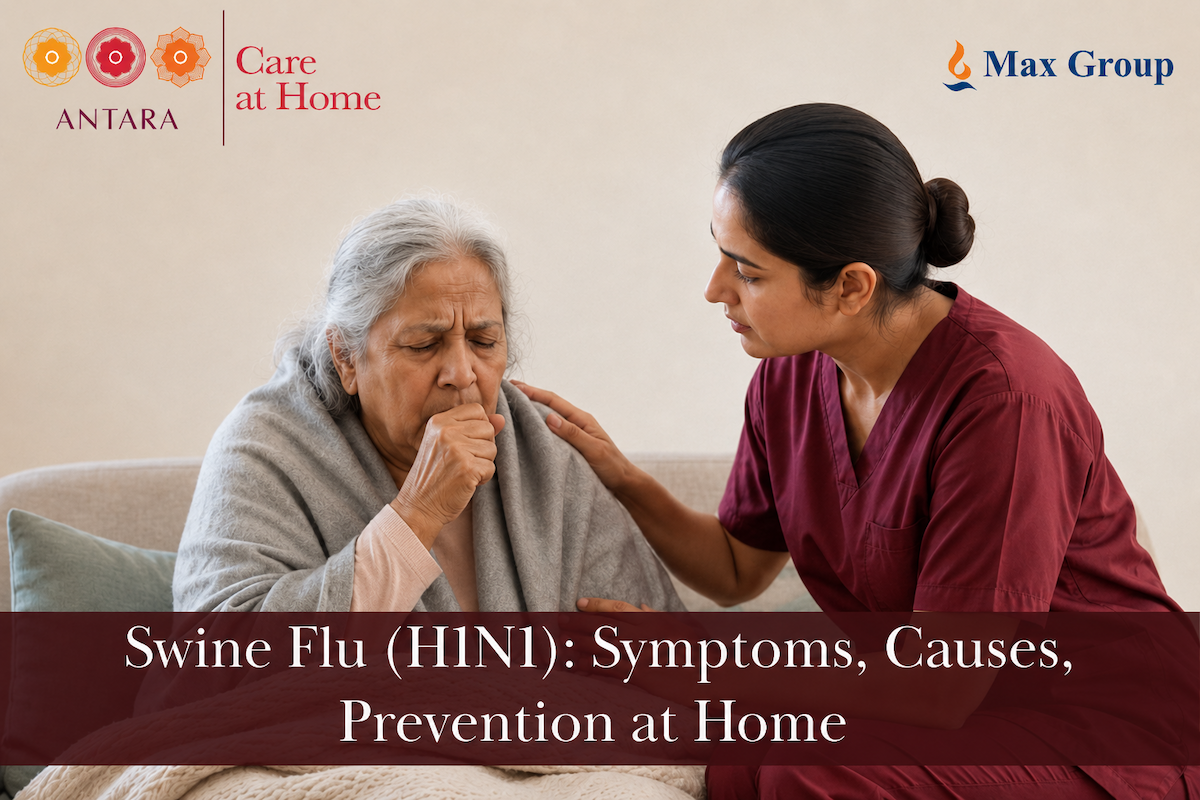
Swine flu is an infection caused by the H1N1 influenza virus. The name is a leftover from 2009, when the strain first emerged and was traced back to a virus circulating in pigs. It caused a global pandemic that year.
H1N1 causes and transmission work like any other influenza. When an infected person coughs, sneezes or talks, they release droplets carrying the virus. Anyone nearby can breathe them in.
In India, cases tend to cluster in two periods each year: during and just after the monsoon, and again through the colder winter months.
For most people, H1N1 symptoms feel like a heavier than usual bout of seasonal flu, and they arrive suddenly rather than building over several days.
The usual picture includes a fever that comes on quickly, often with chills, along with a dry persistent cough, a sore throat, and body aches that settle into the back, legs and shoulders. Most people also describe a heavy fatigue that keeps them in bed rather than pushing through the day, plus headache, a blocked or running nose and a loss of appetite.
Some people, more often children, also get nausea, vomiting or loose motions, which is not typical of the common cold and can cause confusion about what is going on.
The distinction worth holding on to is that a cold builds gradually and lets you carry on with your day. Influenza tends to arrive within hours and stops you. Most otherwise healthy adults recover in about five to seven days, though the cough and tiredness can linger for a fortnight or more.
The following signs mean seeing a doctor promptly rather than waiting it out. In an adult, watch for difficulty breathing or breathlessness at rest, pain or pressure in the chest, lips or fingertips turning bluish, confusion or unusual drowsiness, dizziness on standing, an inability to keep fluids down, and a fever that persists beyond four or five days or returns after seeming to settle.
Any pattern where someone improves and then deteriorates again deserves attention, because it can signal a secondary chest infection developing on top of the flu.
In children, the warning signs are fast or labored breathing, poor feeding, unusual sleepiness or irritability, far fewer wet nappies than normal, and a fever with a rash.
If you have diabetes, asthma, heart disease, kidney disease, cancer, are pregnant, or take medication that suppresses immunity, contact a doctor when symptoms begin rather than waiting for them to worsen. The same applies to anyone over 65.
Swine flu in senior citizens behaves differently from swine flu in a healthy thirty year old, and this catches families out repeatedly.
The first difference is that the classic symptoms may be muted or absent. An older adult with influenza may run only a mild fever, or none at all. What appears instead is often confusion, unusual drowsiness, a loss of appetite, weakness, a fall, or simply not seeming themselves. Families interpret this as ageing or tiredness and lose several days before anyone thinks of infection.
The second difference is that complications develop faster. H1N1 in elderly patients carries a considerably higher risk of pneumonia, which is the most common serious complication of influenza. Existing conditions also de-stabilize: blood sugar swings in diabetes, breathing worsens in COPD and asthma, and the strain of illness can precipitate heart problems. Dehydration sets in more quickly, particularly when appetite drops and someone is not drinking enough.
For older adults living alone, the risk multiplies, because nobody is watching for the deterioration.
The practical advice for families is straightforward. If an elderly relative develops any flu like illness, or simply becomes confused, unusually sleepy or unsteady during flu season, ring a doctor early rather than watching for another day.
Swine flu treatment falls into two parts: supportive care at home, which is what most people need, and antiviral medication, which is prescribed for those at higher risk.
At home, the priorities are rest, fluids and fever control. Rest properly rather than working from bed. Keep fluids going steadily through water, coconut water, soups, dal water, buttermilk or oral rehydration solution, since fever and sweating drain the body faster than people expect. Paracetamol is the usual choice for fever and aches, taken at the dose your doctor advises. Eat lightly if appetite is poor, focusing on soft, easily digested food.
Antiviral medicines such as oseltamivir are prescription drugs. They shorten the illness and reduce complications, but only when started early, generally within 48 hours of symptoms beginning. Doctors typically prescribe them for older adults, pregnant women, young children, and anyone with chronic illness or weakened immunity. They are not routinely needed by healthy adults with mild symptoms.
Two things to avoid. Do not take antibiotics for flu. It is a viral infection and antibiotics do nothing against it, though a doctor may add them later if a bacterial chest infection develops on top. And do not self medicate with leftover antiviral tablets from a previous illness or from a relative, since incorrect use drives resistance and may delay proper assessment.
Testing is not necessary for everyone. Doctors usually reserve confirmatory testing for hospitalised patients or high risk cases and treat others on clinical judgement.
Good home care protects the rest of the household. H1N1 prevention at home comes down to a handful of practical measures.
Keep the unwell person in a separate room where possible, with a window open for ventilation. Fresh air moving through a room reduces viral load considerably.
Both the patient and the person caring for them should wear a mask during contact. Give the patient their own towel, bedding, glass, plate and spoon, and wash these separately in hot water.
Wash hands with soap for twenty seconds after any contact with the patient or their belongings, and before eating or touching your face. Keep sanitiser near the sickroom door.
Wipe down frequently touched surfaces daily, including door handles, light switches, taps, phones and remotes. Dispose of used tissues immediately into a closed bin.
Assign one caregiver rather than rotating the whole family through the room, and choose someone who is not elderly, pregnant, or managing a chronic condition. Keep other vulnerable members of the household away entirely.
Watch for warning signs at least twice a day, particularly breathing rate, alertness and fluid intake, and know in advance which hospital you would go to if things worsened at night.
Keep the patient home from work or school until at least 24 hours after the fever has settled without medication.
For swine flu prevention generally, the same habits work year round: regular handwashing, covering coughs with the elbow rather than the hand, avoiding crowded indoor spaces during outbreak periods, and annual vaccination for those advised to take it.
For most people, swine flu is an unpleasant week that resolves on its own with rest and fluids. The reason it deserves attention is not what it does to healthy adults but what it can do to older parents and grandparents, where it often arrives quietly, without much fever, and turns serious faster than anyone expects.
The two things that make the biggest difference are early medical contact for anyone in a high risk group, and sensible isolation at home so one case does not become five.
If someone elderly in your family is unwell during flu season and simply does not seem right, treat that as reason enough to call a doctor.
Best Stroke Rehabilitation Centre in Bangalore: Recovery, & ...

Best Stroke Rehabilitation Centre in Chennai: Recovery, & Co...

How to Safely Get Out of Bed After Open Heart Surgery

Best Physiotherapy Exercises for Shoulder Pain at Home
Best Physiotherapy at Home Services in Bangalore

Please fill in the form and submit the details to request an appointment.