Loading...
Loading...
 BACK
BACK2026-09-10
Dr. Darshan NA
Summary
Neuro therapy after stroke helps the brain relearn what a stroke disrupted. Movement, speech, memory, all of it can improve with the right, structured therapy. Neurological rehabilitation isn't optional support. It's the actual mechanism behind meaningful stroke recovery treatment, especially in the crucial early months.
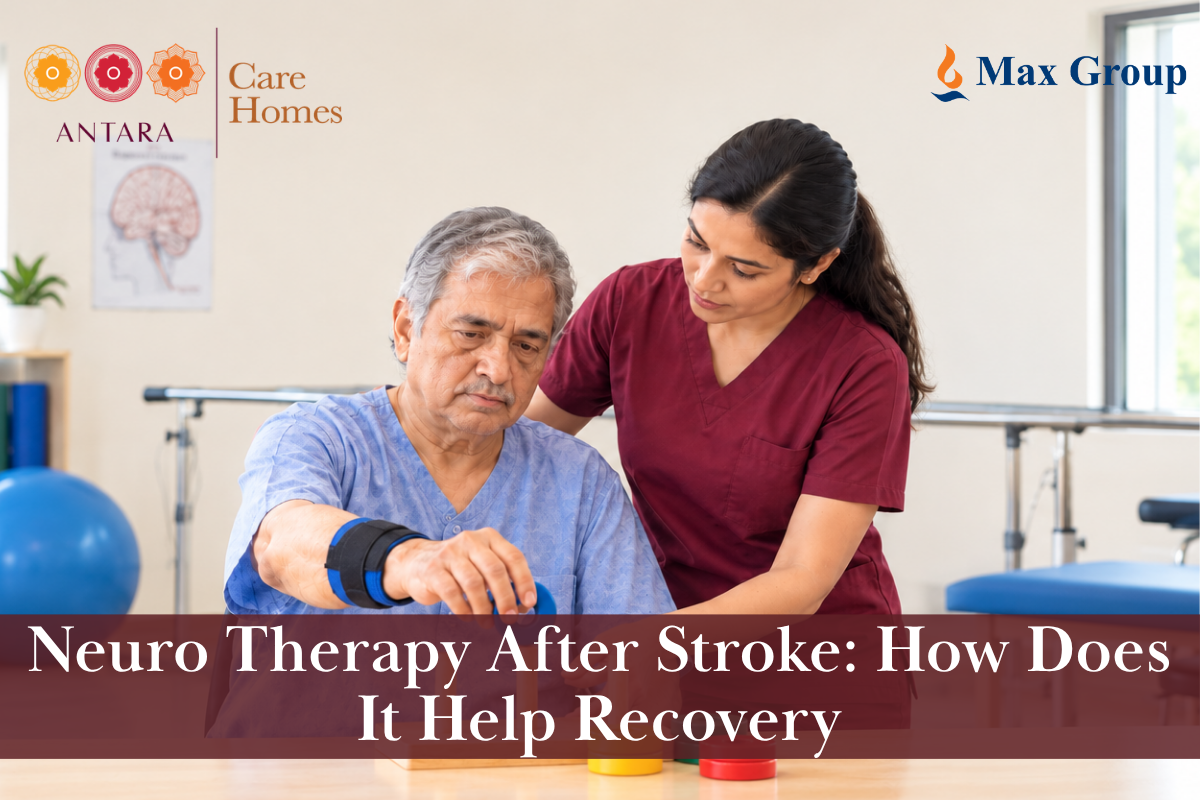
Neuro therapy after stroke is structured treatment aimed at helping the brain rebuild what was lost.
A stroke disrupts signals between the brain and the body. Movement weakens. Speech might falter. Memory or attention can slip too. Neurological therapy targets these specific deficits directly. Not through generic exercise, but through repeated, purposeful tasks that push the brain to rewire itself.
This process relies on neuroplasticity, the brain's ability to form new connections around damaged areas. It doesn't happen automatically. It responds to consistent, targeted input, which is exactly what a proper neuro rehabilitation centre provides. Recovery isn't guaranteed to be complete. But real improvement is possible for most patients with the right approach.
Recovery after stroke depends on more than one therapist working alone. It needs a coordinated team.
Each expert plays a distinct role. But real progress happens when they communicate constantly, adjusting the plan together as the patient actually responds, not working in separate silos.
Neuro rehabilitation after stroke usually combines several therapies, each targeting a different part of recovery.
Good post stroke therapy brings all of this together under one plan, not scattered sessions with no one connecting the progress across disciplines.
A typical session starts with a quick check-in. How did the last few days go? Any new symptoms? Then therapy begins, matched to where the patient actually is that day.
Physiotherapy sessions might involve specific movement exercises, balance work, or walking practice with support. Occupational therapy sessions often focus on a real task, like buttoning a shirt or making tea. Speech sessions might work through specific sounds or words, or practice safe swallowing techniques.
Sessions are rarely identical day to day. A good therapist adjusts pace and difficulty constantly, based on fatigue, mood, and how the patient is actually responding in that moment.
Earlier than most families expect, honestly.
The brain is most responsive to rehabilitation in the first few weeks after a stroke. This window matters. Neuroplasticity works hardest here, and early therapy takes real advantage of that natural capacity.
Most neurological rehabilitation centres begin some form of therapy within days of hospital discharge. Sometimes even earlier, if the patient is medically stable enough. Early sessions might look small. A few movements. A few words. But this early input gives the brain something to build on, right when it's most capable of real change.
Delaying therapy doesn't make recovery impossible. It just means progress often comes slower, and gains that were genuinely possible early on become harder to reach later.
There's no single answer here, since every stroke and every patient differ.
The fastest, most visible gains typically happen in the first three to six months. After that, progress continues, just more gradually. Many people keep improving well past the one-year mark, especially with consistent therapy that doesn't stop too early.
Severity, age, and how quickly rehabilitation began all shape the timeline. Two patients with similar diagnoses can recover at very different paces, and that's normal, not a reason for concern.
Look for a coordinated, multidisciplinary team. Not therapists working in isolation from each other.
Ask specifically about stroke experience. General rehabilitation knowledge isn't quite the same as understanding specific complications like spasticity or aphasia. Check how intensively therapy runs. More frequent, well-structured sessions generally support faster progress, particularly early on.
Ask how the plan gets built and adjusted. A strong centre starts with a real assessment, then updates the approach based on actual progress. Visiting before deciding often reveals more than any brochure could.
At Antara, this comes together as one coordinated, PM&R led programme, with physiotherapists, occupational therapists, and speech therapists working from a single plan, supported by round-the-clock nursing and medical oversight throughout the stay.
1. What is neuro therapy after stroke? It's structured treatment that helps the brain relearn movement, speech, and cognitive function disrupted by a stroke.
2. How soon should neuro rehabilitation start after a stroke? Ideally within days of discharge, once the patient is medically stable. Earlier therapy generally leads to better outcomes.
3. What therapies are part of neuro rehabilitation? Physiotherapy, occupational therapy, speech therapy, cognitive rehabilitation, and psychological support, all working together as one plan.
4. How long does neurological rehabilitation after stroke typically take? Most rapid progress happens in the first three to six months, though many patients continue improving well beyond a year.
5. Does Antara offer neuro rehabilitation after stroke? Yes. Antara provides a coordinated, PM&R led neuro rehabilitation programme with full multidisciplinary therapy and round-the-clock medical support.
Neuro therapy after stroke isn't a single treatment. It's a coordinated, evolving process that gives the brain real opportunities to rebuild. Starting early, staying consistent, and choosing a centre with genuine stroke expertise all shape how much recovery actually becomes possible.

Please fill in the form and submit the details to request an appointment.