Loading...
Loading...
 BACK
BACK2026-09-10
Dr. Darshan NA
Summary
A stroke can affect how a person speaks, understands words, or communicates with others. Speech therapy after stroke can help improve these difficulties and support better communication. But when is speech therapy needed, and how does it help with stroke recovery? Understanding the signs and benefits can help families seek timely stroke rehabilitation and the right support.
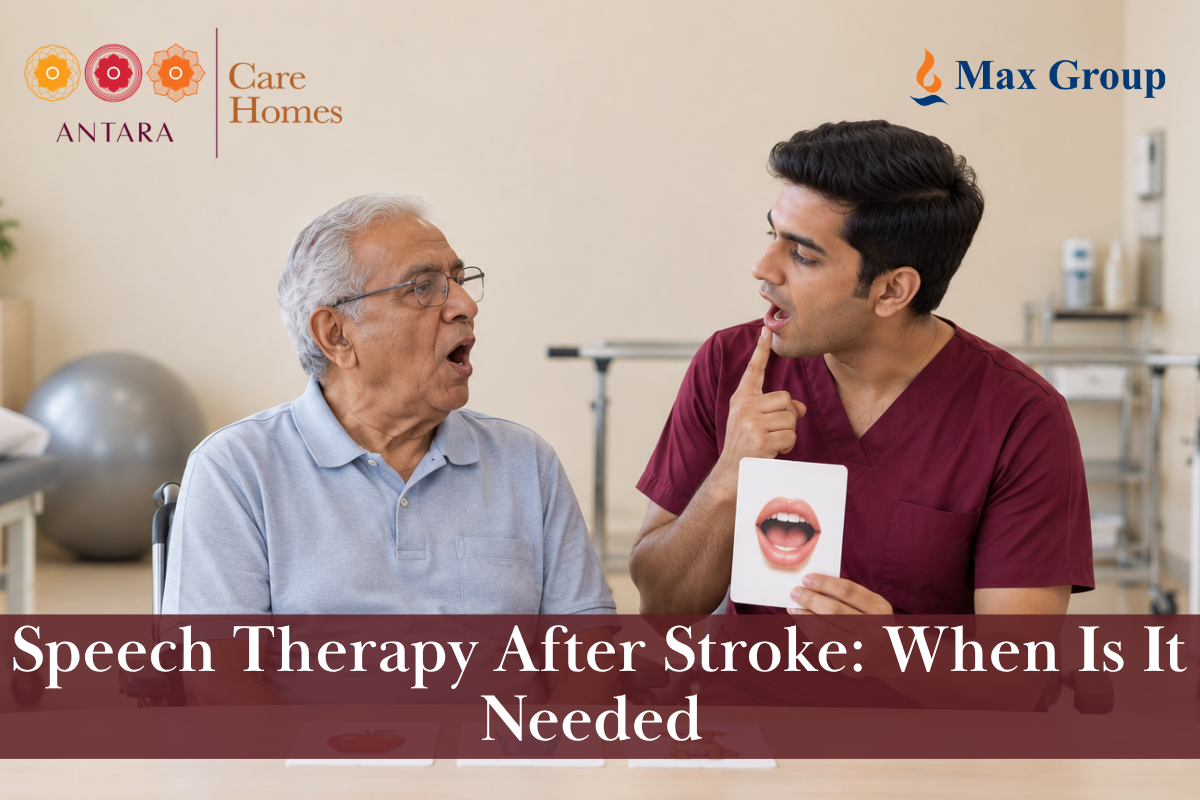
Speech relies on very specific parts of the brain. When a stroke damages these areas, communication can break down in different ways.
Some people struggle to find words. Others slur their speech, even though they know exactly what they want to say. Swallowing can be affected too, since the muscles involved overlap with those used for speech.
This isn't a reflection of intelligence or awareness. The person understands. The signal between brain and mouth simply isn't working the way it used to.
Not every stroke affects speech. But when it does, therapy usually helps. Research shows that speech therapy helps in neuroplasticity that rewires neural networks in the brain & body.
Speech therapy becomes necessary when someone struggles to form words clearly, finds it hard to follow conversations, or has noticeable difficulty naming everyday objects. Swallowing difficulty is another clear sign. Coughing during meals, or food feeling stuck, both need attention quickly.
Sometimes the signs are subtler. A person might understand everything said to them but struggle to respond. Or they might speak fluently, yet the words don't quite make sense together. Both situations point toward the same need. Structured, professional evaluation.
Families often notice these signs before anyone formally diagnoses them. Trust that instinct. Speech therapist involvement early often makes a real difference in how much recovery becomes possible.
A few patterns show up often after a stroke.
Aphasia after stroke affects language itself, not just pronunciation. This can mean trouble finding words, forming sentences, or understanding what others say. It varies widely, from mild word-finding trouble to near-total loss of language ability.
Dysarthria involves the physical muscles used for speech. Words might come out slurred or slow, even when thinking remains completely intact. Apraxia of speech is different again. The brain knows what it wants to say, but struggles to coordinate the movements needed to say it.
Swallowing difficulties, called dysphagia, often accompany these problems. This isn't just inconvenient. It carries real risk, since swallowing safely matters for nutrition and avoiding complications like aspiration.
Speech therapy after stroke targets whichever specific problem is present, not a generic approach applied to everyone.
For aphasia, therapy often involves structured exercises to rebuild word retrieval, sentence formation, and comprehension. This might mean naming pictures, completing sentences, or practicing real conversations in a controlled setting.
For dysarthria, therapy focuses on the physical mechanics of speech. Breathing support, muscle strength, and articulation exercises all help make speech clearer over time.
Swallowing therapy addresses dysphagia directly. This includes specific exercises to strengthen swallowing muscles, along with strategies like modified food textures or particular head positions that make swallowing safer during the recovery period.
Technology sometimes plays a role too. Apps and structured programs can support practice between formal sessions, reinforcing what's worked on directly with the therapist.
Every plan gets built around the specific deficit present, adjusted regularly as the patient's actual progress unfolds week to week.
Speech therapy works by giving the brain repeated, targeted practice at rebuilding damaged pathways.
This connects to neuroplasticity, the brain's ability to form new connections around the areas a stroke affected. Structured, repeated practice pushes this process forward in ways that simply waiting cannot replicate.
Beyond the mechanics of speech itself, therapy restores something harder to measure. Confidence. The ability to order food, hold a conversation, or simply be understood again matters enormously for independence and mental wellbeing.
Swallowing therapy specifically reduces serious risks too, lowering the chances of pneumonia or malnutrition that can follow untreated dysphagia after a stroke.
Earlier than many families expect, generally.
Early stroke rehabilitation, first 90 days after stroke matters for recovery The brain responds most strongly to rehabilitation in the early weeks following a stroke. This window matters for speech recovery just as much as it does for movement. Most stroke rehabilitation centres begin speech assessment within days of admission, often before the patient has even left acute medical care.
Early sessions might look modest. A few sounds. Simple naming tasks. But this early input matters, giving the brain something concrete to build on right when it's most capable of change.
Delaying therapy doesn't make recovery impossible, but it often means slower, harder progress later.
Patience matters more than most people realize.
Give the person time to respond, without jumping in to finish their sentences. Speak clearly, but not louder or slower than necessary, since that can feel patronizing. Encourage real conversation, not just yes-or-no questions. And celebrate small progress. A clearer word, a completed sentence, these moments matter more than they might seem.
Look for a centre where speech therapy is fully integrated, not offered as an isolated add-on service.
At Antara care homes, this comes together as one coordinated, PM&R led programme. It’s structured stroke rehabilitation involves multiple experts to work together. Speech therapists work alongside physiotherapists and occupational therapists, all under physician oversight throughout the stay. Support runs 24x7, with trained nursing and caregivers present at all hours. An in-house pharmacy keeps medication simple, and nutrition therapy supports patients managing swallowing difficulties directly.
Rooms are built with safety in mind too. Grab bars. Anti-skid flooring. Emergency buttons within easy reach, along with an in-built oxygen pipeline in rehabilitation rooms for added medical safety. Families also get end-to-end insurance claim support, easing one more burden during a difficult time.
1. When is speech therapy needed after a stroke? When speech becomes unclear, word-finding becomes difficult, comprehension is affected, or swallowing problems appear after a stroke.
2. What is aphasia after stroke? Aphasia affects language itself, causing difficulty finding words, forming sentences, or understanding speech, without affecting intelligence.
3. Can speech recovery after stroke happen fully? Many patients see significant improvement, especially with early therapy, though the extent varies based on stroke severity and location.
4. Does swallowing therapy after stroke really help? Yes. It reduces risks like aspiration and pneumonia while rebuilding safe, functional swallowing over time.
5. How long does speech rehabilitation after stroke usually take? It varies widely. Many patients continue improving for months, sometimes longer, with consistent therapy.
Speech therapy after stroke addresses far more than pronunciation. It rebuilds language, safety, and confidence, often over months of consistent, targeted work. Starting early, staying consistent, and choosing a centre with genuine speech therapy expertise all shape how much real recovery becomes possible.

Please fill in the form and submit the details to request an appointment.