
Loading...
Loading...
 BACK
BACK2026-07-14
Why Physical Therapy is Required After Traumatic Brain Injury
Key Takeaway:
Recovering a traumatic brain injury is a gradual process, and physical therapy plays an important role in it. It helps improve movement, balance, strength, and confidence, making everyday activities easier over time. Every person's recovery is different, so therapy is planned according to their needs. With regular therapy, expert care, and support from family, patients can take small but steady steps towards a better quality of life.
Most people focus on what brain injury did to thinking, memory, or personality. Those changes are real and they deserve attention. But what often gets underestimated in the early weeks after a traumatic brain injury is what it does to the body.
Limbs that stop moving the way they should. Balance disappears overnight. A gait that looks like nothing else it did before. Muscle strength drops faster than anyone expected. These are not side effects of TBI.
Physical therapy is the structured, clinical process of getting movement back.
The brain controls everything the body does. Every movement, every shift in balance, every automatic adjustment made when you reach for a glass or take a step on uneven ground, all of it is directed by neural pathways running through the brain.
When those pathways are damaged by a TBI, the signals break down. Muscles that used to receive clear instructions start receiving none, or the wrong ones.
Damage to the motor cortex causes weakness or paralysis on one side of the body. Cerebellar damage affects coordination and balance, making movements jerky and imprecise. Damage to the brainstem interferes with reflexes and basic postural control. In many cases, multiple areas are affected at once, which is why TBI movement deficits often look unlike anything else.
This is exactly why waiting is not an option. The longer movement deficits are left unaddressed after traumatic brain injury, the harder they become to reverse.
The gains from physical therapy after traumatic brain injury rehabilitation are documented and significant, but what matters more than statistics is what they translate to in real life.
Restored movement and strength. Targeted physiotherapy rebuilds the motor pathways that control limb movement.
Improved balance and fall prevention. Balance deficits after TBI are serious. A person who cannot stand steadily or walk without risk of falling cannot be independent.
Reduced spasticity. Stretching, range-of-motion exercises, and targeted strengthening work together to manage muscle tightness, preserve joint mobility, and prevent the contractures that develop when spastic muscles are left without intervention.
Rebuilding stamina. Fatigue after TBI is not ordinary tiredness. It is neurological, driven by the immense energy the brain is consuming to repair itself.
Faster return to daily function. The practical goal of every physiotherapy session is not just clinical improvement.
The techniques used in post operative care and rehabilitation after TBI are not generic exercises from a handout. They are specific, evidence-based interventions designed to retrain a damaged nervous system.
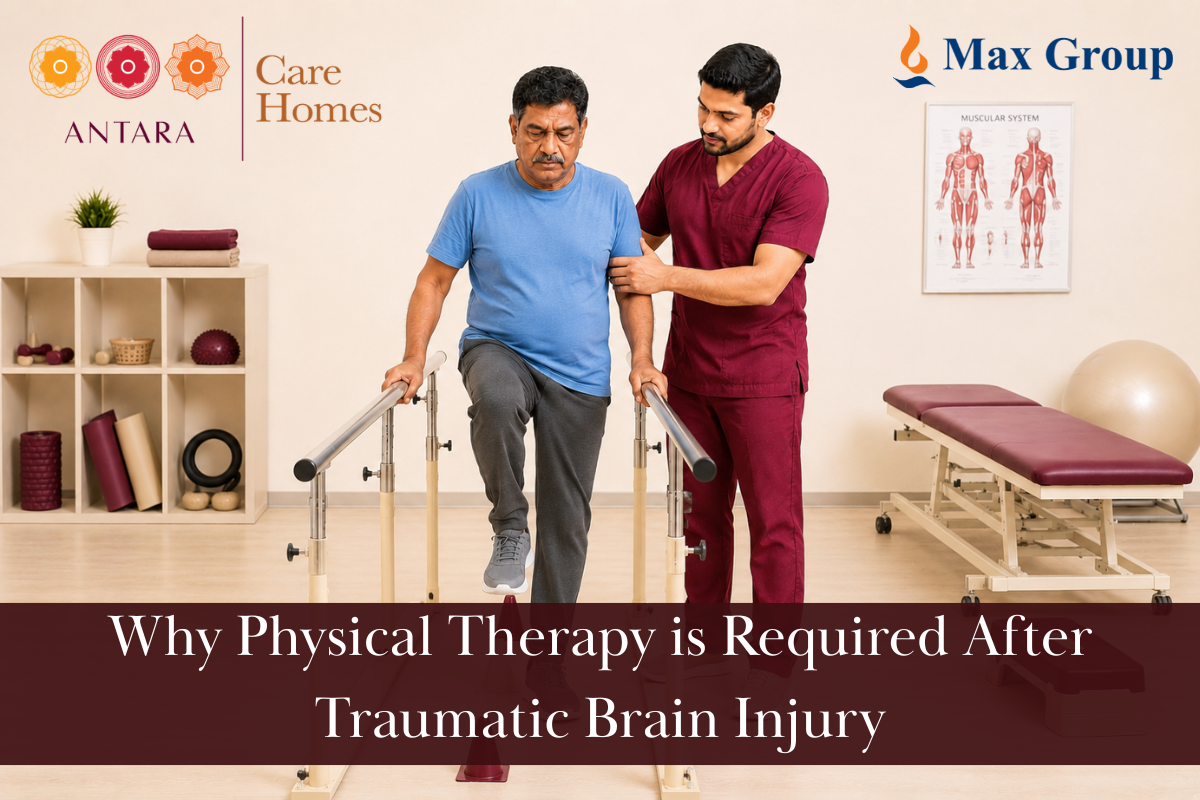
Gait training works on the mechanics of walking, from weight shifting and step length to foot clearance and postural alignment. It often begins with parallel bars, progresses to assisted walking, and eventually moves to independent walking on different surfaces.
Neurodevelopmental treatment (NDT) focuses on normalizing movement patterns by working with the way the nervous system learns. Instead of letting compensatory patterns develop, which the brain will gladly hardwire if given the chance, NDT guides the patient through correct movement repeatedly until it becomes the brain's default.
Constraint-Induced Movement Therapy (CIMT) restricts the unaffected limb to force the use of the weaker one. It is counterintuitive but clinically effective, preventing the brain from avoiding the harder work of rebuilding the damaged pathway.
Balance and vestibular rehabilitation uses specific exercises targeting the body's balance system, including standing on unstable surfaces, dual-task activities, and visual-motor coordination training.
Aquatic therapy uses the resistance and buoyancy of water to allow movement that would be too demanding or painful on land.
Physical therapy does not exist in isolation after a traumatic brain injury. It is one component of a broader neurological rehabilitation framework, and its results depend significantly on what is happening around it.
Occupational therapy works alongside physiotherapy to translate movement gains into functional tasks. Cognitive rehabilitation affects how well the patient can follow instructions, retain what they practised in a session, and carry over gains from the therapy room into real life.
Neurological rehabilitation works because it brings all of these together. The physiotherapist who knows the cognitive therapist's goals can design movement tasks that reinforce both.
The honest answer is: earlier than most families think.
There is a common belief that the patient should "stabilize first" before rehabilitation begins. For the most acute, critical phase of a severe TBI, that is true. But stabilization does not mean discharge. Passive rehabilitation, positioning, gentle range-of-motion work, and sensory stimulation can begin within days of injury, often while the patient is still in the ICU.
Once the patient is medically stable enough to participate even minimally, active rehabilitation should start. The brain's neuroplasticity is strongest in the weeks immediately following injury. Every week of delay in beginning structured physical therapy is a week of that window being unused.
Physical therapy after traumatic brain injury is not a recovery add-on. It is how movement comes back. It drives neuroplasticity, prevents secondary complications, rebuilds strength and balance, and returns people to function that feels impossible in those first dark weeks after injury.
Starting early, maintaining consistency, and ensuring physiotherapy is coordinated with the wider neurological rehabilitation team are the three things that make the biggest difference.
1. How soon after a TBI should physical therapy begin?
As soon as the patient is medically stable, which in many cases is within days of the injury, even during the hospital stay. Earlier is consistently better.
2. How long does physical therapy continue after TBI?
For mild TBI, a few weeks to months. For moderate to severe TBI, physical therapy typically continues for a year or more, with intensity reducing over time as independence increases.
3. Can physical therapy help if the TBI happened years ago?
Yes. While the fastest gains happen in the first year, neuroplasticity continues beyond it. Patients with chronic TBI deficits can still make meaningful progress through structured rehabilitation after TBI, particularly if previous therapy was inconsistent or incomplete.
4. Is physical therapy painful after TBI?
Some discomfort is normal, particularly in muscles that have been inactive or that have developed spasticity.
5. What is the difference between physical therapy for TBI and general physiotherapy?
Neurological physiotherapy for TBI targets the nervous system, not just the muscles and joints. It uses specific techniques designed to retrain the brain's motor pathways rather than simply strengthening the body.
Best Stroke Rehabilitation Centre in Bangalore: Recovery, & ...
Best Stroke Rehabilitation Centre in Chennai: Recovery, & Co...

How to Safely Get Out of Bed After Open Heart Surgery

Best Physiotherapy Exercises for Shoulder Pain at Home

Best Physiotherapy at Home Services in Bangalore

Please fill in the form and submit the details to request an appointment.