
Loading...
Loading...
 BACK
BACK2026-07-09
Paralysis recovery time is not fixed. It depends on the cause of paralysis, the type and extent of nerve damage, the patient's age and overall health, and how early structured paralysis rehabilitation begins. Some people recover within months. Others continue improving over years. What shapes the outcome more than anything else is the quality and consistency of care from day one.
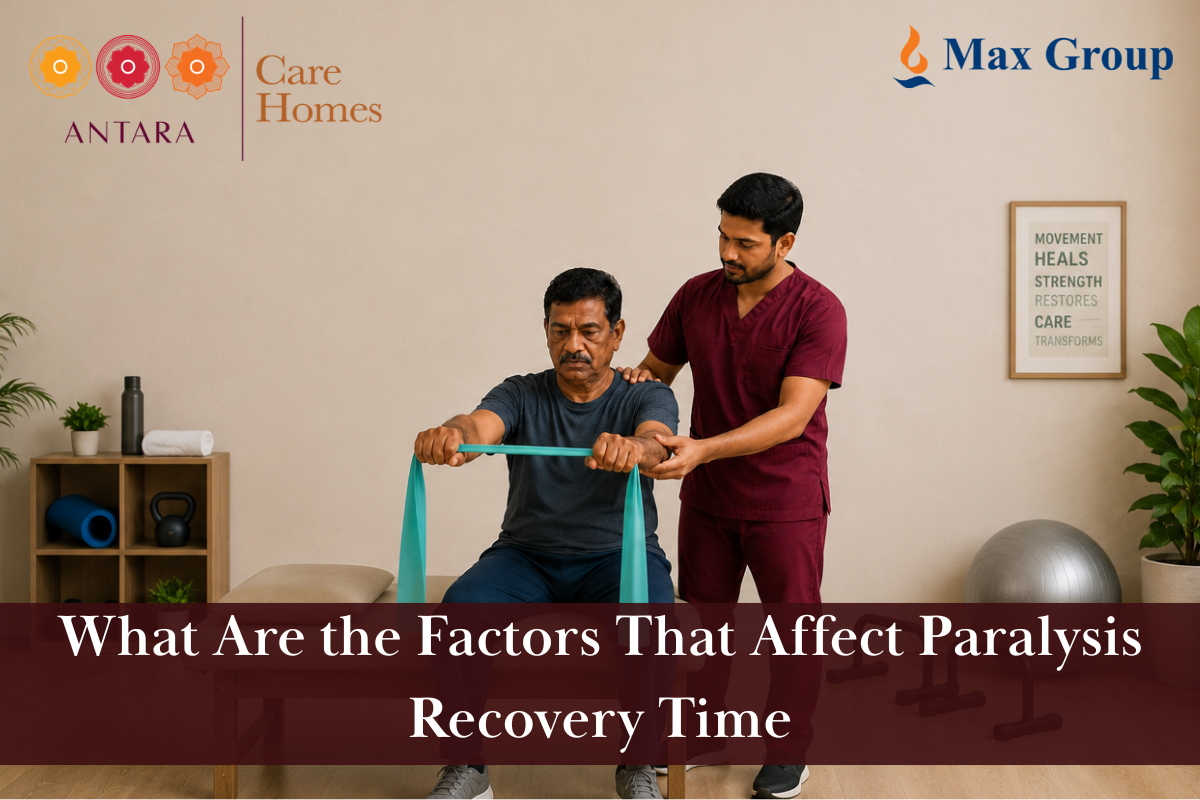
Paralysis is the loss of muscle function in part of the body, caused by damage to the nervous system. When the brain, spinal cord, or the nerves that carry signals to the muscles are injured or disrupted, the affected muscles stop receiving the commands they need to move.
It can affect one limb, one side of the body, the lower half, or in more severe cases, everything below the neck. It can be partial, where some movement or sensation remains, or complete, where none does.
The most common causes in adults are stroke, spinal cord injury, traumatic brain injury, and conditions like multiple sclerosis or Guillain-Barre syndrome.
This is the question every family asks and there is no single answer.
Some forms of paralysis are fully reversible, particularly those caused by temporary nerve compression, inflammation, or conditions like Bell's palsy.
What makes the difference is neuroplasticity, the brain and nervous system's capacity to rewire itself, build new connections, and recruit healthy areas to compensate for damaged ones.
Paralysis requires proper rehabilitation that involves therapies, proper care, nutrition, exercises, advanced robotic rehab, and a structure recovery plan & environment like Antara care homes offers to paralysis patients. It helps in improving the quality of life of patient and reduces the burden of caregivers.
1. The Cause of Paralysis
The underlying cause shapes the entire recovery picture. Paralysis following a stroke follows a different timeline than paralysis from a spinal cord injury, and both differ from paralysis caused by a progressive neurological condition.
Stroke-related paralysis often shows the most significant early recovery in the first three to six months, as the brain uses neuroplasticity to reroute functions around the damaged area.
2. Severity and Location of Nerve Damage
Not all paralysis involves the same degree of damage. Mild injuries to peripheral nerves can heal relatively quickly. Damage to the spinal cord or brain is more complex and slower to resolve.
Location matters equally. Paralysis affecting one limb responds differently to rehabilitation than paralysis affecting both legs or an entire side of the body.
3. Age of the Patient
Younger patients generally recover faster. Their nervous systems are more plastic, healing capacity is stronger, and they typically have fewer comorbidities complicating the recovery process.
That said, age is not a ceiling. Older adults absolutely recover from paralysis, and structured paralysis rehabilitation produces meaningful gains at any age.
4. Time Between Injury and Start of Rehabilitation
This is one of the most consequential factors and one of the most controllable.
The nervous system is most receptive to rehabilitation in the weeks immediately following a paralysis-causing injury. Beginning structured physiotherapy and neurological rehabilitation early takes advantage of this window when the brain and spinal cord are most capable of forming new connections.
Families who arrange paralysis rehabilitation quickly after a stroke or spinal injury consistently see better outcomes than those who wait until the patient is home and stable before starting.
5. General Health and Existing Conditions
A person's overall health at the time of the paralysis-causing event directly affects how their body responds to the recovery process. Diabetes slows nerve healing and circulation. Heart disease limits the intensity of physical rehabilitation that is safe. Obesity affects mobility training. Respiratory conditions complicate the early phases of recovery when stamina is minimal.
None of these factors make recovery impossible.
6. Nutritional Status
This one is consistently underestimated. The nervous system and muscles need adequate protein, vitamins, and minerals to repair and rebuild.
Weight loss after paralysis is extremely common, and not always noticed immediately. Dietician-managed nutrition is not a comfort measure in paralysis care. It is a clinical requirement.
7. Psychological State and Motivation
Depression is extraordinarily common after paralysis. In some studies, more than half of stroke patients experience clinically significant depression within the first year. Depression reduces participation in therapy, disrupts sleep, suppresses appetite, and directly slows neurological recovery.
A patient who is engaged, motivated, and supported emotionally makes meaningfully faster progress than one who is not. This is not about willpower.
8. Consistency and Quality of Rehabilitation
Paralysis rehabilitation is not something that can be done occasionally and still produce results. Neuroplasticity responds to repetition. The brain rewires itself based on what it is asked to do repeatedly, over time. One session a week produces far less than five.
The quality of the paralysis rehabilitation team matters just as much as frequency. Physiotherapists trained specifically in neurological conditions, occupational therapists who understand how to rebuild daily function, and speech therapists for those with communication deficits, these are different specializations from general rehabilitation.
For families managing paralysis recovery, the challenge is rarely understanding what good rehabilitation looks like. It is finding a setting where all of it actually happens together, consistently, under proper clinical supervision.
Antara Care Homes offers structured paralysis rehabilitation that brings physiotherapy, occupational therapy, nursing care, nutritional support, and psychological care into one structured environment. Recovery plans are built around the individual, accounting for the specific cause of paralysis, the patient's health profile, and realistic PMR led recovery goals. The team adjusts the plan as the patient progresses, rather than following a fixed schedule that may not match where the patient actually is.
For seniors recovering from stroke-related paralysis in particular, the senior-focused environment at Antara, designed for safety, consistency, and appropriate pacing, makes a measurable difference in how much recovery is ultimately achieved.
Paralysis recovery time is shaped by many things, some of which cannot be controlled, and some of which absolutely can. The cause and severity of nerve damage, the patient's age, and their existing health conditions are fixed realities.
Acting on them early, with the right professional team in place, is what separates recoveries that plateau too soon from ones that continue surprising everyone involved.
1. What is the average paralysis recovery time after a stroke?
Most meaningful recovery from stroke-related paralysis happens within the first three to six months. However, improvement can continue for a year or more with structured rehabilitation.
2. Does paralysis rehabilitation actually make a difference?
Yes, significantly. Structured paralysis rehabilitation drives neuroplasticity, the brain's ability to form new pathways and compensate for damaged areas.
3. Can complete paralysis improve rehabilitation?
In cases of complete spinal cord injury, full recovery is rare, but partial recovery is possible depending on the level and type of injury.
4. How does age affect paralysis recovery time?
Older patients typically recover more slowly due to reduced neuroplasticity and slower healing capacity.
5. What is the most important thing a family can do during paralysis recovery?
Start rehabilitation early, keep it consistent, and ensure the patient's emotional health is being addressed alongside their physical recovery.
Best Stroke Rehabilitation Centre in Bangalore: Recovery, & ...
Best Stroke Rehabilitation Centre in Chennai: Recovery, & Co...

How to Safely Get Out of Bed After Open Heart Surgery

Best Physiotherapy Exercises for Shoulder Pain at Home
Best Physiotherapy at Home Services in Bangalore

Please fill in the form and submit the details to request an appointment.