
Loading...
Loading...
 BACK
BACK2026-07-23
Rehabilitation After a Slipped Disc: What to Expect
Summary:
Recovering from a slipped disc takes time, the right treatment, and proper rehabilitation. A lot things are important during slipped disc recovery, the role of physiotherapy and rehabilitation, and a structured recovery plan can help reduce pain, improve mobility, and get you back to your daily activities safely.
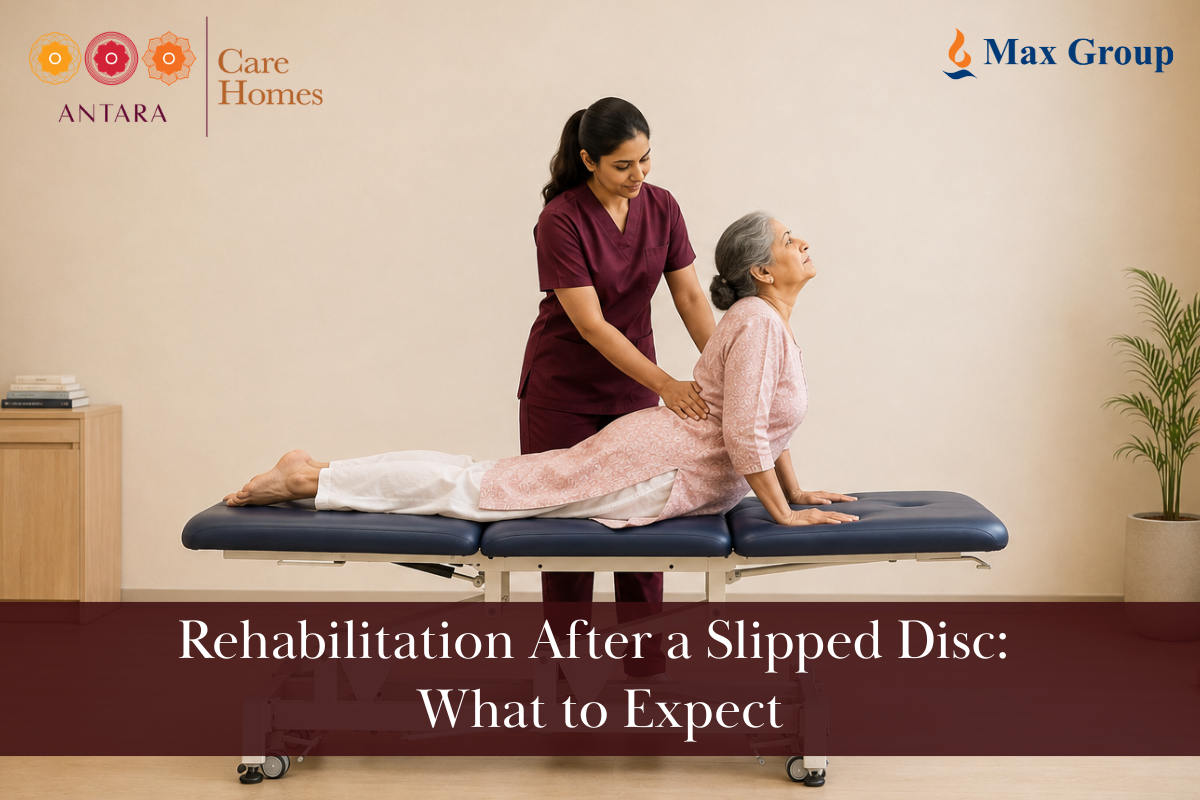
A slipped disc has a way of stopping everything. One wrong lift, one sudden twist, and the pain that follows can make walking to the kitchen feel like an achievement. Most people assume the goal after diagnosis is simply rest until the pain fades. It is not. Rest has a role in the first few days, but rehabilitation after a slipped disc is what actually determines whether someone gets back to their normal life or ends up dealing with recurring pain for years.
This guide walks through why rehabilitation matters, when it should begin, what a proper recovery program looks like, and what genuinely effective slipped disc rehab involves.
A slipped disc, more accurately called a herniated disc or prolapsed disc, occurs when the soft inner material of a spinal disc pushes through its outer layer, often pressing on a nearby nerve. That pressure is what causes the sharp, radiating pain many people describe, sometimes running down a leg or arm depending on which part of the spine is affected.
Here is what most people do not realize: the disc itself often does not need to be perfectly restored for the pain and dysfunction to resolve. What needs to happen is a combination of reducing nerve irritation, rebuilding the muscles that support and protect the spine, and correcting the movement patterns that contributed to the herniation in the first place.
Without structured slipped disc recovery, several things tend to go wrong. Muscles around the spine, particularly the deep stabilizing muscles, weaken from disuse and guarding behaviour, which increases the risk of re-injury.
Rehabilitation addresses all of this directly. It is not just about pain relief. It is about rebuilding the physical capacity and confidence to move normally again, safely and sustainably.
This is one of the most misunderstood parts of slipped disc recovery. Generally people assume extended bed rest is best but clinically it's different.
In the acute phase, typically the first few days after the injury flares up, some rest and activity modification is reasonable, particularly if pain is severe. But prolonged bed rest beyond a few days is now understood to slow recovery, not support it.
Gentle movement and early physiotherapy for slipped discs typically begins within the first one to two weeks, once the most acute pain has settled enough to tolerate structured activity. This does not mean jumping into intense exercise. It means guided, appropriate movement designed specifically to protect the healing disc while preventing the secondary problems that inactivity causes.
For most people, the earlier rehabilitation begins under proper professional guidance, the better the long-term outcome.
A proper post operative rehabilitation is not a single treatment. It progresses through phases, each with a different focus. It should include everything from food, environment, to physiotherapy exercises & nerve mobility. After slipped disc, a patient needs comprehensive plan to feel normal again.
Pain and inflammation management is the starting point. This might include medication guided by a physician, targeted manual therapy, and modalities like heat or cold therapy to reduce acute discomfort enough for the patient to participate in active rehabilitation.
Core stabilization exercises form the backbone of slipped disc rehab. The deep muscles that support the spine, particularly the transverse abdominis and multifidus, are specifically targeted through low-load, controlled exercises. These are not the sit-ups or crunches most people imagine. They are precise, often subtle movements designed to retrain the body's automatic stabilization response.
Slipped disc exercises for flexibility and nerve mobility address stiffness and nerve tension that commonly develop after a disc injury. Gentle stretching, nerve gliding techniques, and controlled range-of-motion work help restore normal movement without aggravating the affected nerve root.
Postural and ergonomic correction looks at how the person sits, stands, lifts, and moves throughout the day. Many slipped disc cases are linked to repeated poor movement patterns, and rehabilitation is incomplete without addressing those root causes directly.
Progressive strengthening builds on the foundational stabilization work, gradually increasing load and complexity as the spine tolerates it. This phase is what allows a return to normal activity, work, and in many cases, sport or exercise, without recurrence.
Functional and work-specific training in later stages prepares the person for the specific physical demands of their daily life, whether that means sitting at a desk for long hours, physical labour, or an active lifestyle.
Physical Medicine and Rehabilitation, commonly known as PM&R, brings a physician-led approach to recovery after a slipped disc, combining medical management with structured physiotherapy under one coordinated plan.
At Antara Care Homes, PM&R rehabilitation for slipped disc integrates physician oversight, physiotherapy, pain management, and progressive exercise programming into a single individualized plan. Rather than treating physiotherapy and medical management as separate tracks, the PM&R model ensures that pain control decisions and rehabilitation exercises are coordinated by the same clinical team, adjusting as the patient's condition evolves.
This matters because slipped disc recovery is rarely linear. A patient may progress well for two weeks and then experience a flare-up that requires the plan to be revised. A coordinated PM&R team responds to that in real time.
Recovery after a slipped disc is not about waiting for pain to disappear. It is an active process of reducing nerve irritation, rebuilding the muscles that protect the spine, correcting the habits that contributed to the injury, and gradually restoring confidence in movement.
1. How long does rehabilitation after a slipped disc typically take?
Most people see significant improvement within six to twelve weeks of structured rehabilitation, though full recovery of strength and confidence can take three to six months depending on severity and consistency of therapy.
2. Can a slipped disc heal without surgery?
Yes, the majority of slipped disc cases improve with conservative treatment, including physiotherapy, pain management, and structured exercise, without requiring surgical intervention.
3. Is walking good for slipped disc recovery?
Yes, gentle walking is generally encouraged early in recovery, as it supports circulation and prevents the stiffness associated with prolonged inactivity, without placing excessive load on the spine.
4. What slipped disc exercises should be avoided?
High-impact activities, heavy lifting, deep forward bending, and twisting movements are typically avoided in the early stages of recovery, as these can increase pressure on the affected disc.
5. What is PM&R rehabilitation and how is it different from regular physiotherapy?
PM&R rehabilitation combines physician-led medical management with physiotherapy under one coordinated plan, allowing pain treatment and physical rehabilitation to be adjusted together as the patient progresses.

How to Choose the Right Palliative Care in Chennai: A Comple...

Post Flu (H1N1) Weakness in Seniors: Recovery Tips and When ...

Swine Flu (H1N1): Symptoms, Causes, Prevention at Home
8 Benefits of Home Nursing services for Seniors
Who Is Most at Risk of a Mini Stroke? Risk Factors, Preventi...

Please fill in the form and submit the details to request an appointment.