Loading...
Loading...
 BACK
BACK2026-09-14
Summary
Recovery after robotic knee replacement typically progresses in stages, from managing pain and swelling and regaining movement in the first few weeks to improving strength, balance and daily function over the following months. A personalized rehabilitation plan and regular physiotherapy play an important role in recovery.
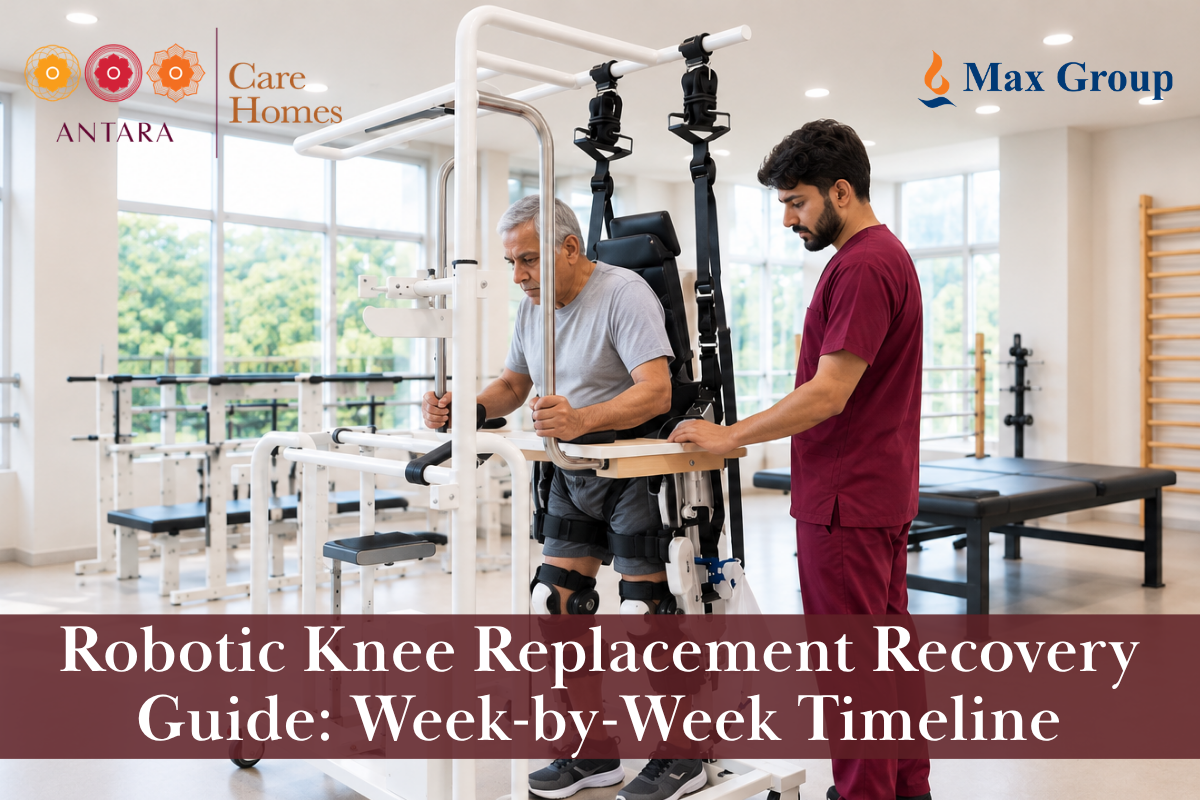
Robotic knee replacement rehabilitation plays an important role in helping patients regain movement, strength, and confidence. A structured rehabilitation plan may include physiotherapy both traditional and robotic after knee replacement, exercises, walking practice, and support with daily activities. The pace of recovery can vary depending on age, overall health, muscle strength, and mobility before surgery. With the right guidance and regular rehabilitation, patients can gradually work towards better knee movement, improved balance, and greater independence in everyday activities.
The first week focuses on stability and early movement.
The first week after knee replacement surgery is an important part of the recovery journey. During this time, the focus is usually on managing pain and swelling, protecting the new knee joint and gradually improving movement.
Knee replacement rehabilitation may begin early, with guided exercises, physiotherapy, and support with walking and daily activities. Every patient recovers at a different pace, so the first week may look different for each person.
Understanding what to expect can help patients and families feel more prepared and confident as they begin their robotic knee replacement recovery.
This phase brings real, visible progress.
Physiotherapy sessions increase in intensity during weeks two through four. Rehabilitation centers use a combination of traditional physiotherapy exercises along with robotic led. Bending the knee further becomes a key goal. Most patients aim for at least ninety degrees of flexion by the end of this period.
Walking distances grow steadily. Many patients transition from a walker to a cane around week three, depending on strength and balance. Daily activities have become more manageable, too. Dressing, using stairs with support, and short outings all become realistic goals. Sitting for longer periods gets easier as well.
Swelling and stiffness continue but gradually ease. Consistent icing, elevation, and prescribed exercises support this progress. Sleep can still feel disrupted, since finding a comfortable position takes time. This is normal. It improves with each passing week.
Strength building becomes the main focus during this stretch.
Physiotherapy shifts toward resistance exercises and balance training. Walking without support often becomes possible for many patients by week six or seven. Stair climbing improves too, though caution remains important on uneven surfaces.
Most patients can return to light daily tasks without significant limitation. Driving may become possible around week six, depending on the affected leg and how well reflexes have returned. This should always be confirmed with the surgical team first.
Knee replacement recovery exercises at this stage often include stationary cycling and light strengthening work. Pain continues to decrease. Some stiffness in the morning remains common but should keep improving. Energy levels typically rise during these weeks, making daily routines feel more manageable again.
This period marks a shift toward long-term function.
By month three, most patients walk comfortably without aids. Strength and flexibility continue improving steadily. Many return to low-impact activities like swimming or cycling during this stage, with their surgeon's approval.
Work responsibilities often resume fully by this point too, especially for less physically demanding roles. Full recovery after knee replacement surgery typically continues through month six, with strength and endurance still building gradually.
Some residual stiffness or mild swelling can persist, especially after longer periods of activity. This usually settles with continued exercise and time. Most patients report feeling significantly more like themselves by this stage.
Several factors shape how recovery unfolds.
Age plays a role. It does not determine outcomes alone, though. Overall health matters more. Conditions like diabetes or heart disease can slow healing. They also require closer monitoring throughout recovery.
Pre-surgery fitness levels matter too. Patients who were more active beforehand often progress faster. Commitment to physiotherapy makes a real difference as well. Skipping sessions or exercises slows progress a lot.
Weight also affects recovery. Extra load on the new joint can increase discomfort. It can slow healing too. Following medical guidance closely remains the most reliable way to support steady progress.
Robotic knee replacement rehabilitation can support a smoother and more structured recovery after surgery. A personalized rehabilitation plan helps patients gradually work on knee movement, muscle strength, balance, and walking ability.
While robotic knee replacement may offer faster recovery, still depends on factors such as overall health, fitness, age, and commitment to rehabilitation.
The right centre coordinates every part of recovery under one plan like Antara care homes, knee replacement rehabilitation follows a PM&R-led approach, combining traditional physiotherapy with advanced lower-limb robotic rehabilitation to support a structured recovery. A physician oversees physiotherapy, pain management and overall progress, while trained therapists work on strength, knee movement, balance and walking ability. The rehabilitation plan can include guided exercises, gait training, and robotic-assisted lower-limb training based on the patient's needs and recovery goals.
Support is available 24×7, with trained nursing staff present at all hours. Rooms include grab bars and anti-skid flooring for added safety. An in-house pharmacy makes medication management simpler, while nutrition therapy supports recovery. Families also receive end-to-end insurance claim support throughout the admission.
1. How long does robotic knee replacement recovery take?
Most patients regain significant function by three months, with continued strength gains through month six.
2. What is the knee replacement recovery timeline week by week?
Early mobility begins in week one, strength building continues through weeks two to eight, and independence grows through month three.
3. When can I walk without support after robotic knee surgery?
Many patients walk unaided by week six or seven, though this varies by individual progress.
4. What knee replacement recovery exercises help most?
Range-of-motion work, walking practice, and gradual strengthening exercises all support steady, safe progress.
5. Is robotic knee surgery recovery time shorter than traditional surgery?
Often yes, due to greater surgical precision, though individual factors still shape overall recovery speed.
Recovery after robotic knee replacement surgery follows a fairly predictable path, though every patient moves through it at their own pace. Structured physiotherapy, consistent effort, and the right rehabilitation setting all shape how smoothly that path unfolds.

Please fill in the form and submit the details to request an appointment.