
Loading...
Loading...
 BACK
BACK2026-07-15
Summary
Traumatic brain injury (TBI) rehabilitation is an important part of recovery, helping patients regain movement, speech, memory, and independence. This guide explains how rehabilitation works, the therapies involved, what to expect during recovery, and why early, personalised care can improve outcomes and support a better quality of life.
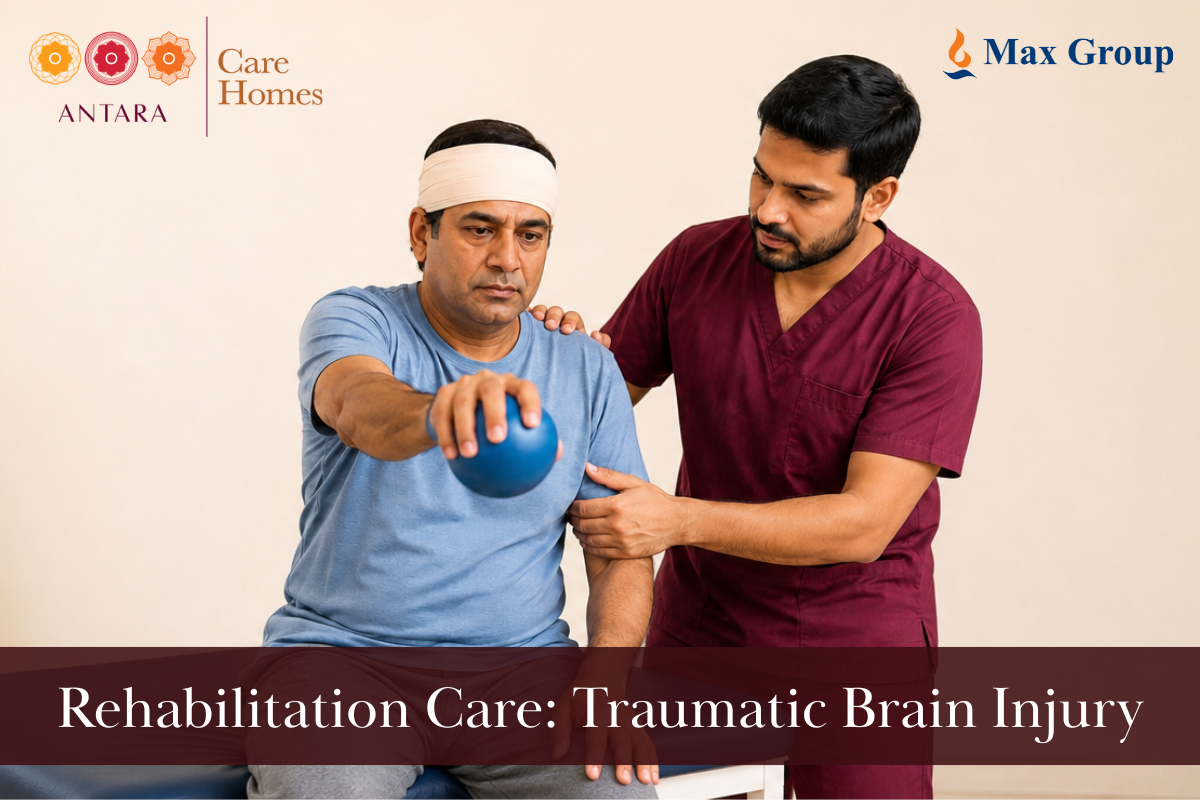
The brain does not heal the way a broken bone does. A fracture knits itself back together in a predictable way, over a predictable period of time. Brain injury does not work like that.
What the brain does instead is rewire. It builds new connections around the damaged area. It recruits healthy regions to take over functions that the injured parts can no longer perform. This process, neuroplasticity, is the biological foundation for everything that makes traumatic brain injury rehabilitation possible.
But neuroplasticity does not happen passively. It happens in response to what the brain is repeatedly asked to do. A person sitting in a bed, not engaging with therapy, is not rewiring toward recovery. They are allowing the brain to wire around inactivity instead.
This is the core reason rehabilitation after TBI is not optional. It is the mechanism of recovery itself. Without structured, consistent neurological rehabilitation starting early, the brain misses its most responsive window and the gains that were available slip away.
There is also a secondary reason that gets less attention.
Not every TBI recovery follows the same path, and the type of care needed shifts significantly depending on where the patient is in their recovery.
This begins while the patient is still in or recently out of the hospital. The focus is on stabilizing whatever deficits exist, preventing complications, and introducing the earliest forms of movement and sensory engagement. Physiotherapists work on passive limb movement and positioning.
Once the patient is medically stable but still has significant deficits, sub-acute care bridges the gap between hospital discharge and independent living. This is typically residential, at a dedicated neurological rehabilitation or step-down care facility. Therapy becomes more active and more frequent. Physiotherapy works on sitting balance, standing, and early walking. Occupational therapy addresses basic daily tasks.
As independence increases, care transitions to outpatient therapy, where the patient attends sessions several times a week while living at home or in a supervised setting. This phase targets the higher-level deficits that linger longest after TBI, memory, concentration, emotional regulation, social confidence, and return to daily roles.
There is no fixed answer for how long TBI recovery takes, but there are patterns that hold across most cases.
In the first month, the brain is in its most intensive healing state. Early post operative rehabilitation after TBI during this period produces the fastest and most significant gains, because neuroplasticity is at its peak.
Between months one and six, active traumatic brain injury rehabilitation produces the most measurable progress. Walking, communication, daily task function, and cognitive skills all see their greatest improvements in this window. Missing this period, or filling it with inconsistent therapy, is one of the most consequential mistakes families make.
From six months to one year, the pace of recovery slows. Progress continues but requires more effort for smaller gains. This does not mean therapy should stop. It means the focus shifts to consolidating what has been achieved and addressing the subtler deficits that remain.
Beyond one year, spontaneous recovery is slower, but it does not stop. TBI Recovery timelines is different for every patient depending on the age, severity and condition of the patient.
The facility a TBI patient recovers in shapes the outcome as much as the injury itself. Choosing well matters.
Look for neurological specialisation, not general rehabilitation. A centre experienced in TBI knows that cognitive and emotional deficits need as much attention as physical ones. A general physio setup does not have the same depth of expertise.
Ask about the multidisciplinary team. Good traumatic brain injury rehabilitation requires physiotherapy, occupational therapy, speech therapy, cognitive rehabilitation, and psychological support working together. If the facility offers one or two of these but not all, that is a gap in the recovery plan.
Ask what the care plan looks like and how it adapts. TBI recovery is not linear. A good facility adjusts the plan as the patient progresses, not three months in when the family notices it is not working.
Check the staff-to-patient ratio. TBI patients in active recovery need frequent, attentive therapy. A high ratio means less individual attention, fewer repetitions of therapeutic activity, and slower progress.
Visit before deciding. The environment matters. A calm, safe, appropriately equipped setting designed for neurological patients is different from a general elder care home that has added a physio room.
Traumatic brain injury rehabilitation is not the part that comes after recovery. It is the process through which recovery happens.
The brain rewires itself in response to structured, repeated, purposeful effort. Post operative care that starts early, stays consistent, and involves the right disciplines gives that process the best possible conditions. The families who understand this from the beginning approach TBI recovery differently, and more often than not, they see results that reflect it.
The injury happened. That part cannot be changed. What happens in rehabilitation is still entirely within reach.
1. When should rehabilitation after TBI begin?
As early as the patient is medically stable, often within the first few days of hospitalization. The brain's neuroplasticity window is most open immediately after injury, and early engagement with rehabilitation consistently produces better long-term outcomes.
2. What is the difference between acute and sub-acute TBI rehabilitation?
Acute rehabilitation begins in the hospital, focusing on stabilization and preventing complications. Sub-acute rehabilitation follows discharge, in a residential facility, and involves more active therapy targeting movement, daily function, communication, and cognition.
3. How long does traumatic brain injury rehabilitation last?
It depends on severity. Mild TBI may require weeks of structured support. Moderate to severe TBI typically involves six months to a year of intensive rehabilitation, followed by ongoing outpatient therapy.
4. Is psychological support part of TBI rehab?
It should be. Depression and anxiety affect the majority of TBI patients and directly reduce engagement with physical and cognitive therapy.
5. What should I look for in a TBI rehabilitation facility?
Neurological specialisation, a full multidisciplinary team covering physiotherapy, occupational therapy, speech therapy, cognitive rehabilitation and psychology, individualised care plans that adapt over time.
Best Stroke Rehabilitation Centre in Bangalore: Recovery, & ...
Best Stroke Rehabilitation Centre in Chennai: Recovery, & Co...

How to Safely Get Out of Bed After Open Heart Surgery

Best Physiotherapy Exercises for Shoulder Pain at Home

Best Physiotherapy at Home Services in Bangalore

Please fill in the form and submit the details to request an appointment.