Loading...
Loading...
 BACK
BACK2026-09-18
Recovery after bypass surgery takes time and usually happens in stages. Patients may need adequate rest at first, followed by gradual movement, walking, breathing exercises, and other activities as advised by their doctor. A structured recovery plan and regular rehabilitation can help improve strength, mobility, and confidence during the healing process.
Two things heal at once here. Your chest wound and breastbone. Your heart itself too, adjusting to better blood flow.
The breastbone was likely divided during surgery. It's wired back together now. That bone needs weeks to fuse solid again. Meanwhile, your heart is already working better. That part happens fast. The physical healing just takes longer to catch up.
Every case moves a little differently. Age, overall health, and how the surgery went all shape the pace. No two recoveries look exactly alike.
Stability comes first. Everything else waits.
Intensive care is where you'll open your eyes first, usually for a day or two. Nurses watch your heart rhythm closely. Blood pressure. Oxygen. All tracked around the clock. Once you're moved to a regular cardiac ward, the real recovery work starts.
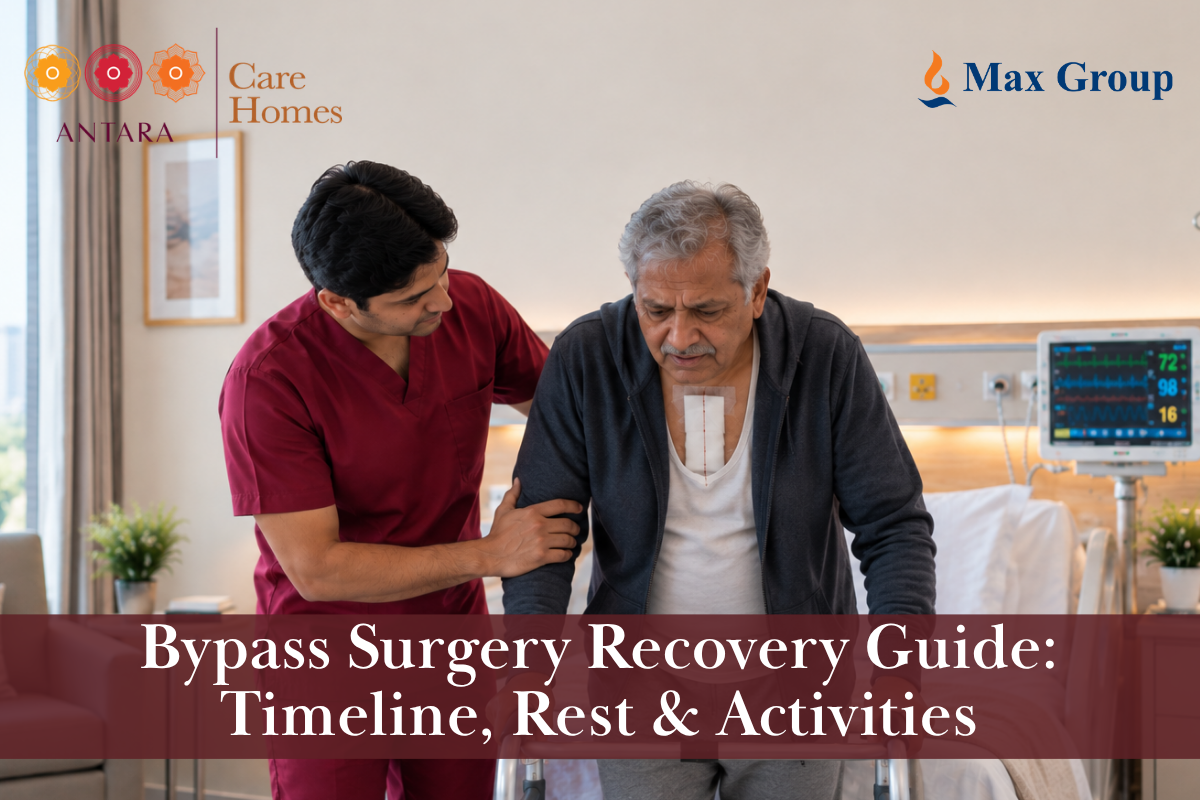
Bypass surgery recovery time often take 2-3 weeks. Longer for more complex cases. Walking begins early though, often within a day or two. Short, assisted steps at first. That's not optional. It helps your lungs. It lowers clot risk too.
Your chest, shoulders, and the site where the graft came from will feel sore. That's expected. Pain gets managed with medication throughout. Sleep can feel tricky too, since lying flat sometimes feels uncomfortable this early on.
Sternal precautions start immediately. No pushing. No pulling. No heavy lifting. Your care team shows you exactly how to move safely before you go home.
This stretch is quieter than people expect. That's by design.
Rest after bypass surgery matters just as much as movement does. Fatigue hits harder than most patients anticipate. Your body is doing real repair work under the surface, even on days that feel uneventful and slow.
Walking distances grow though, day by day. Short outdoor walks often start here, weather permitting. Energy usually picks up a little by week three or four. Light cooking. Getting dressed without help. Longer walks than before.
Your incisions need daily checking. Redness, warmth, or drainage all need reporting right away. Driving stays off the table until your surgeon clears it, usually not before week four, and only once you're off stronger pain medication.
Real structured progress begins here.
Cardiac rehabilitation after bypass typically starts somewhere in this window. It's supervised exercise, paired with education on heart health going forward. Every major cardiology guideline recommends it, and for good reason. It really does lower your risk of future problems.
Sessions build gradually. Walking distance increases. Light resistance work sometimes enters the picture too, always guided, never rushed.
Many people return to desk-based work around this stage, once cleared. Physical jobs usually need longer. Sternal clearance, confirming the breastbone has healed enough, often happens around week six to eight. That clearance opens the door to lifting more and using your arms more freely again.
Life starts feeling ordinary again through this window.
By month three, many people notice real gains in stamina and energy. The breastbone has mostly finished healing by now too. Full recovery after heart bypass surgery, meaning your pre-surgery energy and stamina, often takes three to six months total.
Sexual activity, more strenuous exercise, and physically demanding work all tend to return somewhere in this stretch, guided by your care team's clearance. Emotional recovery matters here too. Low mood or irritability aren't unusual after heart surgery, and they typically ease as physical strength returns.
More than most people plan for, honestly.
The first two weeks call for real rest, balanced with short walks throughout the day. Naps help. So does a regular sleep routine, even if sleep feels different for a while. Comfort takes some trial and error.
Rest doesn't mean total inactivity though. Gentle movement actually speeds healing. It's the heavy stuff, lifting, straining, pushing through fatigue, that needs to wait. Listen to your body here more than any calendar. Some days ask for more rest than others, and that's fine.
A few things stay off-limits early on.
Lifting anything heavier than five to ten pounds is restricted until sternal clearance. So is pushing, pulling, or reaching overhead with real force. Driving waits for clearance too, along with sternal precautions being fully lifted.
Vigorous exercise, contact sports, and heavy housework all need to wait. Smoking should stop entirely, since it slows healing and raises real cardiac risk going forward.
Structured rehabilitation changes outcomes here, especially in these early months.
At Antara, recovery after CABG follows a PM&R led model. A physician oversees cardiac rehabilitation and physiotherapy as one coordinated plan. Nursing stays available 24x7, trained specifically for cardiac patient care. Rooms include grab bars and equipment suited to safe, gradual movement. An in-house pharmacy and nutrition support round out the recovery environment throughout the stay.
1. How long does bypass surgery recovery take? Hospital stays run five to seven nights. Full recovery of energy and stamina takes three to six months.
2. What is the bypass surgery recovery timeline? Walking starts within days, cardiac rehab begins around week five to eight, normal activity returns by month three.
3. When can I drive after bypass surgery? Usually around week four to six, once you're off narcotic pain medication and cleared by your surgeon.
4. What activities should I avoid after CABG? Heavy lifting, pushing, pulling, and vigorous exercise until sternal clearance is confirmed by your surgical team.
5. Does cardiac rehabilitation after bypass really help? Yes. It lowers the risk of future cardiac events and rebuilds strength and confidence at a safe pace.
Recovery after heart bypass surgery moves in stages, each with its own pace and priorities. Rest, gradual activity, and structured cardiac rehabilitation all play a real part in how smoothly that recovery unfolds over the months ahead.

Please fill in the form and submit the details to request an appointment.