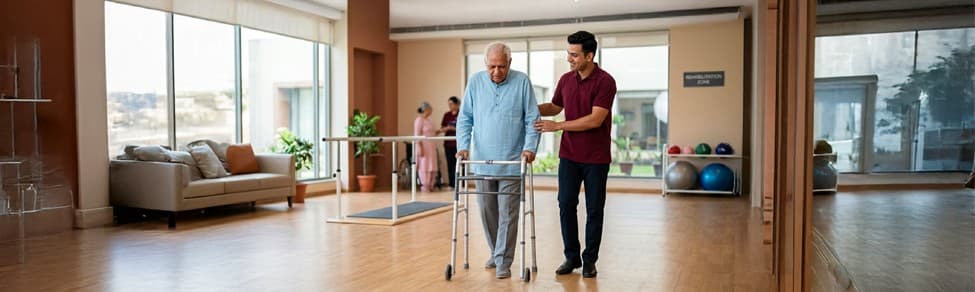
Introduction
When One Morning Changed Everything
At just 41 years old, life was moving normally for him until a sudden medical emergency changed everything in a matter of hours.
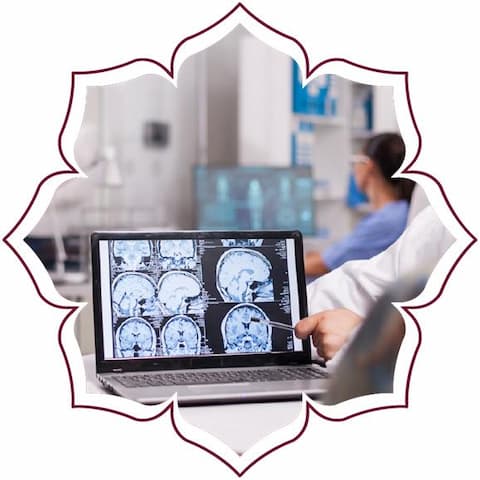
A severe brain hemorrhage caused by a right hypertensive basal ganglionic bleed with intraventricular extension and midline shift left him fighting for survival. What followed was an emergency decompressive brain surgery, days of uncertainty, and the beginning of a difficult journey marked by paralysis, weakness, speech difficulties, and complete dependence on others for even the smallest daily activities.
For his family, it was a moment filled with fear, helplessness, and countless unanswered questions:
Would he walk again? Would he speak normally again? Would life ever feel normal again?
But recovery after stroke is not built in a single day. It is built through patience, consistent rehabilitation, expert clinical support, and small victories that slowly become life-changing milestones.
This is the story of resilience, neuro rehabilitation, and hope.
Written By
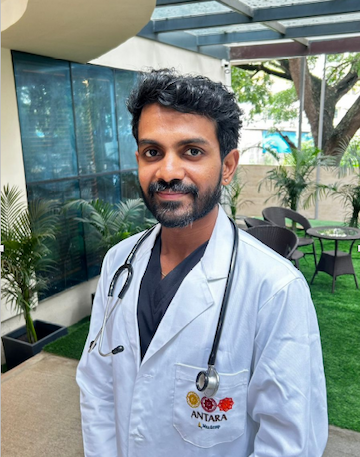
Dr. Vivekanandhan
Cardiac Care, Antara Care Homes
Dr. Divya Mathew
Cardiac Care, Antara Care Homes
Understanding the Case
His Medical Condition
He was diagnosed with:
Right Hypertensive Basal Ganglionic Bleed with Intraventricular Extension and Midline Shift
He underwent:
- Emergency Right FTP-DHC
- Right hypertensive basal ganglia bleed evacuation
- Lax duroplasty
Following surgery, he developed:
- Left-sided paralysis (hemiplegia)
- Severe weakness in upper and lower limbs
- Difficulty sitting, standing, and walking
- Dependence in Activities of Daily Living (ADLs)
- Voice and breathing coordination difficulties
- Reduced balance and functional mobility
This type of condition often requires long-term stroke rehabilitation, neuro physiotherapy, occupational therapy, and speech therapy to regain independence and improve quality of life.
Rehabilitation Approach
Initial Condition: Completely Dependent for Mobility
During the initial assessment on 11 April 2026, He showed severe weakness on the left side of his body.
Muscle Power Assessment
| Muscle Group | Right Side | Left Side |
|---|---|---|
| Upper Limb | 4/5 | 0/5 |
| Lower Limb | 4/5 | 0/5 |
At this stage:
- Independent sitting was not possible
- Standing and walking were not achievable
- Bed mobility required full assistance
- Functional movement on the affected side was absent
- He remained mostly in a semi-fowler bed position
For many stroke survivors, this stage can feel emotionally overwhelming. Simple tasks become major challenges, and recovery can seem distant.
Yet despite the severity of his condition, he remained cooperative, motivated, and actively engaged in therapy.
The Beginning of Neuro Rehabilitation
A comprehensive multidisciplinary rehabilitation program was initiated immediately.
The rehabilitation plan focused on:
- Preventing muscle stiffness and deformities
- Improving range of motion (ROM)
- Building muscle strength
- Enhancing sitting balance
- Restoring mobility and gait
- Improving speech and breathing coordination
- Regaining independence in daily activities
Physiotherapy: Rebuilding Strength Step by Step
Early Rehabilitation Phase
In the first week, therapy concentrated on passive and assisted movements to stimulate recovery and prevent complications associated with prolonged immobility.
Interventions Included:
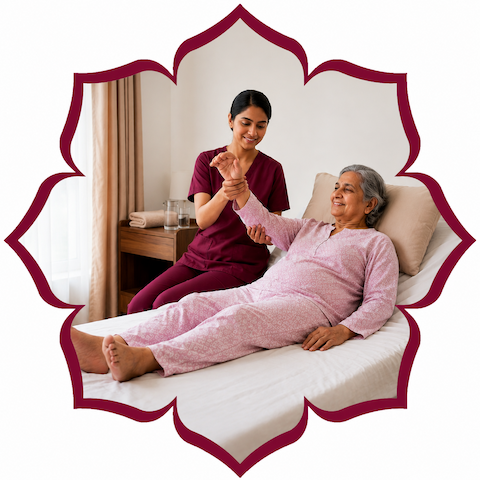
- Passive Range of Motion (PROM)
- Active Assisted ROM (AAROM)
- Bed mobility training
- Supine to side-lying transitions
- Sitting balance exercises
- Straight Leg Raises (SLR)
- Pelvic bridging
- Electrical stimulation for affected limbs
Even the smallest movement mattered.
What looked simple to others turning in bed, attempting to sit upright. Moving a leg slightly represented major progress in neurological recovery.
The First Signs of Recovery
By the first reassessment on 17 April 2026, encouraging improvements began to emerge.
Muscle Power Progress
| Muscle Group | Right Side | Left Side |
|---|---|---|
| Upper Limb | 4/5 | 1/5 |
| Lower Limb | 4/5 | 1/5 |
For the first time:
- Assisted high sitting became possible
- Sit-to-stand activities were initiated
- Gait training started with maximum support
- Early stepping movements were observed
These moments often become emotional milestones for families watching their loved one slowly regain control over their body.
Walking Again: A Major Turning Point
By 26 April 2026, he demonstrated further neurological and functional improvement.
Updated Muscle Power
| Muscle Group | Right Side | Left Side |
|---|---|---|
| Upper Limb | 4/5 | 2/5 |
| Lower Limb | 4/5 | 2/5 |
Functional Improvements Achieved
- Bed mobility improved significantly
- Sitting without support became possible
- Standing with assistance was achieved
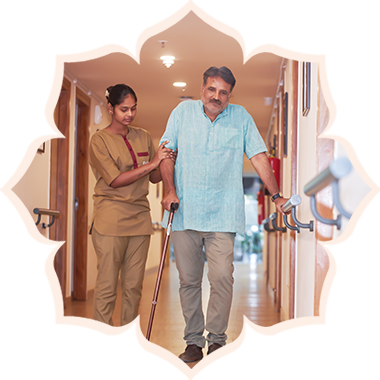
- Walking with two-person support was initiated
- Static standing balance improved
- Better trunk control and postural stability were noted
For someone who initially could not sit independently, these milestones reflected remarkable recovery progress.
Occupational Therapy: Regaining Independence in Daily Life
Stroke recovery is not only about walking again. It is also about restoring dignity, confidence, and independence in everyday activities.
He participated in a structured occupational therapy rehabilitation program focused on:
- Upper limb strengthening
- Fine motor training
- Hand function improvement
- Coordination exercises
- ADL retraining
- Self-care activities
Gradually, improvements in motor control and functional coordination were observed.
Daily activities that once required complete assistance slowly became more manageable.
This phase of stroke rehabilitation plays a critical role in helping stroke survivors rebuild confidence and improve quality of life.
Speech Therapy: Finding His Voice Again
One of the most challenging aspects of his recovery was the impact on his speech and voice.
Initially, he presented with:
- Severe breathy voice
- Poor breath support
- Lip deviation
- Reduced lip seal
- Difficulty sustaining phonation
- Reduced speech intelligibility
A specialized speech and swallowing rehabilitation program was initiated.
Speech Therapy Interventions Included:
- Diaphragmatic breathing exercises
- Oromotor strengthening
- Lip ROM exercises
- Semi-Occluded Vocal Tract (SOVT) exercises
- Resonant Voice Therapy
- Airflow control and phonation training
Over time, measurable improvements were observed:
- Better phonation initiation
- Improved breath control
- Increased speech clarity
- Reduced breathiness
- Improved lip strength and coordination
While recovery continues, the progress achieved demonstrates the importance of early and consistent speech rehabilitation after stroke.
Rehabilitation Goals
The Power of Multidisciplinary Stroke Rehabilitation
Stroke recovery is rarely linear.
Some days bring visible progress. Others test patience and resilience.
What made a difference in his journey was the coordinated approach involving:
- Physiotherapists
- Occupational therapists
- Speech therapists
- Rehabilitation specialists
- Continuous caregiver support
This multidisciplinary neuro rehabilitation approach helped address every aspect of recovery physical, functional, and communicative.
Rehabilitation Goals
Short-Term Rehabilitation Goals
- Improve muscle strength and activation on the affected side
- Prevent muscle stiffness, joint deformities, and contractures
- Improve bed mobility including rolling and repositioning
- Enhance sitting balance and postural control
- Improve range of motion (ROM) in upper and lower limbs
- Initiate supported standing and early gait training
- Improve respiratory and phonation control for speech
- Enhance lip strength, oral motor coordination, and speech clarity
- Begin retraining for basic Activities of Daily Living (ADLs)
Long-Term Rehabilitation Goals
- Improve independent or assisted walking with appropriate assistive devices
- Restore functional mobility and balance for daily activities
- Increase upper limb function, coordination, and hand use
- Improve independence in Activities of Daily Living (ADLs) such as dressing, grooming, and feeding
- Enhance speech intelligibility and conversational communication
- Improve respiratory-phonatory coordination and vocal quality
- Achieve better postural stability and endurance
- Maximize overall functional independence and quality of life
- Support safe community reintegration and long-term recovery after stroke and brain hemorrhage
Recovery Is Possible with the Right Rehabilitation Support
A severe stroke or brain hemorrhage can change life in an instant affecting movement, speech, balance, confidence, and independence. For families, the journey that follows is often filled with uncertainty and emotional exhaustion. But with timely medical care, expert rehabilitation, and consistent support, meaningful recovery is possible.
His journey reflects the power of comprehensive stroke rehabilitation. From being completely dependent for mobility after a critical brain hemorrhage to gradually regaining sitting balance, standing ability, assisted walking, upper limb movement, and improved speech clarity every milestone became a testament to perseverance and structured neuro rehab.
Recovery after stroke is not just about physical healing. It is about helping individuals regain confidence, restore dignity, improve communication, and return to everyday life with greater independence. Through a multidisciplinary rehabilitation approach involving physiotherapy, occupational therapy, and speech therapy, patients can achieve significant functional improvement even after severe neurological conditions.
With the right stroke rehabilitation support, compassionate caregivers, and personalized therapy programs, recovery becomes more than a possibility it becomes a journey of hope, resilience, and renewed life.
Conclusion
His recovery journey highlights the importance of early intervention, neurological rehabilitation, and consistent therapeutic support after a severe stroke and brain hemorrhage. From complete dependence and left-sided paralysis to improved sitting balance, assisted walking, better upper limb function, and enhanced speech clarity, his progress reflects remarkable determination and clinical care. Through physiotherapy, occupational therapy, and speech therapy, he continues to regain strength, mobility, communication, and confidence in daily life. This case demonstrates that with personalized neuro rehabilitation, expert guidance, and family support, meaningful recovery and improved quality of life are possible even after critical neurological conditions.