Introduction
There are moments in a family's life that divide time into a before and an after. For an 80-year-old female and her loved ones, that moment arrived without warning on a quiet January morning in 2025, when a stroke stole her words, her movement, and temporarily, her independence. In the span of hours, a woman of quiet strength found herself unable to speak, unable to move her left side, and wholly dependent on the care of others. The life she had known had changed overnight.
Strokes are among the most devastating neurological events a person can experience. They do not discriminate, and they do not wait. For her, a known patient with both Type 2 Diabetes Mellitus and Hypertension, the risks had always existed, but nothing quite prepares a family for the reality of watching a loved one lose fundamental abilities in an instant. When she was discharged from the hospital after nearly four weeks of acute management, she carried with her a Ryle's tube for nutrition, a Foley's catheter, and a GCS score of E4M5V1; conscious but largely unresponsive verbally, and with her left side completely paralyzed.
It was at this that point Care Homes stepped in, not merely as a facility but as a partner in her recovery. What followed over the next two and a half months was a testament to what dedicated, compassionate, and structured rehabilitation can achieve, even when the odds seem quietly daunting.
Written By
Dr. Lovely Aggrawal
Medical consultant, Clinical
Dr. Rohan
Medical consultant, Clinical
Understanding the Case
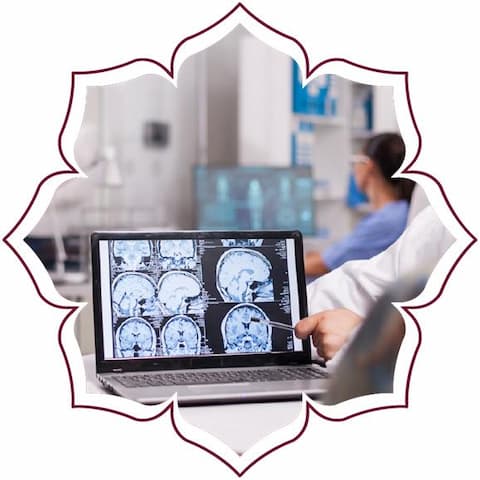
She was admitted to Antara Senior Care on 26th February 2025, following her discharge from the hospital, where she had been managed for a Right Middle Cerebral Artery (MCA) Infarct; in simpler terms, a stroke affecting the right side of the brain. This type of stroke typically results in weakness or paralysis on the left side of the body, speech difficulties, and cognitive changes, all of which she was experiencing.
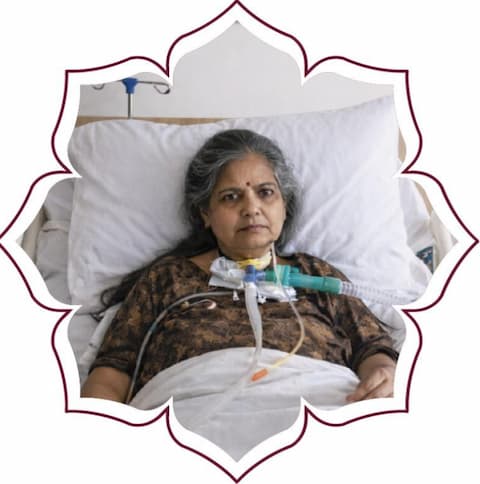
Her presentation on admission painted a complex clinical picture. She was conscious but confused, with a GCS of E4M5V1; her eyes were open; she could respond to commands with movement, but she could not produce any verbal response. Her left arm and leg were completely powerless, scoring 0 out of 5 on the motor power scale. Her right side, while affected, retained some function at 3 out of 5. She was entirely dependent on a Ryle's Tube (nasogastric tube) for all nutrition and hydration, and a Foley's catheter was in place for urinary management. Bilateral air entry was present, and she was breathing comfortably on room air a small but significant comfort amidst the clinical challenges.
Beyond the numbers, what the team at Antara observed was a woman who needed more than medical management. She needed structure, consistency, and, most importantly, hope translated into daily, incremental action. The care team recognized early on that her recovery would not be measured in dramatic leaps but in patient, persistent steps.
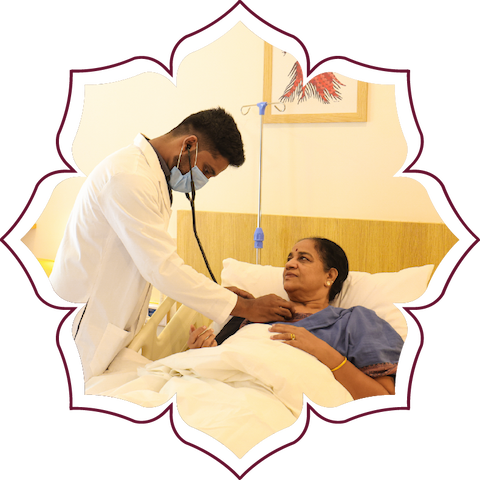
A comprehensive care plan was formulated immediately upon admission, addressing every dimension of her well-being. This included continuous monitoring of vitals and fluid balance, meticulous nursing care with two-hourly repositioning to prevent pressure sores, DVT prophylaxis to guard against blood clots given her immobility, dedicated oral, urogenital, and perianal care, and vigilant infection prevention protocols. The foundations were firmly set for a holistic rehabilitation journey.
Stages of Recovery
Her recovery unfolded across four carefully observed stages, each building on the last, like chapters in a story of quiet resilience.
Stage 1: Stabilization and Baseline Care (Weeks 1–2)
The early days were about laying the groundwork. She arrived confused and medically vulnerable. The team focused on establishing clinical stability, initiating prescribed medications, and conducting detailed blood investigations and culture reports to rule out or address any underlying infections. Unfortunately, as is common in hospitalized elderly patients with urinary catheters, urine cultures revealed a Urinary Tract Infection (UTI). Targeted antibiotics were started promptly, bringing the fever under control within days. Her Foley's catheter and Ryle's tube were changed on the 14th day as per protocol, reducing infection risk. Physiotherapy was initiated gently but consistently, keeping her muscles engaged and beginning the slow process of neurological stimulation. The family was reassured that recovery from the stroke is a marathon, not a sprint.
Stage 2: Neurological Awakening (Weeks 3–5)
Something remarkable began to happen in the third week. As neuro-medications took effect and her body responded to consistent clinical care, her neurological status began to improve. Her GCS motor component gradually transitioned from M5 to M6; she was beginning to follow commands more reliably and respond with purposeful movement. The team noticed a dullness in her verbal responses, but there was something there, a glimmer of emerging communication. Speech therapy was formally initiated during this phase, focusing on stimulating phonation and working patiently with her to rebuild the neural pathways for speech. Repeat urine investigations confirmed the resolution of her UTI. Right-sided motor power, already at 3 out of 5 on admission, began showing encouraging signs of improvement. Physiotherapy continued at a steady pace, targeting both passive and active range of motion exercises.
Stage 3: Breakthrough — Movement and Voice (Weeks 6–7)
Weeks six and seven brought milestones that brought both the clinical team and her family quiet joy. Her left side, once completely paralyzed, began to show movement for the first time. A motor power score of 1 out of 5 on the left may seem modest on paper, but for a family that had watched their loved one lie motionless, it was everything. Her right side had now reached full motor power of 5 out of 5. Meanwhile, a swallow assessment was conducted, and she passed; a pivotal moment that opened the door to the next phase of her recovery. RT weaning was initiated, and for the first time since her stroke, she was allowed to oral sip. The team celebrated this milestone with her. Speech therapy continued its vital work, and she was beginning to produce sounds; early words struggling to find their way through damaged pathways, but arriving, nonetheless.
During this period, a brief episode of loose stools was managed with anti-diarrhoeal measures, resolved without complication a reminder that recovery is rarely linear, and the team remained prepared for every twist along the way.
Stage 4: Integration and Independence (Weeks 8–9)
By weeks eight and nine, the transformation was undeniable. Her GCS had climbed to E4M6V5; she was alert, responsive, and verbally engaged. Her left-sided motor power had improved to 2 out of 5 and continued on an upward trajectory, while her right side remained at full strength. The Ryle's tube, her nutritional lifeline for weeks, was successfully removed, as she was now tolerating a blended and soft oral diet independently. It was kept on standby (SOS) but was no longer routinely needed. Her words, while still in recovery, were becoming clearer and more purposeful. She was oriented to time, place, and person. The fog of confusion had lifted. She was, in every meaningful sense, returning to herself.
Rehabilitation Approach
What set her journey apart was not any single intervention, but the seamless integration of multiple therapeutic approaches into one cohesive, patient-centred plan. Antara Senior Care's philosophy of holistic rehabilitation was evident in every aspect of her care.
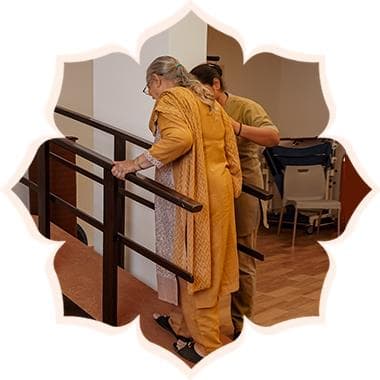
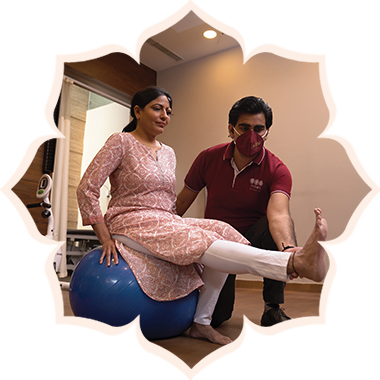
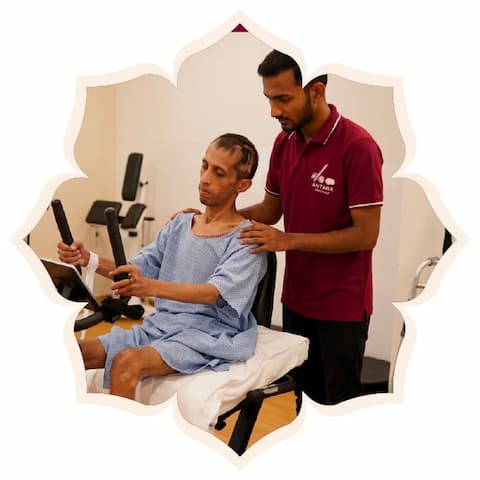
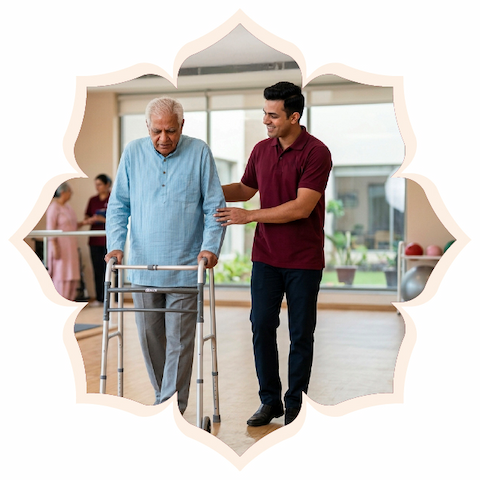
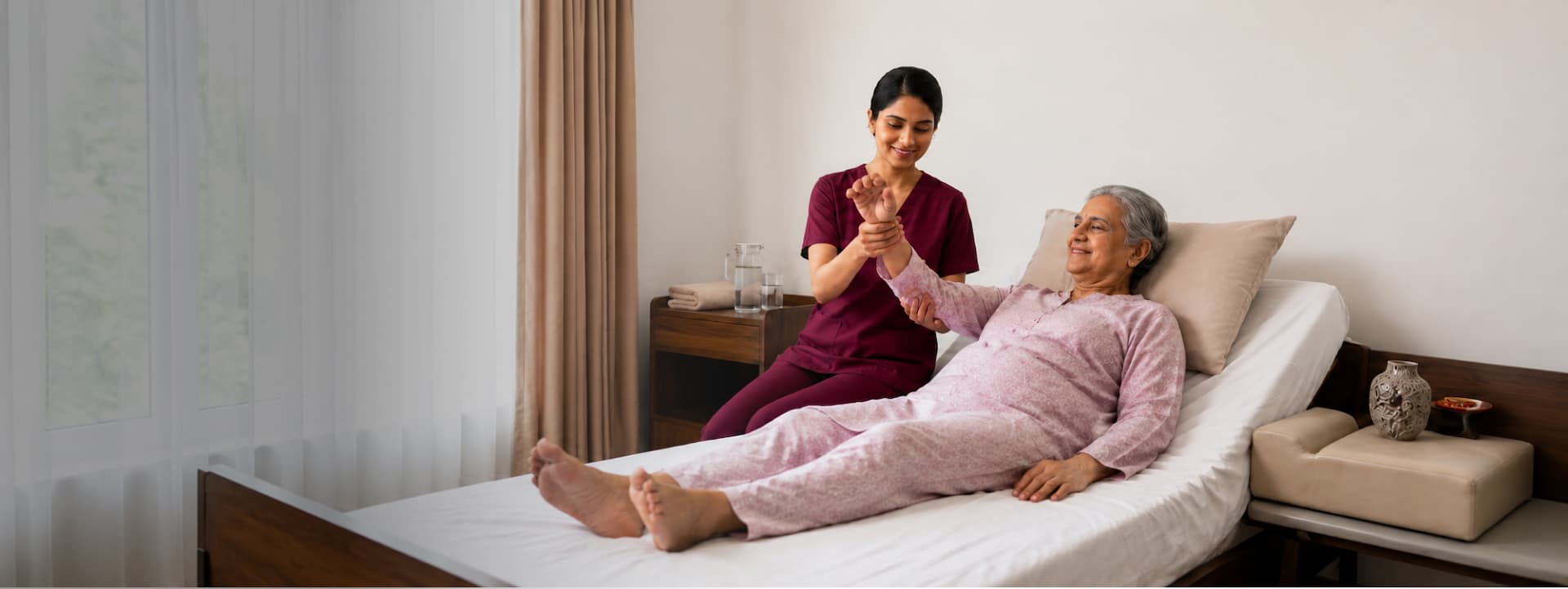
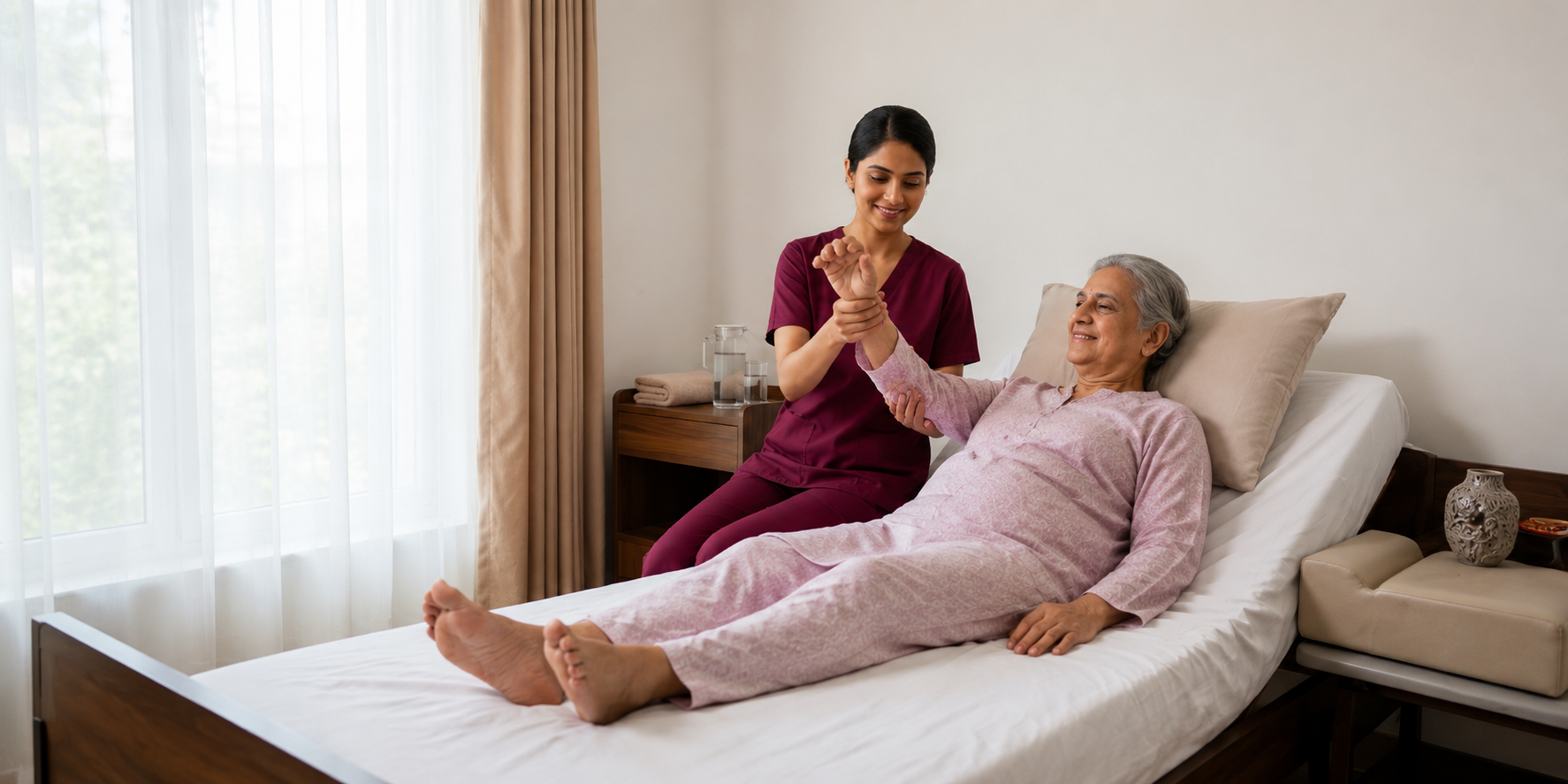
Physiotherapy formed the cornerstone of her physical rehabilitation. Sessions were conducted daily, progressing systematically, from passive limb mobilization in the early weeks to active assisted exercises as her strength returned. The goal was not merely to rebuild muscle but to retrain the brain's motor pathways, exploiting neuroplasticity that makes stroke recovery possible. Every session was calibrated to her tolerance and adapted as she progressed.
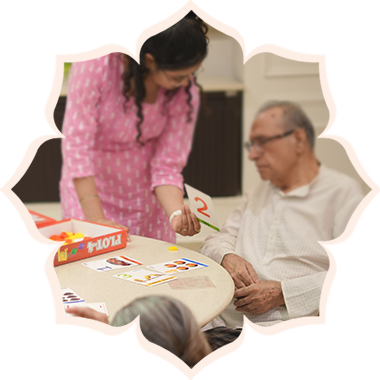
Speech Therapy played an equally vital role. Aphasia the loss or impairment of language- is one of the most isolating consequences of stroke. For her, who had been completely non-verbal on admission, the work of the speech therapist was a bridge back to connection. Through systematic phonation exercises, structured communication practice, and swallow assessment, the team guided her from silence to sound and from sound to words. The removal of Ryle's tube was as much a speech therapy victory as a medical one.
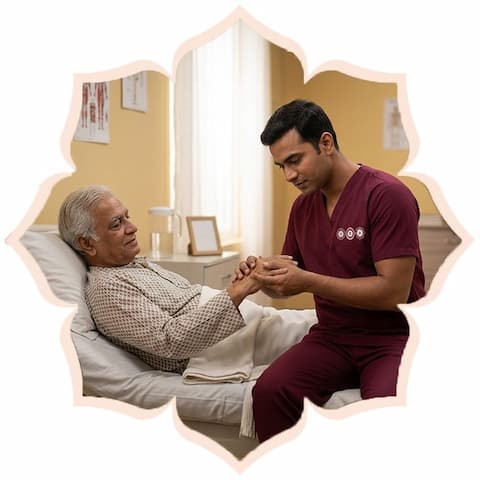
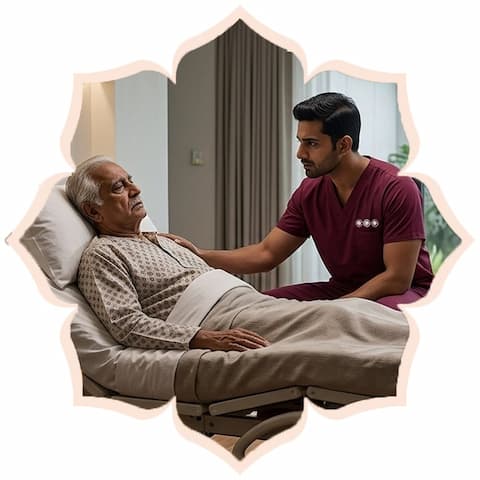
Nursing care was meticulous and continuous. Two-hourly repositioning prevented pressure sores throughout her stay; a remarkable achievement for a patient who spent weeks largely immobile. Catheter and tube care was carried out with precision and protocol adherence, resulting in no new infections beyond the initial UTI managed on admission. Oral and perianal hygiene was maintained with consistent care, preserving her dignity while protecting her health.
Nutritional support was personalised from day one. The team worked with a personalised diet plan that evolved with her recovery; from RT feeds to oral sips, to blended diet, to soft food. At every stage, her caloric and hydration needs were met with care and attention.
Emotional and psychological support was woven throughout her stay. Stroke recovery is as much a psychological journey as a physical one. The team remained attuned to her emotional state, offering reassurance, consistency, and gentle encouragement. Her family was kept informed and involved, which itself played a significant role in her motivation and healing.
Rehabilitation Goals
From the outset, the care team established clear and realistic goals ones that honoured her clinical status while stretching meaningfully toward recovery.
Short-Term Goals
The immediate priorities were neurological optimisation, stabilising her clinical parameters and preventing further deterioration, and the incremental improvement of muscle power in all limbs. The team also aimed to improve her verbal response from the non-communicative V1 status and to address and resolve all active infections. These goals were achieved within the first four to five weeks.
Long-Term Goals
The longer-term vision was broader and more ambitious: to achieve haemodynamic stability, to restore meaningful oral feeding and discontinue the Ryle's tube, to rebuild left-sided motor function to a level that would support assisted mobility, and to progress her speech to intelligible verbal communication. Equally important was stroke rehabilitation as an ongoing process; establishing a foundation from which she could continue to improve even beyond her stay at Antara. All of these goals were met or meaningfully progressed by the time of her discharge.
Conclusion
She arrived at Antara Senior Care in the shadow of one of life's most frightening medical events. She was non-verbal, paralysed on one side, dependent on tubes for every basic need, and navigating a world that had become suddenly, profoundly unfamiliar. Two and a half months later, she was a different person.
She is now alert and oriented; aware of where she is, who she is, and what day it is. She eats by herself, speaks with increasing clarity, and moves her once-paralysed left side with growing strength. Her GCS stands at E4M6V5. Her right side is fully functional. Her left side, while still in recovery, is gaining ground with each passing week. She did not acquire a single new infection during her stay. She is, in the truest sense of the word, healing.
But perhaps more than any clinical metric, what stands out in her an 80-year-old female journey is what cannot be easily measured: her spirit. The quiet determination that, even in the hardest early weeks, kept her engaging with her therapists, tolerating her exercises, and allowing the team to care for her fully. Recovery from a stroke is never guaranteed, and it is never easy. It demands patience from the patient and family, and deep commitment from every member of the care team.
At Antara Care Homes, she found both. And in finding both, she found her way back.