Introduction
A stroke can change a person's ability to move, walk, and manage everyday activities within a short time. For 60-year-old Mr. Goyal, weakness in both his arms and legs made even simple movements difficult. He also faced other health complications, including difficulty swallowing, infection, kidney-related problems, and anaemia. When he started rehabilitation, he needed assistance with walking and basic mobility. With regular physiotherapy and exercises planned according to his progress, he gradually started gaining strength and control. From simple bed-level exercises to balance training and gait practice, his recovery progressed step by step. Today, he is able to walk independently and continues to work towards better balance and endurance.
Written By
Dr. Lovely Aggrawal
Medical consultant, Clinical
Dr. Dharshan N. A.
Consultant – Physical Medicine & Rehabilitation
Understanding the Case
Where His Recovery Began – Stroke Rehabilitation
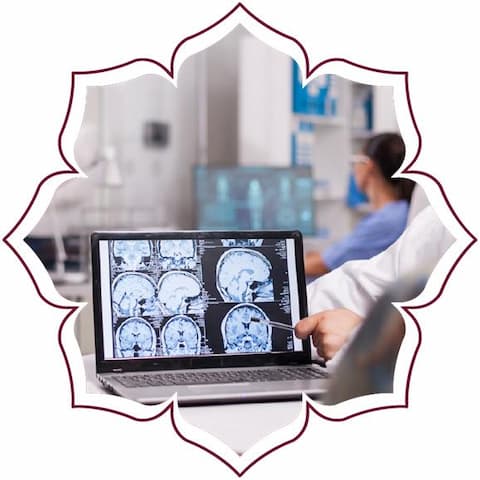
Mr. Goyal had suffered a cerebrovascular accident (CVA), with acute infarcts involving both frontal lobes, the left basal ganglia, and the right thalamus.
Following the stroke, he developed weakness in both his upper and lower limbs. Walking became difficult, and his overall mobility was reduced.
His stroke recovery was also affected by other medical conditions, including:
- Difficulty swallowing with risk of aspiration
- Urinary tract infection (UTI)
- Acute kidney injury
- Low sodium levels
- Nephropathy
- Anaemia
These complications further contributed to his overall weakness and reduced his ability to perform physical activities. That is why Antara care Homes created a PM&R led stroke care rehabilitation plan for his recovery.
What Did the Stroke Rehabilitation Assessment Show?
During his physiotherapy assessment, the main concerns were:
- General weakness in both arms and legs
- Difficulty walking
- Reduced functional mobility
- Reduced tolerance for physical activity
- Need for assistance during basic walking and mobility
His range of motion was within normal limits, with no significant concerns related to posture, tenderness or swelling.
How the Stroke Affected His Daily Life
For Mr. Goyal, one of the biggest challenges after the stroke was losing the ability to move around independently.
Walking, standing, and carrying out simple movements after stroke became difficult. During the early stage of neurological rehabilitation, he needed support for basic mobility.
The focus of rehabilitation was therefore not only to improve his muscle strength, but also to help him gradually regain the ability to move, walk, and become more independent in his everyday life.
His Stroke Rehabilitation Journey
Mr. Goyal's physiotherapy programme was divided into three phases. As his strength and movement improved, the exercises and activities gradually progressed.
Phase 1: Getting the Body Moving
The first phase focused on basic movement and muscle activation.
Goals
- Maintain joint movement
- Prevent stiffness and muscle wasting
- Activate weak muscles
- Prepare him for functional activities
Physiotherapy included
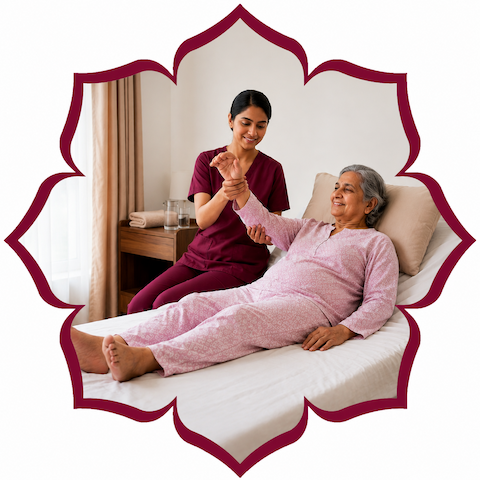
- Active-assisted range of motion (AAROM) exercises
- Basic strengthening exercises
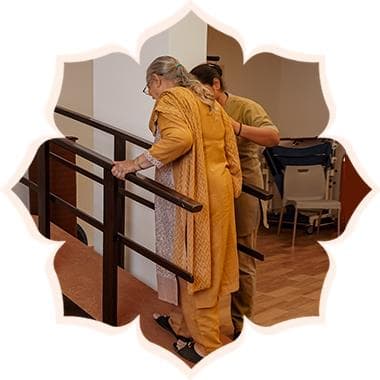
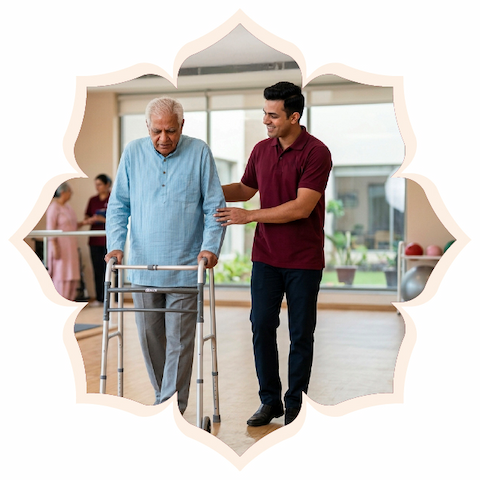
- Gait training with appropriate support
During this phase, Mr. Goyal gradually showed better muscle activation and joint movement. He also became more comfortable with therapeutic exercises.
Phase 2: Building Strength and Balance
As his movement improved, the focus shifted towards building strength and improving balance.
Goals
- Improve muscle strength
- Improve active movement
- Develop better balance
- Increase independence during movement
Physiotherapy included
- Active range of motion (AROM) exercises
- Isometric strengthening
- Functional training
- Progressive mobility exercises
With regular therapy, Mr. Goyal developed better voluntary muscle control. His strength, balance and mobility also improved.
Phase 3: Working Towards Independent Walking
Once his strength and mobility improved further, the focus moved towards walking, coordination and endurance.
Rehabilitation Approach
Early Mobilisation
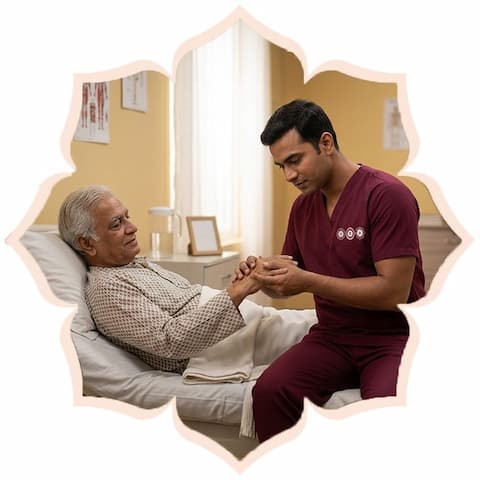
Gentle joint movements and active-assisted exercises were used to maintain mobility and prevent stiffness.
Muscle Strengthening
Progressive strengthening exercises were used to improve muscle weakness after stroke and maintain strength in the upper and lower limbs.
Balance Training
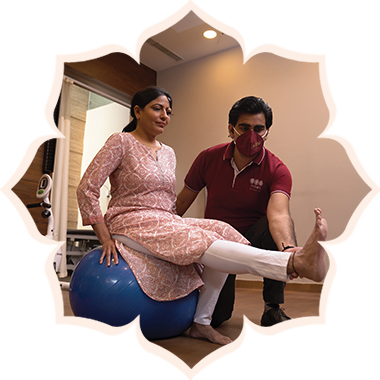
Exercises focused on improving sitting, standing and dynamic balance.
Gait Training after stroke
Walking practice was introduced with appropriate support and gradually progressed as his mobility improved.
Functional Training
Exercises focused on movements that are important for everyday activities and independence.
Endurance Training
Stationary cycling and progressive physical activity were included to help improve stamina and exercise tolerance.
Chest stroke Physiotherapy
Chest stroke physiotherapy was included as part of his ongoing care based on his clinical needs.
Gradual Progression
The intensity and type of exercises were changed according to his progress, strength and ability to perform each activity safely.
A Step Towards Independence
Mr. Goyal's recovery has been a gradual process.
He started stroke rehabilitation with significant weakness, reduced mobility and difficulty walking. His physiotherapy programme began with basic joint movements and muscle activation and gradually progressed to strengthening, balance training and gait practice.
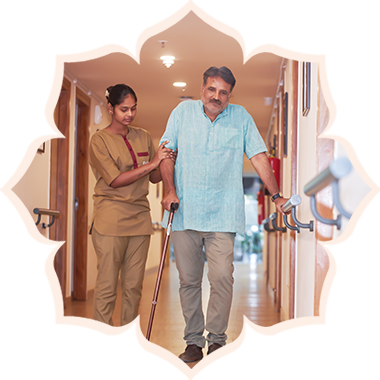
Today, he is able to walk independently.
His progress shows how consistent stroke physiotherapy and step-by-step rehabilitation can help a patient work towards greater mobility and independence after a stroke.
His rehabilitation continues to focus on improving his walking pattern, balance, coordination and endurance.
Rehabilitation Goals
The stroke rehab goals were planned according to Mr. Goyal's progress and functional needs.
Short-Term Goals
- Improve muscle activation and strength
- Improve active movement
- Improve sitting and standing balance
- Improve tolerance for physical activity
- Progress walking with reduced assistance
- Improve coordination during basic movements
Long-Term Goals
- Achieve safe and independent walking
- Improve walking pattern and efficiency
- Improve balance and coordination
- Increase lower-limb strength and endurance
- Increase walking distance and support community ambulation
- Reduce the risk of falls
- Improve independence in everyday activities
Conclusion
At Antara Care Homes, Stroke rehabilitation programmes are planned according to each patient's medical condition, functional ability and recovery goals.
Depending on the patient's needs, physiotherapy may include:
- Strengthening exercises
- Mobility training
- Balance exercises
- Gait training
- Functional training
- Endurance exercises
- Other therapies as clinically required
The aim is to help patients gradually regain mobility, improve their ability to perform everyday activities and work towards greater independence. The cost of stroke rehabilitation depends on your condition.
Looking for Stroke Rehabilitation for Your Loved One?
Recovery after a stroke takes time, patience and regular rehabilitation. The right rehabilitation plan can help patients work towards improving their movement, strength and independence.