
Introduction
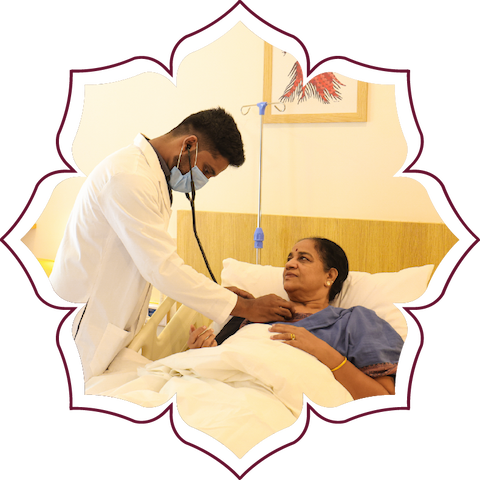
A 76-year-old woman had been suffering from severe pain in both knees for several years due to osteoarthritis. The pain, stiffness, and swelling gradually made it difficult for her to walk, stand, climb stairs, or even get up from a chair without help.
Before surgery, she depended on a walker to move around and needed assistance from her family for many daily activities. As both knees were badly damaged, she underwent simultaneous bilateral total knee replacement surgery on 22 May 2026.
After being discharged from the hospital on 30 May 2026, she started a structured physiotherapy rehabilitation program to help her regain strength, mobility, and independence.
Understanding the Case
A 76-year-old woman who had been living with severe osteoarthritis in both knees for many years. Osteoarthritis is a common condition in older adults where the protective cartilage in the knee wears away, causing pain, stiffness, swelling, and difficulty in movement.
As her condition worsened, simple daily activities like walking, standing for a few minutes, climbing stairs, and getting up from a chair became painful and challenging. She eventually became dependent on a walker and needed help from her family for many routine tasks. Since both knees were badly damaged, her doctors recommended simultaneous bilateral total knee replacement (TKR), where both knees are replaced during the same surgery.
While the surgery successfully replaced the damaged joints, recovery depended heavily on a structured post knee replacement rehabilitation program. Physiotherapy played a key role in reducing pain, improving knee movement, rebuilding muscle strength, restoring balance, and helping her return to an independent lifestyle.
Why Is Physiotherapy Important After Knee Replacement?
A total knee replacement surgery removes the damaged joint, but it does not automatically restore strength or normal movement. After surgery, muscles become weak, the knees remain stiff, and patients often feel hesitant to walk because of pain or fear of falling.
A structured physiotherapy after knee replacement program helps patients:
- Reduce pain and swelling
- Improve knee flexibility and range of motion
- Strengthen the thigh and leg muscles
- Improve balance and coordination
- Restore normal walking
- Regain independence in daily activities
Early post operative care is important also lowers the risk of complications such as joint stiffness, muscle weakness, poor mobility, and delayed recovery.
Challenges Faced During Recovery
Recovering from a bilateral knee replacement is more demanding than replacing just one knee because both legs are healing at the same time.
During the first few weeks after surgery, Mrs. experienced:
- Pain and swelling in both knees
- Difficulty bending and straightening her knees
- Weakness in her thigh muscles
- Poor balance while standing
- Difficulty getting out of bed or standing from a chair
- Dependence on a walker for walking
- Low confidence while moving independently
These challenges made it essential to follow a carefully planned knee replacement recovery program, where exercises became slightly more advanced every week based on her progress.
How a Step-by-Step Rehabilitation Program Helped
Recovery after total knee replacement surgery does not happen overnight. It requires a gradual rehabilitation approach that focuses on different goals at each stage of healing.
During the first few weeks, treatment focused on reducing pain and swelling while gently improving knee movement. Some things you should strictly avoid on knee replacement recovery journey. As healing progressed, strengthening exercises, balance training, walking practice, stair climbing, and endurance exercises were introduced.
This progressive post-operative physiotherapy helped her regain muscle strength, improve joint flexibility, walk without support, climb stairs safely, and confidently perform her daily activities again.
By following a personalized rehabilitation plan consistently for six weeks, she successfully returned to an active and independent lifestyle.
Rehabilitation Approach
A successful rehabilitation after total knee replacement is not just about healing the surgical wound it is about helping the patient regain strength, mobility, confidence, and independence. She followed a structured six-week physiotherapy rehabilitation program that was designed according to her recovery progress and functional goals.
The rehabilitation plan focused on gradually restoring knee movement, reducing pain and swelling, strengthening the muscles around the knees, improving balance, and helping her return to everyday activities safely. Each stage of therapy built on the progress made in the previous week, ensuring a safe and steady recovery.
1. Early Recovery: Pain Relief and Safe Movement
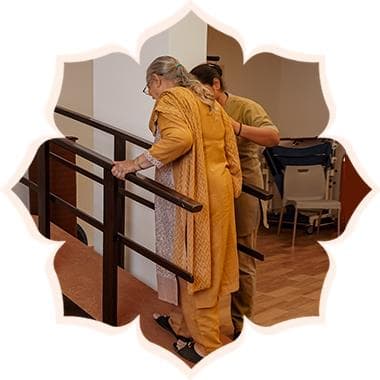
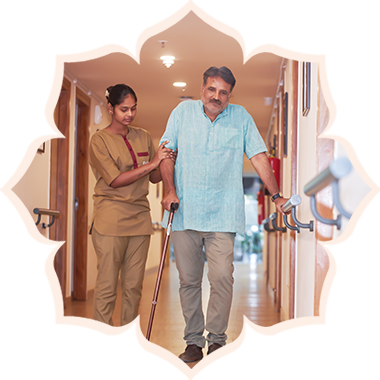
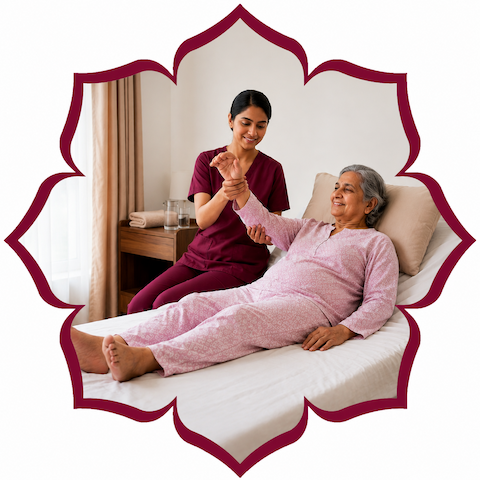
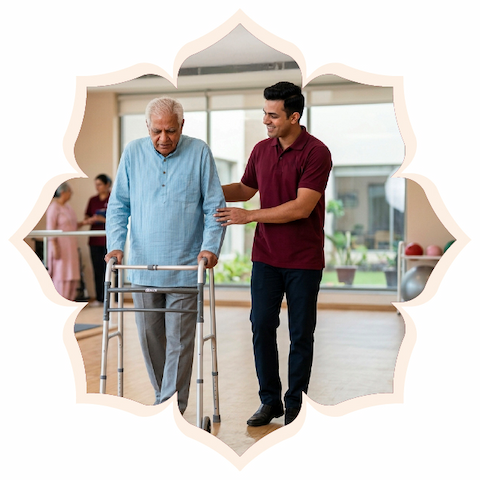
During the first phase after surgery, the priority was to control pain and swelling while preventing stiffness and other post-operative complications. Gentle exercises such as ankle pumps, deep breathing, heel slides, and muscle activation exercises helped improve blood circulation and maintain joint mobility. The patient also began walking with a walker under the supervision of a physiotherapist, encouraging early mobility and reducing the risk of complications associated with prolonged bed rest.
2. Strength and Mobility Restoration
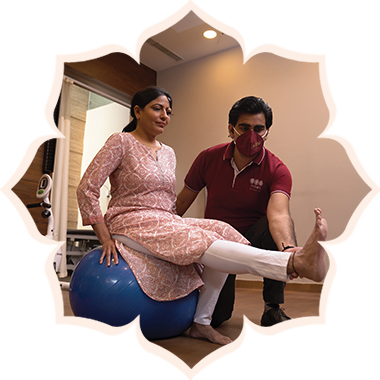
As pain and swelling reduced, the focus shifted towards improving knee range of motion after knee replacement and rebuilding muscle strength. Progressive strengthening exercises for the quadriceps, hamstrings, and gluteal muscles were introduced along with standing balance exercises and walking practice. These exercises improved stability, increased walking distance, and made everyday movements such as standing up from a chair much easier.
3. Functional Training and Balance Improvement
Once the patient achieved better strength and knee flexibility, rehabilitation moved towards functional recovery. Activities such as sit-to-stand practice, stair climbing, supported squats, marching, weight-shifting exercises, and balance training were added to improve coordination and confidence. This phase prepared the patient to safely perform daily activities while reducing the risk of falls.
4. Independent Mobility and Long-Term Recovery
The final stage of the rehabilitation program focused on restoring full independence. Advanced strengthening exercises, outdoor walking, endurance training, and stair negotiation helped the patient walk confidently without a walking aid. By the end of six weeks, she was able to perform her daily activities independently and safely.
This structured post knee replacement rehabilitation program demonstrates how a personalized physiotherapy plan can significantly improve knee replacement recovery, helping older adults regain mobility, strength, and a better quality of life after surgery.
Rehabilitation Goals
The rehabilitation goals for her were designed to support her recovery after simultaneous bilateral total knee replacement. The treatment focused not only on reducing pain and improving knee function but also on helping her safely return to an active and independent lifestyle. The goals were divided into short-term and long-term objectives to ensure steady progress throughout her knee replacement rehabilitation.
Short-Term Goals
During the initial weeks after surgery, the primary focus was on managing post-operative symptoms and restoring basic mobility. The short-term goals included:
- Reduce pain and swelling in both knees
- Improve knee flexibility and range of motion
- Prevent joint stiffness and post-operative complications
- Restore strength in the quadriceps, hamstrings, and surrounding muscles
- Improve sitting, standing, and bed mobility
- Achieve safe walking with the support of a walker
- Improve balance and confidence during movement
These goals helped create a strong foundation for the next stage of physiotherapy after knee replacement, allowing the patient to progress safely through rehabilitation.
Long-Term Goals
As recovery progressed, the focus shifted towards improving overall function and independence. The long-term goals included:
- Walk independently without a walker or walking cane
- Climb and descend stairs safely using a normal step pattern
- Restore muscle strength and endurance in both lower limbs
- Improve balance, coordination, and walking confidence
- Increase walking distance without pain or excessive fatigue
- Return to daily activities such as dressing, bathing, household tasks, and community mobility without assistance
- Maintain long-term joint health through a personalized home exercise program
Conclusion
Her recovery highlights how a structured physiotherapy rehabilitation program after total knee replacement can help older adults regain mobility and independence. Through consistent pain management, progressive strengthening exercises, balance training, and functional mobility practice, she successfully progressed from walker-assisted walking to independent community ambulation within six weeks. Her case demonstrates that recovery after bilateral knee replacement surgery depends not only on a successful operation but also on timely and personalized rehabilitation. With regular physiotherapy, family support, and commitment to a home exercise program, patients can achieve better strength, improved function, greater confidence, and an enhanced quality of life after knee replacement surgery